Physicists unveil the most accurate atomic clock ever — and it could literally redefine the second - Live Science
This story deserves to be shared
Send it to someone who'd care, or post it on your networks.
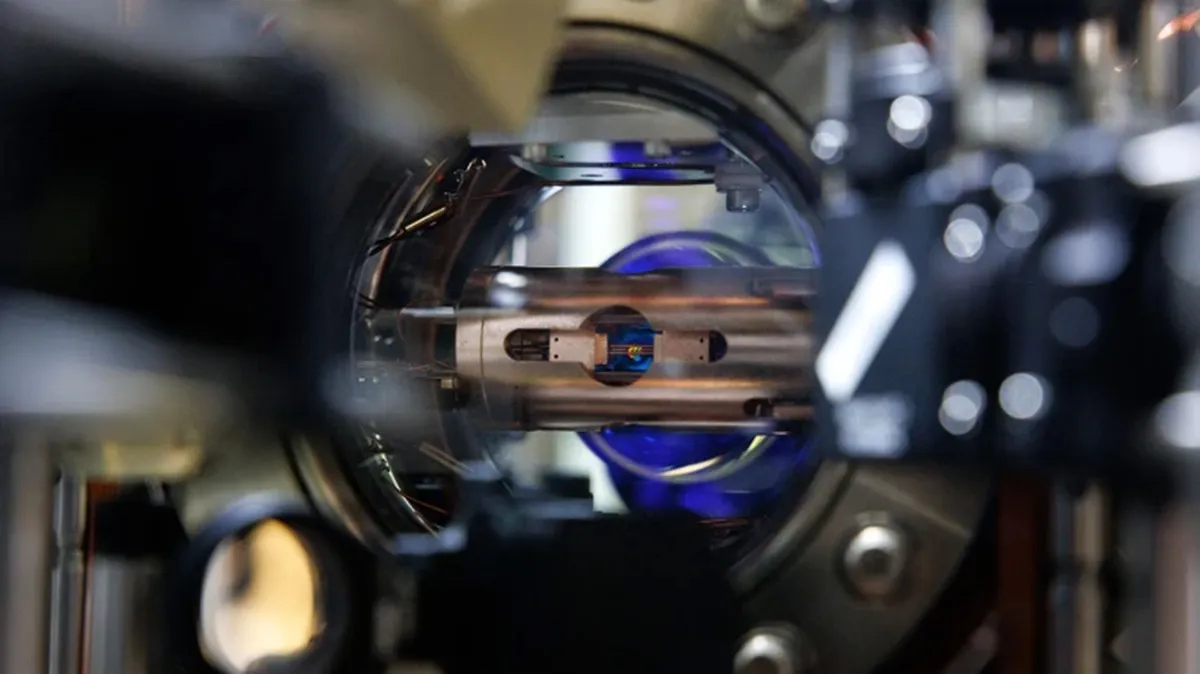
Physicists have used radioactive lutetium to create what they say is the most accurate atomic clock ever, keeping time perfectly up to 19 decimal places.
This article is an excerpt. To read the full content, visit the original source. Live Science
Related articles

How accurate is the climate disaster in Tom Cruise’s new movie Digger? - Scientific American
October 2, 20263 min read Add Us On GoogleAdd SciAmHow accurate is the climate disaster in Tom Cruise’s new movie Digger? In the movie, a giant iceberg from Greenland floats into the sea, imperiling millions—but is that even possible? By Emma Gometz edited by Claire CameronTom Cruise as Digger Rockwell in Warner Bros. Pictures’ "Digger. " © 2026 Warner Bros. Ent. All Rights ReservedIn Tom Cruise’s new movie Digger, the actor plays a crazed oil baron whose irresponsible drilling causes a massive iceberg to split off Greenland. Named Judy by climate scientists in the movie, the marauding ice barrels toward Europe, imperiling lives—but real climate scientists say this may be a little more fantastical than what we’d see if such an event really happened. In the movie, Judy threatens to bring a tsunami to Norway. The plot point is dramatic, but it misunderstands how ice shelves work, says Nils Bochow, a climate scientist at the Alfred Wegener Institute in Potsdam, Germany.

Learning is a blast—literally—at the South Side Science Festival - University of Chicago News
With a flourish, Dr. DiNitrogen capped a suspiciously billowing pop bottle and tossed it in a bin—sealing the lid firmly before stepping toward the crowd of wide-eyed children and their families. “It’s very important to throw away trash,” he said. “You see, you have to properly dispose of-”

Eating Alone Can Literally Change How Your Body Metabolizes Glucose - ScienceAlert
Dinner by yourself can be a lonely affair. The lack of social connection could change the way that your body processes your meal. A new study published in Science Advances has now found evidence that eating with others could help your body balance your blood sugar levels. In experiments, 108 participants consumed just over 100 grams of white-wheat bread. For the following two hours, researchers tracked their glycemic response. In one scenario, participants ate the bread on their own. In another scenario, they were accompanied by a close companion. In the social scenario, blood sugar levels spiked less and returned to baseline faster than in the alone scenario. The authors argue that this aligns with a "robust phenomenon" in humans. "Blood sugar regulation is not just about what we eat, but who we eat with," explains Shir Atzil from the Hebrew University of Jerusalem in Israel. "Our relationships have an active biological role in our physical well-being. "After the same carbohydrate meal, participants' blood sugar rose less when they ate with a close companion (blue) than when they ate alone (red).

Scientists build a nuclear clock that could make atomic clocks obsolete - Science Daily
Scientists have reached a major milestone in the quest to build an entirely new kind of clock. After decades of research, a team in Vienna has developed the world's first self-stabilizing nuclear clock, a device that could eventually measure time with far greater precision than today's most advanced atomic clocks. Unlike earlier prototypes, the new nuclear clock can maintain its own stability without depending on a conventional atomic clock. Researchers have demonstrated that it can operate steadily for more than 24 hours without intervention.
0 comments
No comments yet. Be the first to share your thoughts!