Scientists build a nuclear clock that could make atomic clocks obsolete - Science Daily
This story deserves to be shared
Send it to someone who'd care, or post it on your networks.

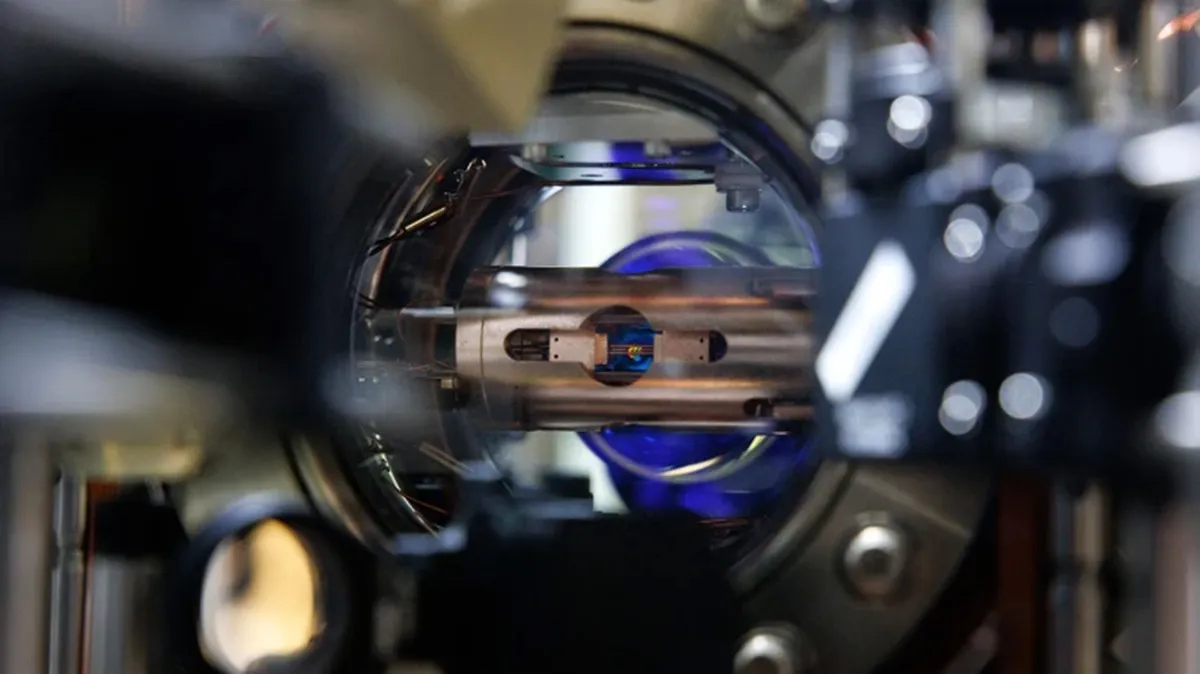
Scientists have reached a major milestone in the quest to build an entirely new kind of clock. After decades of research, a team in Vienna has developed the world's first self-stabilizing nuclear clock, a device that could eventually measure time with far greater precision than today's most advanced atomic clocks.
Unlike earlier prototypes, the new nuclear clock can maintain its own stability without depending on a conventional atomic clock. Researchers have demonstrated that it can operate steadily for more than 24 hours without intervention.
This article is an excerpt. To read the full content, visit the original source. Science Daily
Related articles

The world’s first nuclear clocks start ticking - Popular Science
Timekeeping has officially entered its nuclear age. Two independent teams, one in Vienna, Austria and another in Beijing, China have built working thorium-229 nuclear clock prototypes. Rather than track changes in an atom’s electrons the way that current atomic clocks do, these nuclear versions use a laser that’s tuned to the frequency where a thorium nucleus flips between two energy states for potentially even more accurate time keeping. Scientists believe this new approach could one day make the clocks far more reliable than any existing atomic timekeeper. To put that in perspective, current atomic clocks can keep time with an uncertainty of 1 second every 300 million years. Scientists predict that more advanced nuclear clocks could move that metric into the billions of years. That could open the door to probing some of the universe’s hardest-to-measure phenomena, like notoriously elusive dark matter. The Chinese clock and Austrian clock were detailed in a pair of studies published this week in the journal Nature.
Physicists unveil the most accurate atomic clock ever — and it could literally redefine the second - Live Science
Physicists have used radioactive lutetium to create what they say is the most accurate atomic clock ever, keeping time perfectly up to 19 decimal places.
0 comments
No comments yet. Be the first to share your thoughts!