A hierarchical shell locks and stabilizes perovskite nanocrystals with near-unity quantum yield - Science | AAAS
This story deserves to be shared
Send it to someone who'd care, or post it on your networks.
This article is an excerpt. To read the full content, visit the original source. Science | AAAS
Related articles
Assessing the classicality of photon echo from excitons in lead halide perovskite nanocrystals - APS Journals
Photon echo (PE) spectroscopy is a powerful technique for probing decoherence mechanisms and charge carrier dynamics in semiconductor systems. Beyond traditional coherence measurements, characterizing the photon statistics of the echo signal is important for assessing its potential in quantum information applications and understanding the underlying quantum mechanical processes. Here, we study the photon statistics of PE signals generated by excitons in ensembles of lead halide perovskite CsPbI3 nanocrystals at cryogenic temperature of 2 K using continuous-variable quantum state optical tomography based on homodyne detection. Pronounced Rabi oscillations of the PE amplitude allow us to evaluate the statistics for various pulse areas in the excitation sequence. The damping of the oscillations with increasing pulse area is attributed to spatial excitation inhomogeneity and excitation-induced dephasing. Despite the large ensemble of optically addressed excitons, the efficiency of generated PE signals is low which is attributed to the complex energy level structure of excitons and non-radiative recombination channels in CsPbI3 nanocrystals.
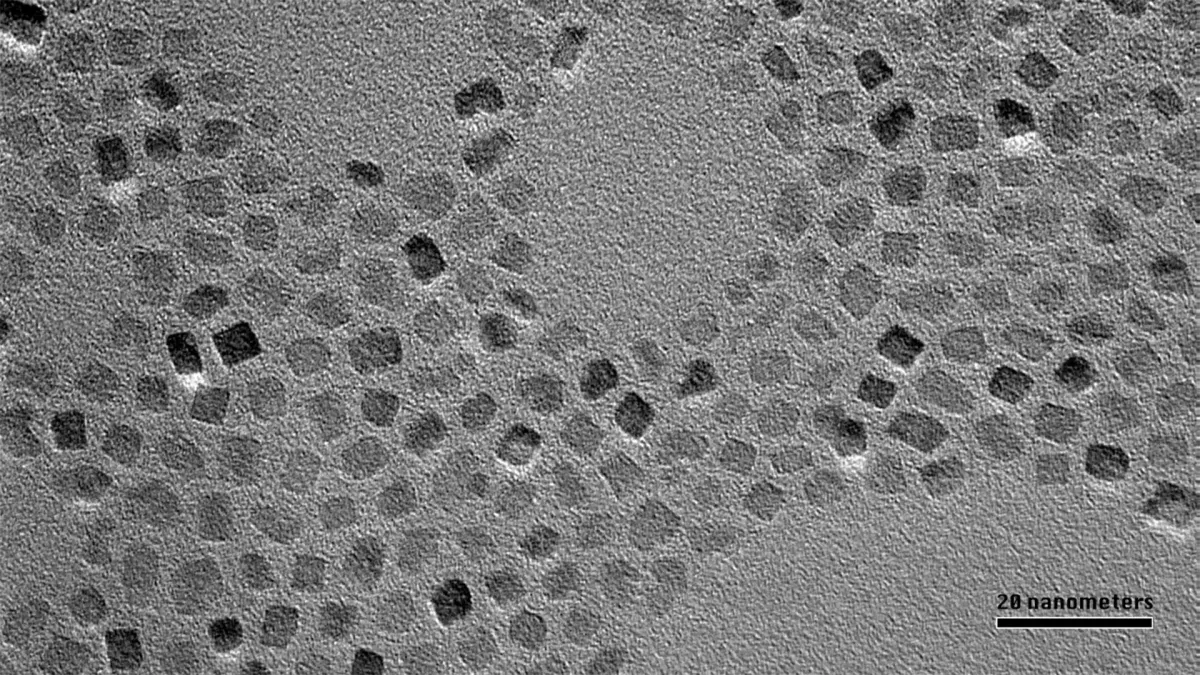
A new recipe unlocks “impossible” nanocrystals for LEDs, implants, and superconductors - Science Daily
Nanocrystals have become an important part of modern materials science, with quantum dots helping inspire the 2023 Nobel Prize in Chemistry. Yet despite their enormous potential, researchers have only been able to produce these microscopic crystals from a relatively narrow range of materials. Now, chemists at the University of Chicago and Argonne National Laboratory have developed a method for creating nanocrystals from metal nitrides, a technologically important group of materials that had resisted conventional nanocrystal synthesis. The study, published in Nature, could expand the possibilities for electronics and other applications, including flexible lighting and medical implants.
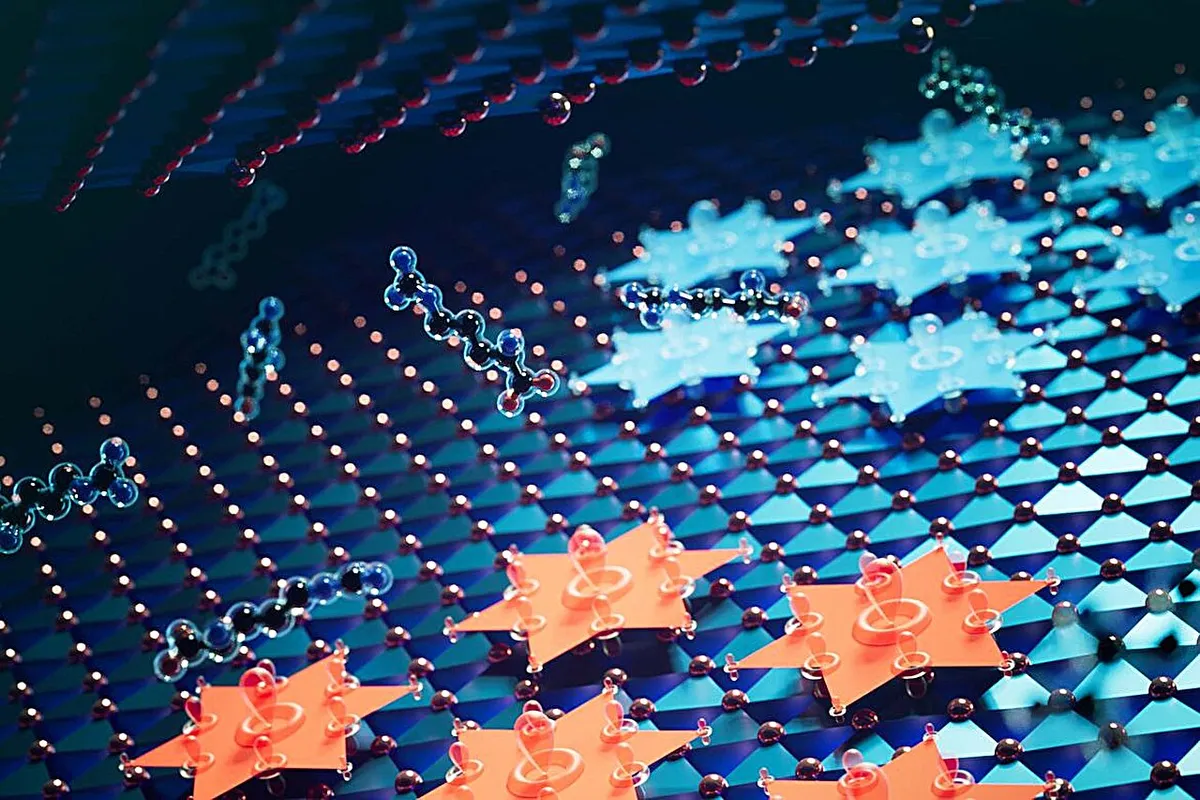
Amino acid stabilizes material's quantum state above room temperature - Phys.org
An illustration represents the interaction between blue-outlined arginine molecules and tantalum disulfide's star-shaped crystal pattern. Credit: Duan Lab/UCLA New research started with a special material that behaves unusually when it's extremely cold—135 degrees below zero Fahrenheit (minus 93 degrees Celsius), close to the most frigid temperature ever recorded in Antarctica—and showed that the unusual behavior could be extended to well above room temperature—up to about 135 F (57 degrees Celsius), close to the highest heat ever measured in Death Valley, California.
Lightweight hierarchical composite aerogel for ultrawideband microwave absorption - Nature
We’re sharing this article early to provide faster access to peer-reviewed, accepted research. It is citable and carries a permanent DOI. This version is subject to further edits and will be replaced automatically by the final Version of Record. All legal disclaimers apply. AbstractLightweight aerogel absorbers, especially with polymer, carbon and mineral structures, are considered to be the most efficient materials for microwave absorption. Here, montmorillonite (MMT) nanosheets were decorated by MoSe2 and activated carbon (AC) nanoparticles to form MoSe₂/AC/MMT composite. Then, MoSe₂/AC/MMT was loaded into the chitosan matrix as filler, with different weight percentage of 35, 50, and 75 to produce MoSe₂/AC/MMT–Chitosan aerogels named as Ch2-Ch4, and a sample without AC, named as Ch1. The results showed that, Ch3 was the optimal sample with the highest minimum reflection loss (-88 dB) at a thickness of 2.6 mm. All samples had broad absorption bands covering the entire X and Ku bands.
0 comments
No comments yet. Be the first to share your thoughts!