An entropy-regulating molecular lock stabilizes formamidinium lead halide perovskite - Science | AAAS
This story deserves to be shared
Send it to someone who'd care, or post it on your networks.
This article is an excerpt. To read the full content, visit the original source. Science | AAAS
Related articles
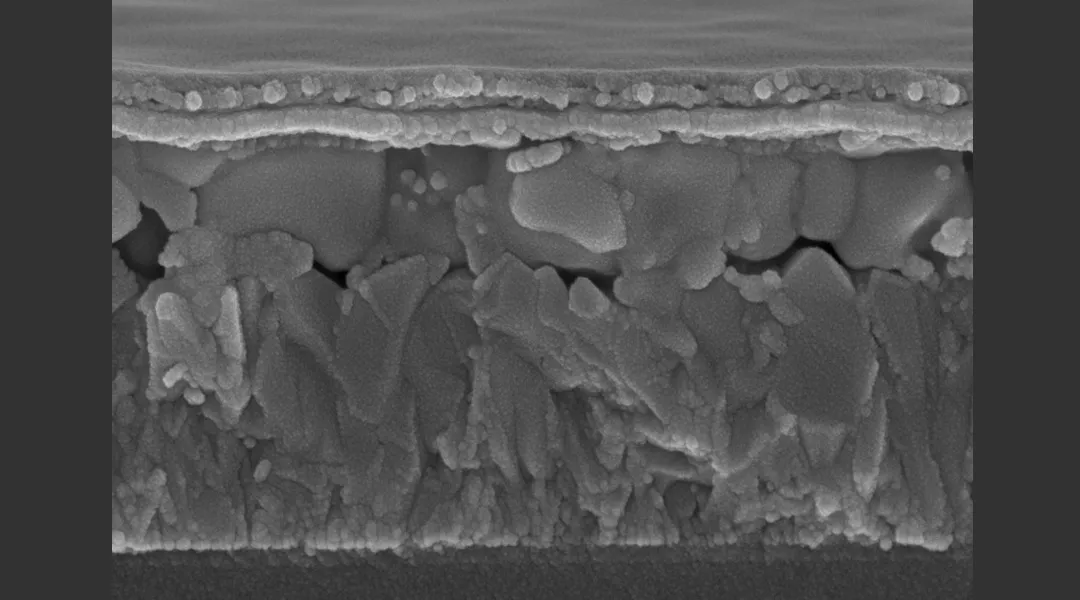
Chance discovery boosts the efficiency of perovskite tandem solar cells - Advanced Science News
Researchers have uncovered a way to suppress halide segregation in tandem solar cells, improving both efficiency and stability. Their strategy works across multiple mixed-halide perovskite compositions, suggesting the approach may be broadly applicable to this important class of photovoltaic materials. Tandem solar cells stack two different light-absorbing materials on top of one another, allowing them to convert more sunlight into electricity than either material alone. Mixed-halide perovskites—crystals containing both iodide and bromide ions—are commonly used as the top layer because their composition can be tuned to absorb high-energy light while permitting longer wavelengths to pass through to the lower cell. However, because iodide and bromide crystallize at different rates, the resulting films tend to be uneven in composition, with bromide-rich regions forming near the surface.

How Brazil is regulating AI ahead of presidential vote - The Christian Science Monitor
Dona Maria is a straight-talking, middle-aged Black woman, whose videos criticizing the policies of Brazilian President Luiz Inácio Lula da Silva amassed millions of views on social media earlier this year. “They line their pockets with our sweat!” she says in one clip about a supposed increase in electricity bills. But “Dona Maria” isn’t a Brazilian voter – or even human. She’s a hyperrealistic avatar, created by artificial intelligence. As countries around the globe are voting in increasingly AI-saturated elections, Brazil is on the front lines of trying to regulate the technology’s use in the electoral context. Its election authority, the Superior Electoral Court, passed broad rules this year, including requiring AI-generated campaign material to carry clear labels and prohibiting the use of AI to impersonate candidates. In the United States, at least 31 states have enacted local legislation with similar rules. But globally, election regulation regarding AI has “been perceived as a back burner issue” compared with other AI threats, says J. B. Branch, director of federal AI governance and technology policy at Public Citizen, a U. S. consumer advocacy organization.
0 comments
No comments yet. Be the first to share your thoughts!