Redirecting wet–interfacial redox pathways for efficient inverted perovskite solar cells - Science | AAAS
This story deserves to be shared
Send it to someone who'd care, or post it on your networks.
This article is an excerpt. To read the full content, visit the original source. Science | AAAS
Related articles
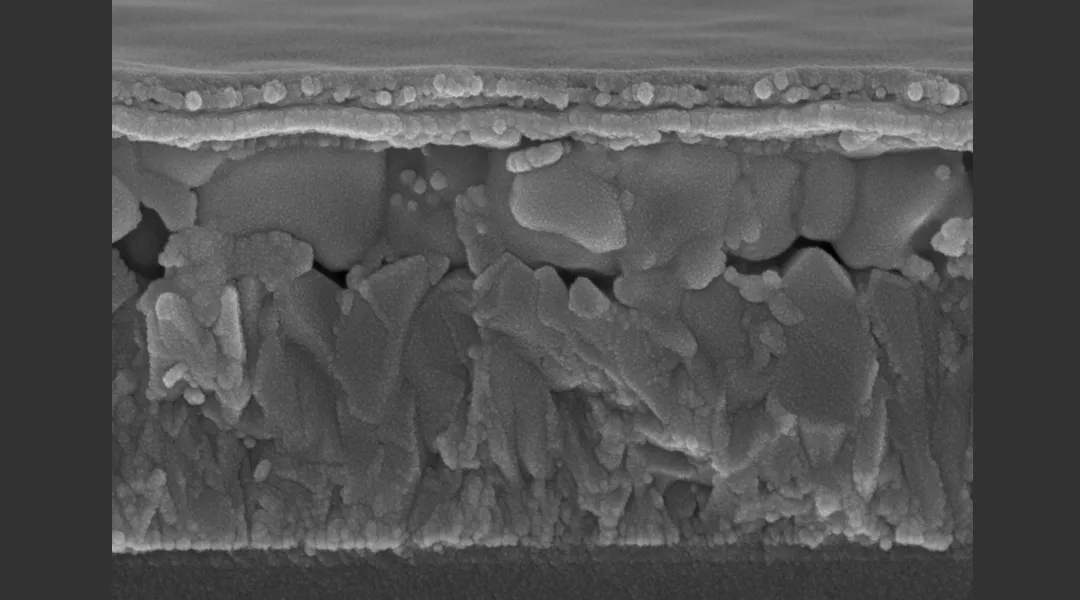
Chance discovery boosts the efficiency of perovskite tandem solar cells - Advanced Science News
Researchers have uncovered a way to suppress halide segregation in tandem solar cells, improving both efficiency and stability. Their strategy works across multiple mixed-halide perovskite compositions, suggesting the approach may be broadly applicable to this important class of photovoltaic materials. Tandem solar cells stack two different light-absorbing materials on top of one another, allowing them to convert more sunlight into electricity than either material alone. Mixed-halide perovskites—crystals containing both iodide and bromide ions—are commonly used as the top layer because their composition can be tuned to absorb high-energy light while permitting longer wavelengths to pass through to the lower cell. However, because iodide and bromide crystallize at different rates, the resulting films tend to be uneven in composition, with bromide-rich regions forming near the surface.
A new kind of magnetism could unlock faster, more efficient computers - Science Daily
The computers of the future may rely on more than the electrical charge carried by electrons. Researchers are increasingly interested in another fundamental electron property called spin, which could provide a new way to move and process information inside electronic devices. Conventional computers use the movement of electrical charge to handle data. If scientists can reliably control electron spin as well, they may be able to develop entirely new approaches to computing that operate faster and consume less energy.

Simulations explore nuclear mitigation of asteroid threats - Phys.org
Lawrence Livermore National Laboratory researcher Isaiah Santistevan led the development of three-dimensional simulations exploring how a nuclear device could deflect or disrupt an asteroid threatening Earth. Credit: Blaise Douros/LLNL Lawrence Livermore National Laboratory (LLNL) researchers are developing three-dimensional simulations to examine how a nuclear device could be used to deflect or potentially disrupt an asteroid threatening Earth.
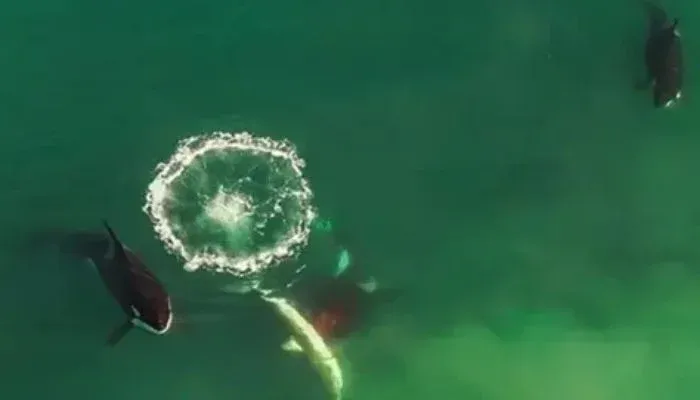
Orcas are hunting great White Sharks around the world, scientists confirm - Geo News
Orcas are hunting great White Sharks around the world, scientists confirmThe killing of great whites by orcas has been reported in the waters of South Africa, California, and Australia, and the implications that the hunting behaviour would have on the marine ecosystem have been considered. In fact, it all started back on May 3, 2017, when the body of a female great white, weighing 1,100 kilograms, washed ashore in Gansbaai, close to Cape Town, with a deep gash through which its 90-kilogram liver had been extracted. Five more corpses of great whites appeared with similar wounds in the coming months, as claimed by shark biologist Alison Towner of Rhodes University. Two adult males, called Port and Starboard, who are supposed to be brothers judging by their dorsal fins that fold differently, were identified as the most probable perpetrators. The connection was officially established in 2022 based on video footage of a drone that caught three orcas chasing and biting a 3-meter great white off Mossel Bay. The sharks quickly disappeared from Dyer Island, one of the best places in the world to witness a great white.
0 comments
No comments yet. Be the first to share your thoughts!