The Breaking It Down series aims to inform and inspire people by putting advanced manufacturing technologies and processes into simpler terms.
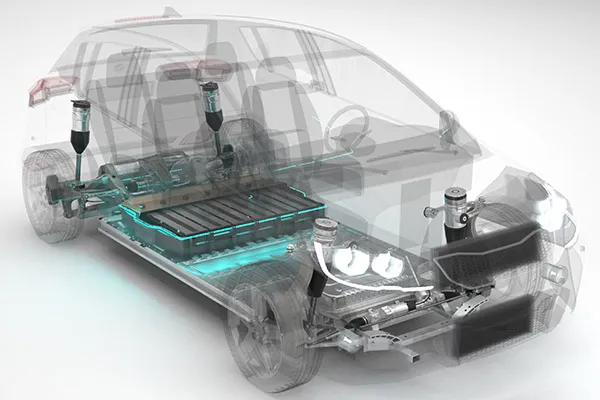
With electric vehicles (EVs) that get us places, cell phones that connect us to others, and utility-scale electric grid storage that powers our homes, batteries are all around us. Batteries can be either mobile, like those in electric vehicles, or stationary, like those needed for utility-scale electricity grid storage.
The U. S. Department of Energy's (DOE) Energy Technology Innovation Partnership Project (ETIPP) works alongside coastal, remote, and island communities that are seeking to improve the resilience, affordability, and reliability of their energy systems. ETIPP helps these communities overcome the unique geographical and logistical challenges that limit their access to affordable, reliable, and secure energy resources. This multi-year, cross-sector technical assistance program applies a tailored approach to each participating community. Leveraging the experience and expertise of its partner network—a broad coalition of local stakeholders, regional organizations, national laboratories, and DOE offices—ETIPP helps communities proactively identify and implement solutions that suit their particular needs. ETIPP offers two tracks: strategic energy planning (four to eight months) and deep-dive technical assistance (12 to 24 months) for specific energy projects. Selected communities receive support for a project scoping phase, followed by energy planning and analysis projects that:Address the community's energy priorities, goals, challenges, and opportunities.
Hydraulic fracturing is a technique in which large volumes of water and sand, and small volumes of chemical additives are injected into low-permeability subsurface formations to increase oil or natural gas flow. The injection pressure of the pumped fluid creates fractures that enhance gas and fluid flow, and the sand or other coarse material holds the fractures open. Most of the injected fluid flows back to the wellbore and is pumped to the surface. Hydraulic fracturing has been used for over 60 years in over one million wells. Recently, public concern about potential impacts on drinking water and other environmental damage has significantly grown. Consequently, Congress directed the Environmental Protection Agency (EPA) in 2010 to conduct a study of this practice to better understand any potential impacts of hydraulic fracturing on drinking water and groundwater. DOE/NETL is working closely with the EPA as it carries out the study and is also collaborating with the Department of the Interior to enhance understanding of these risks. On May 5, 2011, U. S.
Abu Dhabi’s Technology Innovation Institute, a state-run research body, released AI models trained on the Emirati Arabic dialect, improving translation, transcription, and voice-enabled services. The Falcon-Emirati model and related tools for speech recognition and extracting Arabic text from images and documents are relatively compact. The speech recognition model has 1.6 billion parameters, but is more accurate than a 30-billion-parameter model, according to TII. AI training in Arabic has lagged behind other languages, partly because dialects vary widely and can be incomprehensible to people who know only the formal Arabic used in news reports and textbooks. This has made some machine translations comically inaccurate, sometimes turning innocuous words into vulgar references in English. TII aims to eliminate those errors by training models on local dialects, idioms, and cultural references, ultimately making AI more useful in the region.
In 2025, two scholars of religion decided to make a multiday pilgrimage along the Kumano Kodō trail – an ancient route in Japan connecting Shinto shrines and Buddhist temples – guided by an artificial intelligence assistant.
The two – Wayne E. Arnold and John A. Shultz – trained an AI companion on a smartphone to suit their travel needs, including translation. But they were also curious to see how AI would shape their pilgrimage experience.
Calvin University is establishing the Calvin Center for Faith and Technology, a new interdisciplinary center that will explore the intersection of Christian faith and technology and provide a thoughtful, credible Christian voice in conversations surrounding artificial intelligence and other emerging technologies. Based in Calvin’s School of Engineering and Computer Science, the center will draw on the university’s longstanding strength in engineering, computer science, and faith integration while bringing together perspectives from across the liberal arts and professional programs. Its work will engage questions involving technology and how it interplays with education, business, health care, science, philosophy, psychology, media, worship, governance and other areas of society. “Technology is shaping nearly every dimension of our lives, and Christians need to be part of that conversation, not simply reacting to technological change, but thoughtfully considering how technology can be developed and used in ways that serve our neighbors and contribute to the flourishing of our communities,” said Calvin University President Greg Elzinga.
GAITHERSBURG, Md. — The U. S. Department of Commerce’s National Institute of Standards and Technology (NIST) announces its support for the recommendations and principles established in the White House Office of Science and Technology Policy Director Michael Kratsios’ Science: A New Golden Age report. This whole-of-government initiative aims to secure U. S. dominance in critical and emerging technologies by accelerating scientific discovery, driving real-world technology deployment and rebuilding America’s industrial base. As the nation’s lead agency for measurement science and standards, NIST is uniquely positioned to bridge the distance between fundamental discovery and industrial capability. NIST brings to this initiative extensive data repositories spanning key technology domains, expertise with data standards that foster interoperability, and world-class physical test beds. “Our contributions as part of America’s Golden Age of Science reflect NIST’s steadfast commitment to advancing U. S. leadership in critical technologies vital to our economic competitiveness and national security,” said Under Secretary of Commerce for Standards and Technology and NIST Director Arvind Raman.
National Institute of Standards and Technology (.gov)·
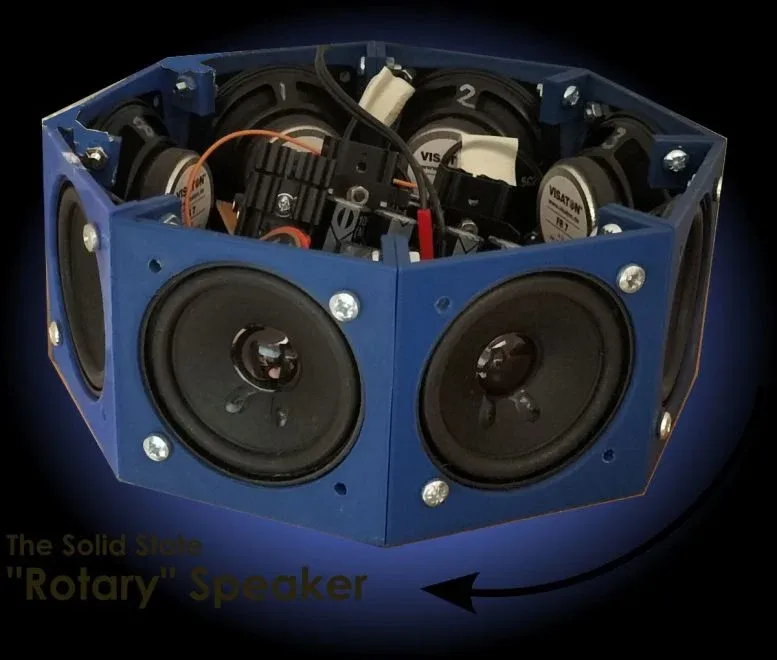
The novel rotary speaker created by Nottingham engineers. Credit: University of NottinghamResearchers have demonstrated a solid-state approach to sound modulation that electronically creates the acoustic sensation of a moving sound source. A new speaker system developed at the University of Nottingham creates audio effects by manipulating sound waves around the listener rather than modifying only the electronic signal. The solid-state design recreates aspects of a classic rotary speaker without motors, belts, or other moving components, offering a new approach that sits between mechanical and digital audio effects. Researchers in the university’s Faculty of Engineering built the system from a circular array of speakers. Instead of physically rotating a horn or other sound source, the device electronically shifts the audio signal around the array, producing the acoustic impression of movement. The work has been published in the Journal of the Audio Engineering Society. Moving the Sound, Not Just the SignalMost electronic and digital audio effects alter a signal before it reaches a speaker. The Nottingham system takes a different approach.
The Co-op has become the latest employer to place workers under AI surveillance with an automated listening technology that rates every phone call some of them make to customers. In a system described as “oppressive and dystopian” by a whistleblower, Co-op Legal Services is using AI models to record, analyse and award a percentage score for interactions between agents and customers seeking advice about probate, wills and estates. A model from OpenAI has been trained to assess more than 50 discrete aspects of each phone call and provide pass and fail scores to managers who use the data to analyse employee performance. One worker said the system can mean their work is monitored by AI for several hours a day as they handle inquiries often from recently bereaved customers. It comes after the Guardian last week revealed Euan Blair’s AI training company, Multiverse, has started using an AI for blanket monitoring of online classroom sessions, which teachers called “remorseless” and “unnerving”, while Multiverse said it was “using AI to improve the experience of learners and customers”. Experts have voiced fears that increasing AI monitoring of workers risks increasing stress.
volume 10, pages 1420–1422 (2026) Cite this article
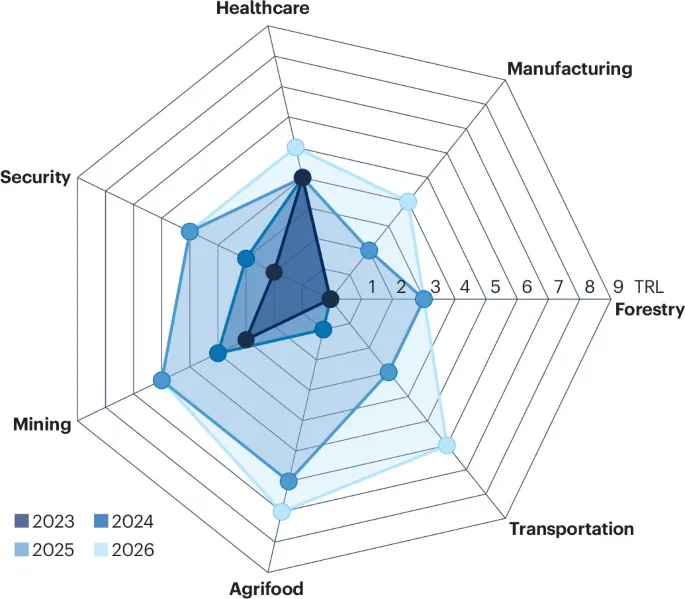
In Chile, the Center for Astrophysics and Associated Technologies has been working towards turning scientific investment into economic success for two decades, through the transfer of technology and techniques from astrophysics to industry. Many successful projects provide tangible examples of the real-world benefits of astronomy.