BBlogFlow

Categories

Science

10924 articles

Science

2004 Ames Earth Science Publications - NASA (.gov)

Spectral absorption of solar radiation by aerosols during ACE-AsiaBergstrom, R. W., et al. (2004), Spectral absorption of solar radiation by aerosols during ACE-Asia, J. Geophys. Res., 109, D19S15, doi:10.1029/2003JD004467. Convective lofting links Indian Ocean air pollution to paradoxical South Atlantic ozone maximaChatfield, R., et al. (2004), Convective lofting links Indian Ocean air pollution to paradoxical South Atlantic ozone maxima, Geophys. Res. Lett., 31, L06103, doi:10.1029/2003GL018866. Size distributions and mixtures of dust and black carbon aerosol in Asian outflow: Physiochemistry and optical propertiesClarke, A., et al. (2004), Size distributions and mixtures of dust and black carbon aerosol in Asian outflow: Physiochemistry and optical properties, J. Geophys. Res., 109, D15S09, doi:10.1029/2003JD004378. Stratospheric Aerosol Sampling: Effect of a Blunt-Body Housing on Inlet Sampling CharacteristicsDhaniyala, S., et al. (2004), Stratospheric Aerosol Sampling: Effect of a Blunt-Body Housing on Inlet Sampling Characteristics, Aerosol Sci. Tech., 38, 1080–1090, doi:10.1080/02786829088581. Microphysical modeling of the 1999–2000 Arctic winter: 3.

NASA (.gov)·
Science

2013 Ames Earth Science Publications - NASA (.gov)

The Ikhana unmanned airborne system (UAS) western statesAmbrosia, V., et al. (2013), The Ikhana unmanned airborne system (UAS) western states, Geocarto International Journal, 26, 85-101, doi:10.1080/10106049.2010.539302. Trends and Variability of AVHRR-Derived NPP in IndiaBala, G., et al. (2013), Trends and Variability of AVHRR-Derived NPP in India, Remote Sensing, 5, 810-829, doi:10.3390/rs5020810. Variability of AVHRR-Derived NPP in India. Remote SensingBala, G., et al. (2013), Variability of AVHRR-Derived NPP in India. Remote Sensing, 5 (2), 810-829, doi:10.3390/rs5020810. Improved cirrus simulations in a general circulation model using CARMA sectional microphysicsBardeen, C., et al. (2013), Improved cirrus simulations in a general circulation model using CARMA sectional microphysics., O. Toon.. Improved cirrus simulations in a general circulation model using CARMA sectional microphysics. J. Geophys, Res.: Atmospheres, 118 (20), 118, 11,679-11,697, doi:10.1002/2013JD020193. State transformations and ice nucleation in amorphous (semi-)solid organic aerosolBaustian, K., et al. (2013), State transformations and ice nucleation in amorphous (semi-)solid organic aerosol, Atmos. Chem.

NASA (.gov)·
Science

2014 Ames Earth Science Publications - NASA (.gov)

Selection of Appropriate Class UAS/Sensors to Support Fire Monitoring, Real-Life Experiences in the USAmbrosia, V. G., and T. Zajkowski (2014), Selection of Appropriate Class UAS/Sensors to Support Fire Monitoring, Real-Life Experiences in the US, Handbook of Unmanned Aerial Vehicles, edited by K. P. Valavanis and G. J. Vachtsevanos. New York: Springer Verlag; ISBN 978-9048197064. Analyzing dynamical curculations in the tropical tropopause layer through empirical predictions of cirrus cloud distributionsBergman, J., E. Jensen, L. Pfister, L. Pan, and S. Honomichi (2014), Analyzing dynamical curculations in the tropical tropopause layer through empirical predictions of cirrus cloud distributions, J. Geophys. Res., 119, 2831-2845, doi:10.1002/2013JD021295. True Emission Factors for Western Forest Fires: Better Estimation and Usage, Long Beach, CaliforniaChatfield, R. B., and R. F. Esswein (2014), True Emission Factors for Western Forest Fires: Better Estimation and Usage, Long Beach, California, Proceedings of A&WMA’s 107th Annual Conference, 107, 27-31. Multi-decadal aerosol variations from 1980 to 2009: a perspective from observations and a global modelChin, M., T. Diehl, Q. Tan, J

NASA (.gov)·
Science

2017 Ames Earth Science Publications - NASA (.gov)

JTRF2014, the JPL Kalman filter and smoother realization of the International Terrestrial Reference SystemAbbondanza, C., et al. (2017), JTRF2014, the JPL Kalman filter and smoother realization of the International Terrestrial Reference System, J. Geophys. Res., 122, 8474-8510, doi:10.1002/2017JB014360.​Seasonal and spatial changes in trace gases over megacities from AURA TES observations: two case studiesCady-Pereira, K. E., V. H. Payne, J. L. Neu, K. W. Bowman, K. Miyazaki, E. A. Marais, S. Kulawik, Z. A. Tzompa-Sosa, and J. D. Hegarty (2017), Seasonal and spatial changes in trace gases over megacities from AURA TES observations: two case studies, Atmos. Chem. Phys., 17, 9379-9398,. Fluid Lensing & Applications to Remote Sensing of Aquatic DevelopmentsChirayath, V. (2017), Fluid Lensing & Applications to Remote Sensing of Aquatic Developments, 00Z, doi:20170004512. Creating Aerosol Types from CHemistry (CATCH): A New Algorithm to Extend the Link Between Remote Sensing and ModelsDawson, K. W., et al. (2017), Creating Aerosol Types from CHemistry (CATCH): A New Algorithm to Extend the Link Between Remote Sensing and Models, J. Geophys. Res., 122, doi:10.1002/2017JD026913.

NASA (.gov)·
Science

2015 Ames Earth Science Publications - NASA (.gov)

Three-Corner Hat for the assessment of the uncertainty of non linear residuals of space-geodetic time series in the context of terrestrial reference frame analysisAbbondanza, C., Z. Altamimi, T. M. Chin, R. S. Gross, M. B. Heflin, J. W. Parker, and X. Wu (2015), Three-Corner Hat for the assessment of the uncertainty of non linear residuals of space-geodetic time series in the context of terrestrial reference frame analysis, J. Geodesy, 89, 313-329, doi:10.1007/s00190-014-0777-x. Liquid water cloud properties during the Polarimeter Definition Experiment (PODEX)Alexandrov, M. D., B. Cairns, A. P. Wasilewski, A. S. Ackerman, M. J. McGill, J. E. Yorks, D. L. Hlavka, S. E. Platnick, G. T. Arnold, B. van Diedenhoven, J. Chowdhary, M. Ottaviani, and K. D. Knobelspiesse (2015), Liquid water cloud properties during the Polarimeter Definition Experiment (PODEX), Remote Sensing of Environment, 169, 20-36, doi:10.1016/j.rse.2015.07.029. Synchronous in-field application of life-detection techniques in planetary analog missionsAmador, E., M. Cable, N. Chaudry, T. Cullen, D. Gentry, M. Jacobsen, G. Murukesan, E. Schwieterman, A. Stevens, A. Stockton, C. Yin, D. Cullen, and W.

NASA (.gov)·
Science

1991 Ames Earth Science Publications - NASA (.gov)

Horizontal Wind Fluctuations in the Stratosphere During Large Scale CyclogenesisChan, R., et al. (1991), Horizontal Wind Fluctuations in the Stratosphere During Large Scale Cyclogenesis, J. Geophys. Res., 96, 17,425–17. The Effect of Various Surface Features on Polarized and Specular ReflectanceGrant, L., C. S. T. Daughtry, and V. Vanderbilt (1991), The Effect of Various Surface Features on Polarized and Specular Reflectance, Physiology Plantarum. The Physics of Polar Stratospheric Clouds and the Ozone HoleHamill, P., and O. B. Toon (1991), The Physics of Polar Stratospheric Clouds and the Ozone Hole, Physics Today, 14, 34–42. Remote Sensing of Earth’s Atmosphere and Surface Using a Digital Array Scanned Interferometer–A New Type of Imaging SpectrometerHammer, P. D., et al. (1991), Remote Sensing of Earth’s Atmosphere and Surface Using a Digital Array Scanned Interferometer–A New Type of Imaging Spectrometer, J. Imaging Sci. The 27–28 October 1986 FIRE Cirrus Case Study: Retrieval of Cloud Particle Sizes and Optical Depths from Comparative Analyses of Aircraft and Satellite Based Infrared MeasurementsHammer, P. D., F. Valero, and S.

NASA (.gov)·
Science

Physicists discover “astonishing” property of light that defies expectations - Science Daily

Scientists have discovered a surprising ability of light that allows it to develop spinning patterns as it moves through empty space, without relying on special lenses, mirrors, or materials. The finding reveals that light possesses a hidden geometric structure that can influence its behavior in ways researchers previously thought were difficult to achieve. The discovery comes from an international team led by researchers at the University of East Anglia (UEA) in the United Kingdom, working with scientists in South Africa. Their experiments demonstrate that carefully prepared light can be controlled through its own internal geometry, offering a new approach to manipulating how light spins and twists.

Science Daily·
Science

Great Women of Science: Ada Yonath, the Nobelist exemplifying perseverance - American Council on Science and Health

She was told she was chasing the impossible. She persisted through poverty, skepticism, and 25,000 failed attempts. In the end, Ada Yonath unlocked one of biology’s most elusive structures: the ribosome, transforming our understanding of how antibiotics work and paving the way for drugs that can overcome antibiotic resistance. Her story is not only one of scientific brilliance, but of extraordinary perseverance. Women have won eight Nobel Prizes in Chemistry; the first went to Marie Curie in 1911, and the second to her daughter, Irene Joliot Curie, in 1935. We waited almost three decades for the 3rd woman Nobel winner in Chemistry, Dorothy Crowfoot Hodgkin, and another 45 years before the 4th award was granted [1]. Like Dorothy Hodgkin, Ada Yonath, who died last month, is relatively unknown. In 2009, she became the first woman from the Middle East to win a Nobel Prize in the sciences for deciphering the structure of ribosomes, the cellular machinery that synthesizes proteins. Until Dr. Yonath mapped its structure, its mysteries remained hidden. The discovery proved crucial to understanding antibiotic resistance and developing new drugs to combat resistant microbes.

American Council on Science and Health·
Science

Out of Orbán’s shadow, Hungary tries to reset how the public gets its news - The Christian Science Monitor

For 16 years, Hungarian journalists learned to survive in one of two worlds. One was a patronage-heavy, pro-government machine; the other an adversarial independent sector. So when Antónia Mészáros was tapped to host the official relaunch of Hungary’s main public television channel, she did not hesitate to step up and help mark a clean break with the past. When she was called into the offices of M1, the broadcaster was operating with only a skeleton staff after many of its employees had left or been fired following the ouster of Prime Minister Viktor Orbán from office in April. Under Mr. Orbán, public media had become a mouthpiece of the government, with heavy-handed bias in its reporting and favoritism in its offices. Ms. Mészáros had worked in Hungarian public broadcasting as a journalist before being part of mass layoffs in 2011, and hosted a talk show in Hungary for several years afterward, until going to work for UNICEF. The opportunity to host a special day of programming now, she says, gave her the honor of symbolizing a free, credible, and professional public media ethos. “I’m convinced that there’s a genuine effort being made,” Ms. Mészáros says.

The Christian Science Monitor·
Science

As Houthi attacks undermine Saudi security, a cautious kingdom recalibrates - The Christian Science Monitor

Saudi Arabia spent months trying to stay out of the U. S.-Israel-Iran war and convince Washington and Tehran to end the conflict. But deadly attacks by Yemen-based Houthis at Saudi airports over the weekend are pushing the kingdom’s normally cautious leadership to take more drastic military action to restore public and investor confidence in Saudi security, according to an analyst and palace insiders. The shift has broad implications for the region, the United States, and the kingdom’s diplomatic efforts to contain the Iran war. And it has left Saudi Arabia ramping up its own conflict in Yemen – with or without requested U. S. assistance. On Tuesday, the Saudi-led coalition intensified airstrikes against the Iran-backed Houthis in Yemen, who control Sanaa, the capital. The turning point came on Saturday, when a Houthi cruise missile hit a passenger terminal at the King Khalid International Airport in Riyadh, killing 13 travelers and airport workers and wounding more than 300 others, many of whom remain in critical condition. It was the deadliest militant attack in Saudi Arabia since the Islamic State bombing of a mosque in Qatif in 2015.

The Christian Science Monitor·
Science

How soaring bond yields pressure big economies like the US, France - The Christian Science Monitor

Even boring old bonds can get exciting sometimes. Since July, they’ve been especially feisty. Interest rates on the 10-year U. S. Treasury bond have jumped a full percentage point to levels not seen in more than 20 years. That quick rise in interest costs is now reverberating throughout the global economy. In the United States, it is pushing up interest rates on everything from mortgages to small business loans. More worrying, globally, it is making it much more expensive for heavily indebted governments to service their debts. Ironically, government bonds – that safe place where investors park their money when stock markets get dicey – are now themselves stoking uncertainty and fear. At the heart of that fear is the possibility that one or more nations could default on their debt. These nations aren’t the usual suspects: developing countries with weak economies and small footprints. They’re major, developed nations. The current focus is on France.

The Christian Science Monitor·
Science

(LAS) Fluid-Lensing based Machine Learning for Augmenting Earth Science Coral Datasets - NASA (.gov)

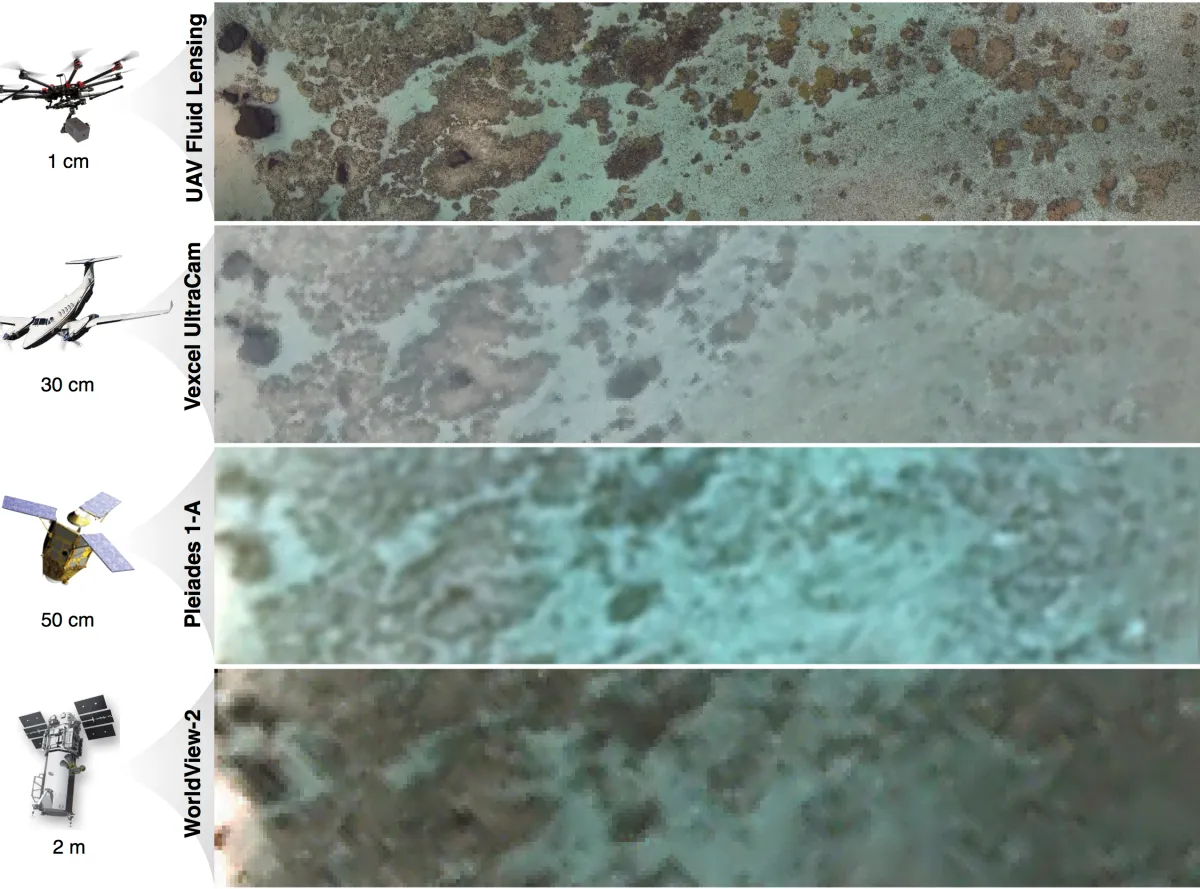
Authors: Alan Li, Ved Chirayath Laboratory for Advanced Sensing, NASA Ames Research Center. Recently, there has been increased interest in monitoring the effects of climate change upon the world’s marine ecosystems, particularly coral reefs. These delicate ecosystems are especially threatened due to their sensitivity to ocean warming and acidification, leading to unprecedented levels of coral bleaching and die-off in recent years. However, current global aquatic remote sensing datasets are unable to quantify changes in marine ecosystems at spatial and temporal scales relevant to their growth. We at LAS are directly addressing this challenge through recent UAV imaging campaigns directed towards coral reefs, utilizing a new algorithm known as Fluid Lensing capable of removing optical distortions caused by the fluid surface to produce cm-scale resolution imagery of benthic cover. Taking these data products, we were able to generate highly detailed and accurate maps of coral cover and morphology breakdown utilizing MAP estimation, with error rates of 5% and 8% , respectively.

NASA (.gov)·
Science

Experts Identified The Gravest Health Threats Facing Humanity – Two Have 'Extinction Potential' - ScienceAlert

If there's one thing the COVID-19 pandemic taught us, it's that the world isn't always as prepared for a crisis as we might think. Now, in a sweeping international assessment published in The Lancet, a team of dozens of scientific experts has cataloged the dangers of 17 major global health threats faced by humanity this century – and preparedness is a key theme of their findings. While it's a sobering review, the key message is that the dangers of global catastrophes can be mitigated and managed, but only if society takes action now. "The striking finding is not only the scale of these threats, but that humanity still has the agency to act," says physician and health economist Christopher JL Murray from the University of Washington, the co-chair of The Lancet Commission on 21st Century Global Threats to Health. "Across all 17 catastrophic threats, the decisions made by leaders today will shape the health and well-being of the next generation. "In their study, the researchers used modeling to estimate how much death and disability could potentially be avoided for each threat between 2025 and 2100, measured in disability-adjusted life-years (DALYs).

ScienceAlert·
Science

Scientists pinpoint key hotspot driving tau propagation in dementia - News-Medical

Diseases such as Alzheimer's and frontotemporal dementia are considered neurodegenerative tauopathies, in which tau proteins in the brain misfold and lead to cognitive decline. Until now, it has been unclear how misfolded tau recruits other seemingly healthy tau and causes it to misfold and clump. A new study led by Northwestern University researchers, in collaboration with researchers with the University of California, Santa Barbara, found that tau vulnerable to misfolding carries a single dominant hotspot. That site binds the matching site on a neighboring tau, or on a tau at the end of an existing fibril, and the incoming tau then misfolds to match. The hotspot is hydrated by water that is wrapping over and protecting a hydrophobic site, and releasing that water is what pulls the two together. This finding could help scientists diagnose tauopathies, block misfolded tau from converting other normal tau to misfolded shapes, and design therapeutic solutions in the future.

News-Medical·
Science

Free cheers for science as researchers raise the bar - The University of Western Australia

Pull up a stool and savour a cool glass of science as some of The University of Western Australia’s brightest minds hit CBD bars for a series of free public talks on Tuesday 27 October. The annual Raising the Bar event transforms five Perth bars into spaces for big ideas and great chats as 10 top researchers share how they are tackling global, national and regional issues to make the world a better place.

The University of Western Australia·
Science

WHO invites organizations worldwide to join the Together for Science and Health movement - World Health Organization (WHO)

The World Health Organization (WHO) today announced a global call inviting organizations and institutions to affiliate with Together for Science and Health, a new movement to strengthen the connection between science, health and society and build trust in evidence-informed decision-making. Science has changed the course of human health. Antibiotics have made once-deadly bacterial infections treatable. Advances in vaccination, nutrition, sanitation and medical care have helped millions more children survive and thrive. Antiretroviral treatment has enabled millions of people living with HIV to live longer and healthier lives. Cancer screening, prevention and new treatments are helping to prevent cancers, detect them earlier and improve and extend lives. These achievements show what is possible when scientific discoveries are translated into action. But progress cannot be taken for granted. People need to be able to trust scientific evidence, understand what it means for their lives, help shape the questions science seeks to answer and have a fair opportunity to benefit from its advances. No single institution can achieve this alone.

World Health Organization (WHO)·
Science

Scientists just gave the powerhouses of our cells a high-tech upgrade - Science Daily

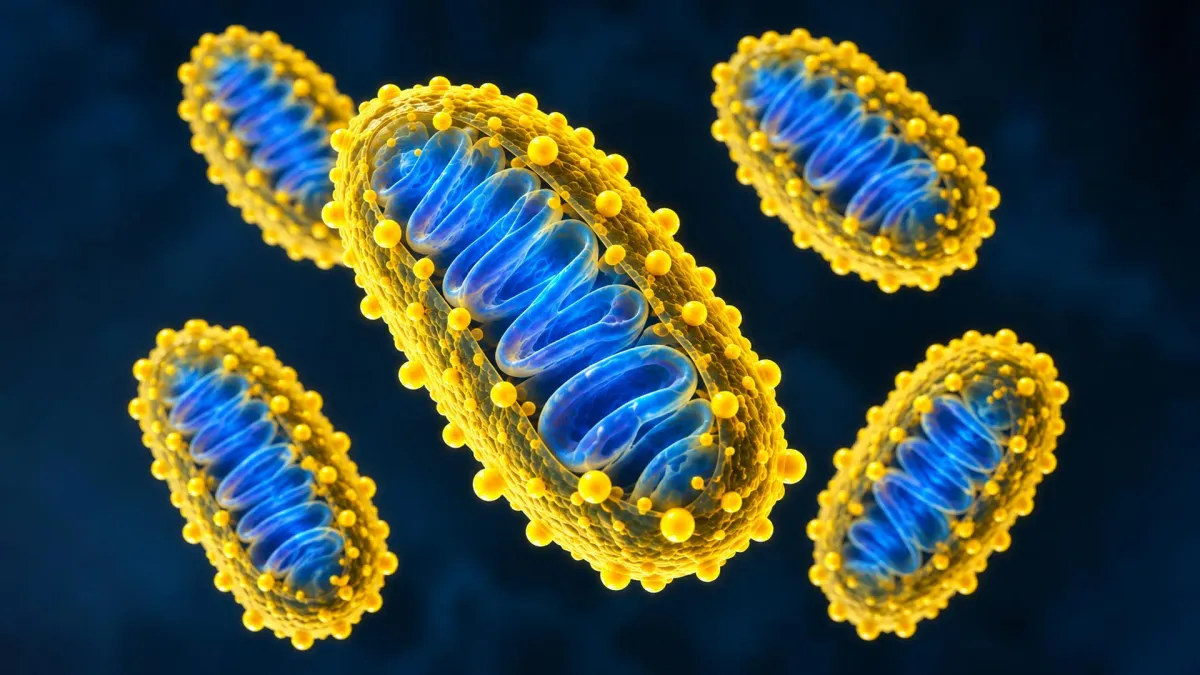
Scientists have developed a way to coat mitochondria, the tiny structures that produce energy inside our cells, with advanced materials without interfering with their function. The achievement could eventually help researchers develop new approaches to treating diseases caused by malfunctioning mitochondria. The research was conducted by IRCCS Fondazione Istituto Neurologico Carlo Besta (FINCB) and Politecnico di Milano through their joint BraiNs laboratory, established in 2023. The collaboration combines the mitochondrial biology expertise of Dr. Valeria Tiranti (FINCB), a researcher in the Medical Genetics and Neurogenetics Complex Unit (SC) and head of the Fondazione Mariani Centre for Paediatric Mitochondrial Diseases, with the chemistry and materials engineering expertise of Professor Pierangelo Metrangolo (Politecnico di Milano).

Science Daily·
Science

Science popularization center in Heilongjiang offers interactive experience of Siberian tigers, Amur leopards - Global Times

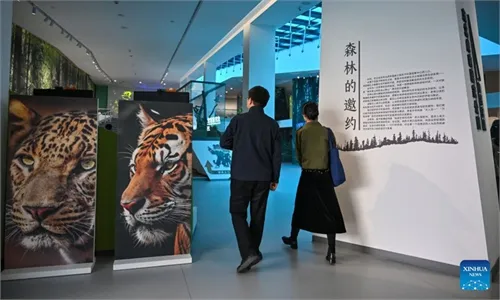
People visit the Northeast China Tiger and Leopard National Park Dongning Science Popularization and Education Center in Dongning, northeast China's Heilongjiang Province, Oct. 12, 2026. Located in Dongning City, Heilongjiang Province, the Dongning Science Popularization and Education Center of the Northeast China Tiger and Leopard National Park focuses on the sensory experience of tigers and leopards. Combining diverse interactive experience scenes, it allows visitors to gain an immersive understanding of Siberian tigers and Amur leopards. (Photo: Xinhua) People visit the Northeast China Tiger and Leopard National Park Dongning Science Popularization and Education Center in Dongning, northeast China's Heilongjiang Province, Oct. 12, 2026. Located in Dongning City, Heilongjiang Province, the Dongning Science Popularization and Education Center of the Northeast China Tiger and Leopard National Park focuses on the sensory experience of tigers and leopards. Combining diverse interactive experience scenes, it allows visitors to gain an immersive understanding of Siberian tigers and Amur leopards. (Photo: Xinhua)

Global Times·