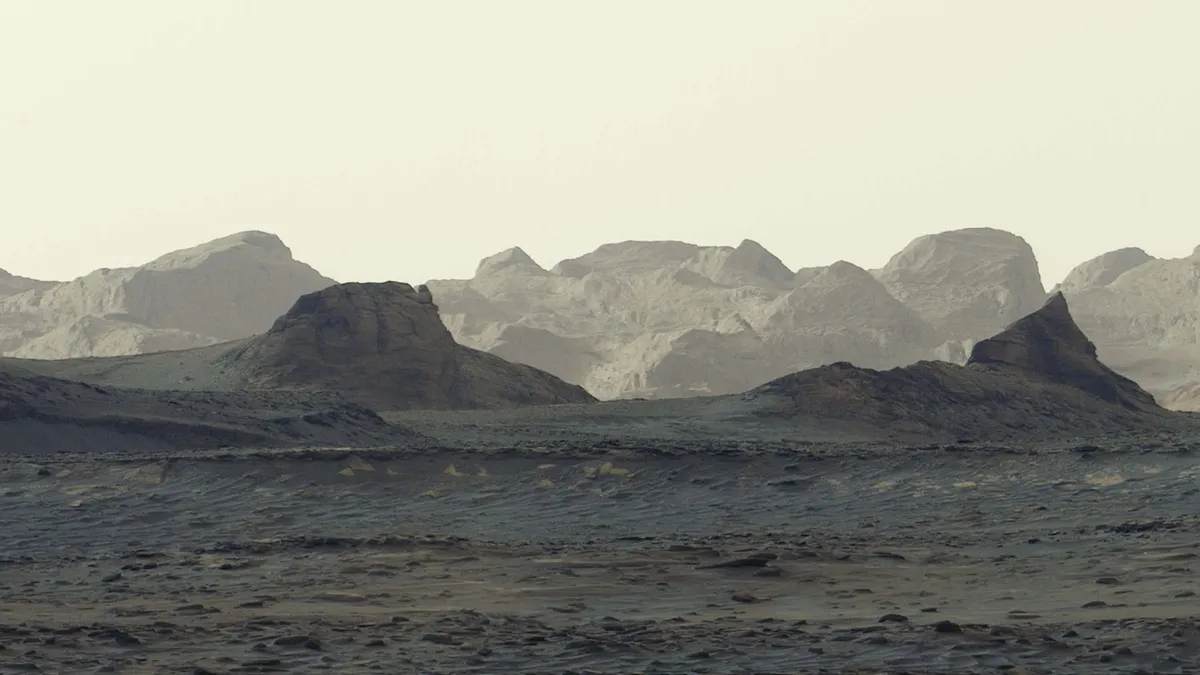
NASA's rover beamed back a series of shots depicting wind-carved crags on Mars illuminated by golden dawn light, which the space agency made into a panorama
Last Thursday, I attended the 12th Annual International Wrongful Conviction Day hosted by Innocence Canada at Osgoode Hall at the University of Toronto.
I can’t always make it, but I like to attend these events as I get to see and hear firsthand how exonerees have suffered and survived, and how their experiences have affected their loved ones. It’s always a moving experience. (I received the Tracey Tyler Award for my reporting on Glen Assoun at the 2018 event.)
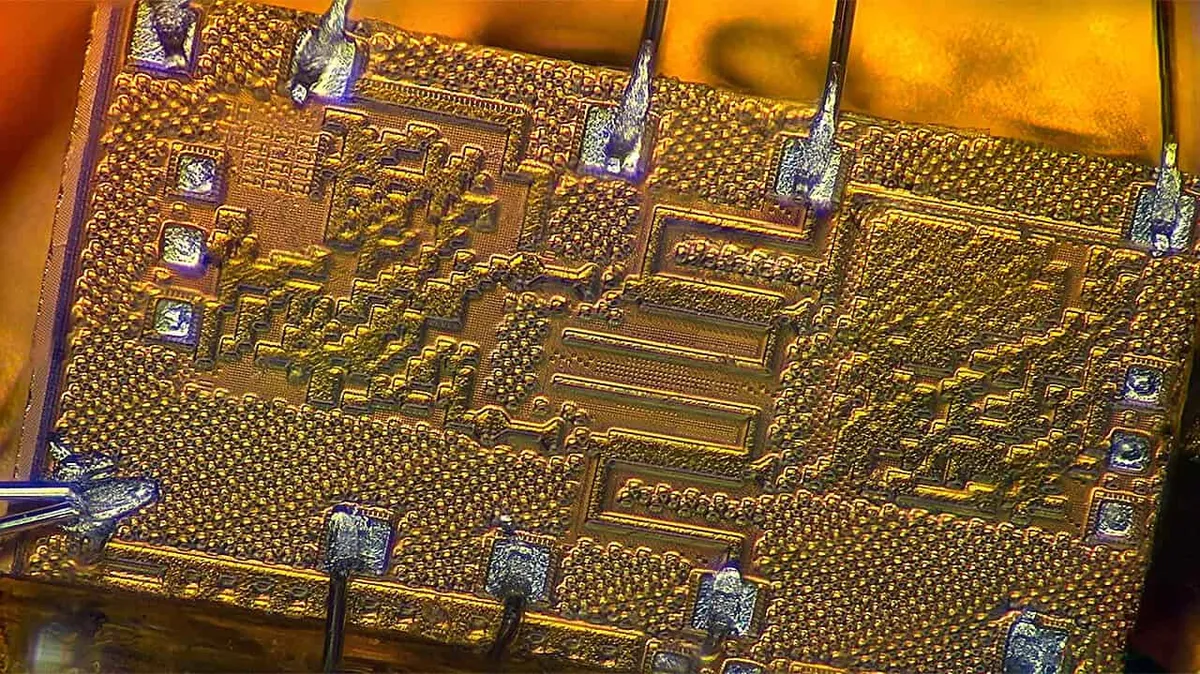
The AI design features unusual and efficient, circuitry patterns. Credit: Emir Ali Karahan, Princeton University.
Engineers usually design wireless chips using familiar patterns and templates, refining them through simulations and painstaking testing. But a series of studies is proposing a different approach: a deep-learning-enabled design process for creating circuits and components.
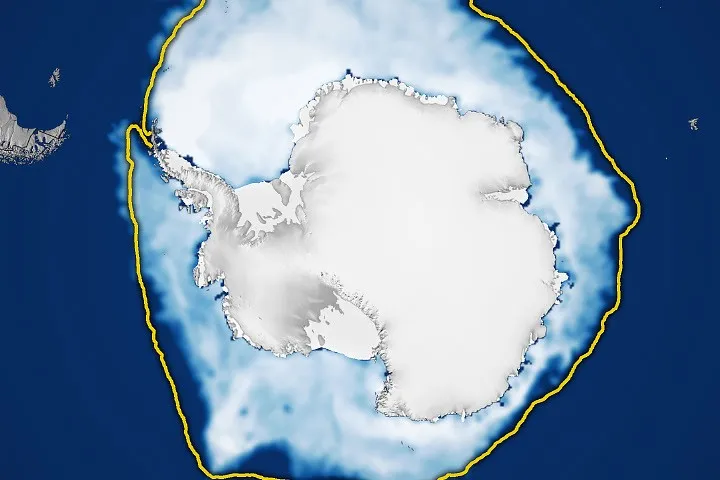
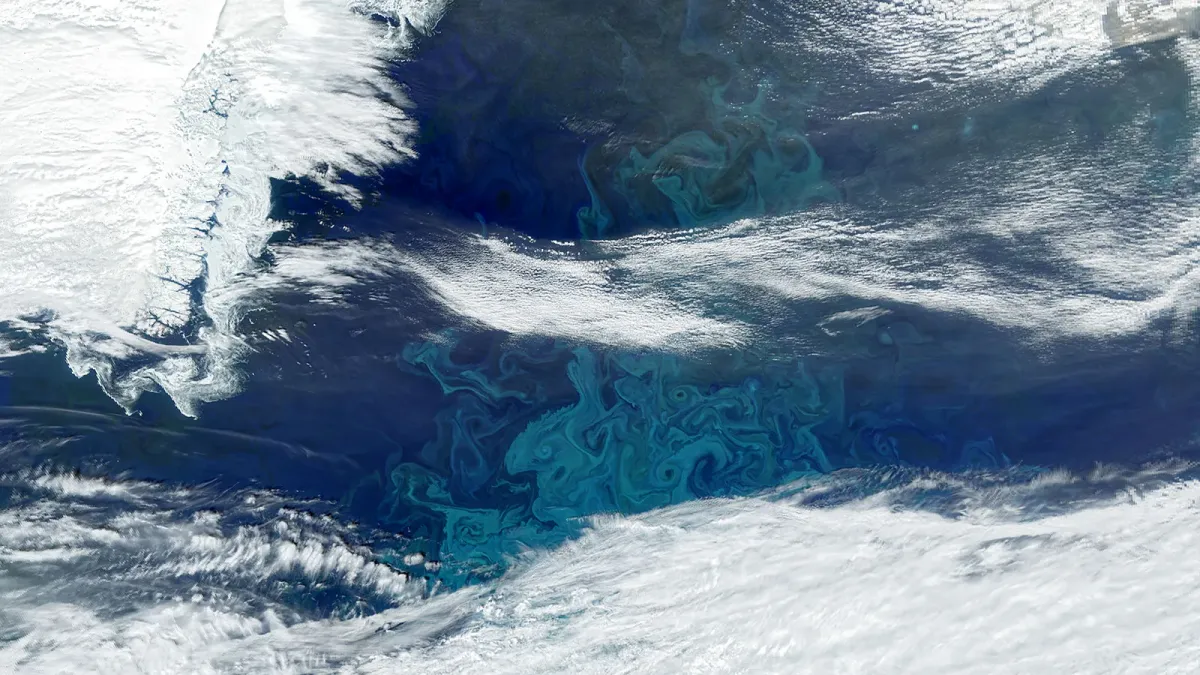
This story is an update to the Antarctic sea ice feature in our World of Change series tracking long-term change on Earth's surface through satellite imagery.
Unlike the Arctic—an ocean basin surrounded by land—the Antarctic is a large continent surrounded by an ocean. Because of this geography, sea ice has more room to expand during the winter. However, that ice also stretches into warmer latitudes, leading to more melting in the summer. Antarctic sea ice usually peaks in September, around the end of the Southern Hemisphere’s winter, and retreats to a minimum in February.
Rome – Indigenous and non-Indigenous experts and representatives from all seven sociocultural regions of the world gathered today for the opening ceremony of the fourth annual meeting of the Global-Hub on Indigenous Peoples’ Food and Knowledge Systems. Hosted in two Sámi nomadic tents, or Lavvus, an Indigenous Peoples’ territory has been created at the heart of the Food and Agriculture Organization of the United Nations (FAO) headquarters. Taking place during the week of World Food Day and the World Food Forum, the Global-Hub meeting will bring together Indigenous Peoples’ knowledge holders, leaders, experts and researchers to exchange experiences, co-create knowledge and strengthen the role of Indigenous Peoples’ knowledge and science in shaping responses to today’s global challenges. Opening the ceremony, FAO Director-General QU Dongyu acknowledged the shared history and ancestral connections that link all people to Indigenous Peoples. Reflecting on the role of the Global-Hub, he described its participants as humble intermediaries, helping to pass on knowledge from one generation to the next.
More than 250 attendees from over 75 life science organizations, including GSK, will gather in Philadelphia October 12–14 for ENGAGE 2026, eClinical Solutions’ eighth annual client and partner conference. The number matters less than what it signals: clinical data management is generating enough operational complexity that a vendor conference now draws that breadth of biopharma participation, with the explicit agenda of turning data intelligence into decisions rather than reports.
The timing is pointed. The FDA released its updated electronic systems and records guidance in October 2024, setting clearer expectations for how sponsors and investigators handle electronic data capture across clinical investigations. Teams still working out how to comply while keeping enrollment on track have real operational questions, and a focused gathering of this kind is where implementation specifics actually get worked through, not just announced.
The 2027 American Society for Biochemistry and Molecular Biology Annual Meeting will take place April 3–6 in Boston. ASBMB Today spoke with co-chairs Amy Palmer of the University of Colorado Boulder and W. Mike Henne of the University of Texas Southwestern Medical Center about the scientific program, deep dive sessions and what researchers in the molecular life sciences can expect.
What cutting-edge science can attendees look forward to at ASBMB 2027?
American Society for Biochemistry and Molecular Biology·
Ari Schulman: Tony, I’ve spent the past year trying to make sense of what the Trump administration’s agenda is for science.
It’s a tough job, because you hear two very different stories coming from the admin. One story is about restoring gold-standard science, restoring trust in science, solving the replication crisis, fueling cutting-edge research, and doing more to free scientists from needless grant paperwork and support them early in their careers. It’s a lofty story, practically a love letter to science. One of the narrators of this story writes in City Journal that “we should be working toward tapping the energy at the heart of the sun and hanging our achievements in the balance of the stars.”
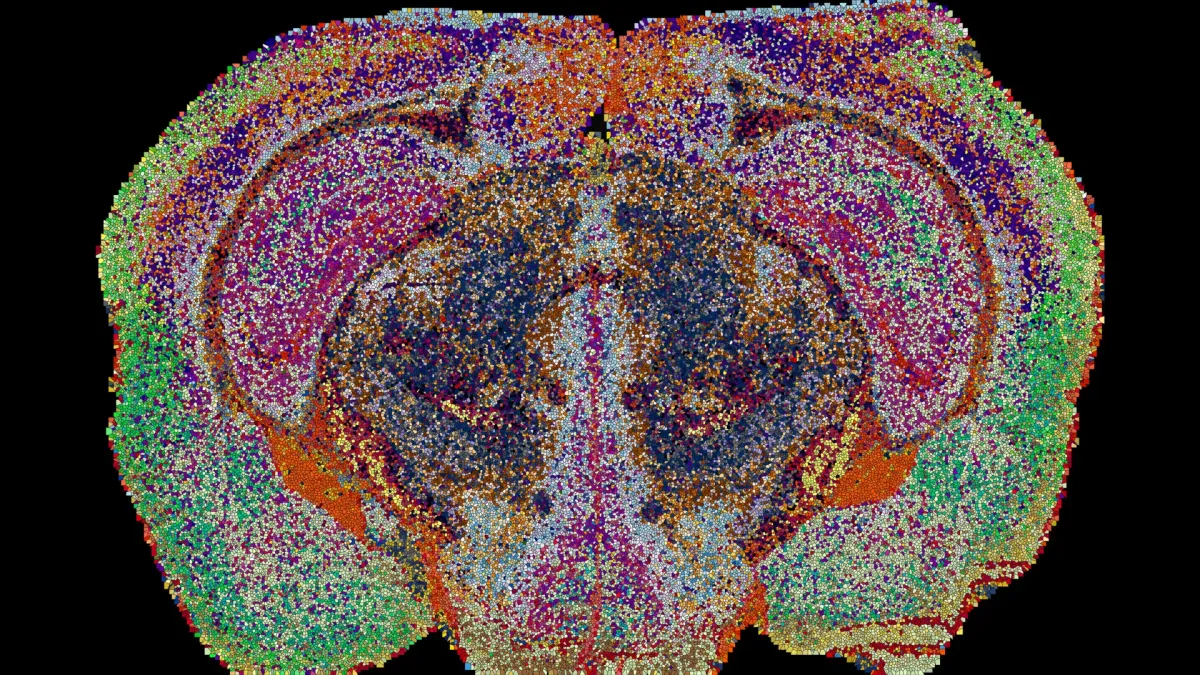
Scientists have spent decades studying the brain's cells, connections, genes, and proteins. Yet another essential part of brain biology has received far less attention: lipids. These fatty molecules make up the membranes surrounding neurons, contribute to the myelin insulation that protects nerve fibers, and play important roles in communication between brain cells.
Although lipids are fundamental to brain function, scientists have struggled to map where different types are located. Conventional imaging techniques cannot easily distinguish individual lipid molecules, leaving a major gap in our understanding of the brain's chemical organization.
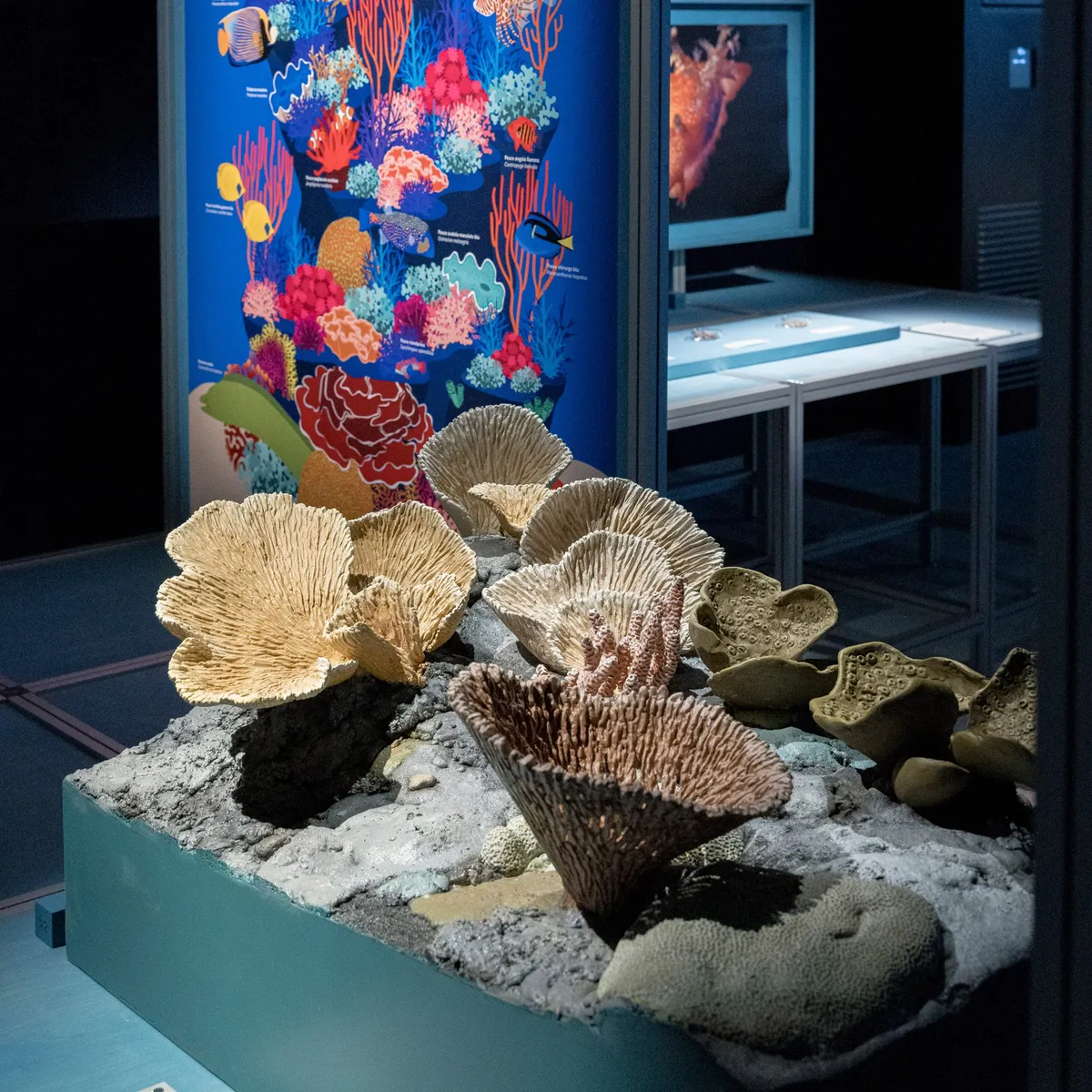
Italian studio Formafantasma has created the displays for Ocean & Climate Village, an exhibition at Prada Group's Luna Rossa base in Cagliari, Sardinia, that uses "design as an educational tool" to show the importance of the ocean.
The show, which fashion conglomerate Prada Group describes as a "travelling science exhibition", was developed by UNESCO's Intergovernmental Oceanographic Commission (IOC). It is supported by Prada Group as part of its educational Sea Beyond project.
The Ikhana unmanned airborne system (UAS) western statesAmbrosia, V., et al. (2013), The Ikhana unmanned airborne system (UAS) western states, Geocarto International Journal, 26, 85–101, doi:10.1080/10106049.2010.539302. Trends and Variability of AVHRR-Derived NPP in IndiaBala, G., et al. (2013), Trends and Variability of AVHRR-Derived NPP in India, Remote Sensing, 5, 810–829, doi:10.3390/rs5020810. Variability of AVHRR-Derived NPP in IndiaBala, G., et al. (2013), Variability of AVHRR-Derived NPP in India, Remote Sensing, 5(2), 810–829, doi:10.3390/rs5020810. Improved cirrus simulations in a general circulation model using CARMA sectional microphysicsBardeen, C., et al. (2013), Improved cirrus simulations in a general circulation model using CARMA sectional microphysics, Journal of Geophysical Research: Atmospheres, 118(20), 11,679–11,697, doi:10.1002/2013JD020193. State transformations and ice nucleation in amorphous (semi-)solid organic aerosolBaustian, K., et al. (2013), State transformations and ice nucleation in amorphous (semi-)solid organic aerosol, Atmospheric Chemistry and Physics, 13, 5615–5628, doi:10.5194/acp-13-5615-2013.
Spectral absorption of solar radiation by aerosols during ACE-AsiaBergstrom, R. W., et al. (2004), Spectral absorption of solar radiation by aerosols during ACE-Asia, J. Geophys. Res., 109, D19S15, doi:10.1029/2003JD004467. Convective lofting links Indian Ocean air pollution to paradoxical South Atlantic ozone maximaChatfield, R., et al. (2004), Convective lofting links Indian Ocean air pollution to paradoxical South Atlantic ozone maxima, Geophys. Res. Lett., 31, L06103, doi:10.1029/2003GL018866. Size distributions and mixtures of dust and black carbon aerosol in Asian outflow: Physiochemistry and optical propertiesClarke, A., et al. (2004), Size distributions and mixtures of dust and black carbon aerosol in Asian outflow: Physiochemistry and optical properties, J. Geophys. Res., 109, D15S09, doi:10.1029/2003JD004378. Stratospheric Aerosol Sampling: Effect of a Blunt-Body Housing on Inlet Sampling CharacteristicsDhaniyala, S., et al. (2004), Stratospheric Aerosol Sampling: Effect of a Blunt-Body Housing on Inlet Sampling Characteristics, Aerosol Sci. Tech., 38, 1080–1090, doi:10.1080/02786829088581. Microphysical modeling of the 1999–2000 Arctic winter: 3.
The Ikhana unmanned airborne system (UAS) western statesAmbrosia, V., et al. (2013), The Ikhana unmanned airborne system (UAS) western states, Geocarto International Journal, 26, 85-101, doi:10.1080/10106049.2010.539302. Trends and Variability of AVHRR-Derived NPP in IndiaBala, G., et al. (2013), Trends and Variability of AVHRR-Derived NPP in India, Remote Sensing, 5, 810-829, doi:10.3390/rs5020810. Variability of AVHRR-Derived NPP in India. Remote SensingBala, G., et al. (2013), Variability of AVHRR-Derived NPP in India. Remote Sensing, 5 (2), 810-829, doi:10.3390/rs5020810. Improved cirrus simulations in a general circulation model using CARMA sectional microphysicsBardeen, C., et al. (2013), Improved cirrus simulations in a general circulation model using CARMA sectional microphysics., O. Toon.. Improved cirrus simulations in a general circulation model using CARMA sectional microphysics. J. Geophys, Res.: Atmospheres, 118 (20), 118, 11,679-11,697, doi:10.1002/2013JD020193. State transformations and ice nucleation in amorphous (semi-)solid organic aerosolBaustian, K., et al. (2013), State transformations and ice nucleation in amorphous (semi-)solid organic aerosol, Atmos. Chem.
Selection of Appropriate Class UAS/Sensors to Support Fire Monitoring, Real-Life Experiences in the USAmbrosia, V. G., and T. Zajkowski (2014), Selection of Appropriate Class UAS/Sensors to Support Fire Monitoring, Real-Life Experiences in the US, Handbook of Unmanned Aerial Vehicles, edited by K. P. Valavanis and G. J. Vachtsevanos. New York: Springer Verlag; ISBN 978-9048197064. Analyzing dynamical curculations in the tropical tropopause layer through empirical predictions of cirrus cloud distributionsBergman, J., E. Jensen, L. Pfister, L. Pan, and S. Honomichi (2014), Analyzing dynamical curculations in the tropical tropopause layer through empirical predictions of cirrus cloud distributions, J. Geophys. Res., 119, 2831-2845, doi:10.1002/2013JD021295. True Emission Factors for Western Forest Fires: Better Estimation and Usage, Long Beach, CaliforniaChatfield, R. B., and R. F. Esswein (2014), True Emission Factors for Western Forest Fires: Better Estimation and Usage, Long Beach, California, Proceedings of A&WMA’s 107th Annual Conference, 107, 27-31. Multi-decadal aerosol variations from 1980 to 2009: a perspective from observations and a global modelChin, M., T. Diehl, Q. Tan, J
JTRF2014, the JPL Kalman filter and smoother realization of the International Terrestrial Reference SystemAbbondanza, C., et al. (2017), JTRF2014, the JPL Kalman filter and smoother realization of the International Terrestrial Reference System, J. Geophys. Res., 122, 8474-8510, doi:10.1002/2017JB014360.Seasonal and spatial changes in trace gases over megacities from AURA TES observations: two case studiesCady-Pereira, K. E., V. H. Payne, J. L. Neu, K. W. Bowman, K. Miyazaki, E. A. Marais, S. Kulawik, Z. A. Tzompa-Sosa, and J. D. Hegarty (2017), Seasonal and spatial changes in trace gases over megacities from AURA TES observations: two case studies, Atmos. Chem. Phys., 17, 9379-9398,. Fluid Lensing & Applications to Remote Sensing of Aquatic DevelopmentsChirayath, V. (2017), Fluid Lensing & Applications to Remote Sensing of Aquatic Developments, 00Z, doi:20170004512. Creating Aerosol Types from CHemistry (CATCH): A New Algorithm to Extend the Link Between Remote Sensing and ModelsDawson, K. W., et al. (2017), Creating Aerosol Types from CHemistry (CATCH): A New Algorithm to Extend the Link Between Remote Sensing and Models, J. Geophys. Res., 122, doi:10.1002/2017JD026913.
Three-Corner Hat for the assessment of the uncertainty of non linear residuals of space-geodetic time series in the context of terrestrial reference frame analysisAbbondanza, C., Z. Altamimi, T. M. Chin, R. S. Gross, M. B. Heflin, J. W. Parker, and X. Wu (2015), Three-Corner Hat for the assessment of the uncertainty of non linear residuals of space-geodetic time series in the context of terrestrial reference frame analysis, J. Geodesy, 89, 313-329, doi:10.1007/s00190-014-0777-x. Liquid water cloud properties during the Polarimeter Definition Experiment (PODEX)Alexandrov, M. D., B. Cairns, A. P. Wasilewski, A. S. Ackerman, M. J. McGill, J. E. Yorks, D. L. Hlavka, S. E. Platnick, G. T. Arnold, B. van Diedenhoven, J. Chowdhary, M. Ottaviani, and K. D. Knobelspiesse (2015), Liquid water cloud properties during the Polarimeter Definition Experiment (PODEX), Remote Sensing of Environment, 169, 20-36, doi:10.1016/j.rse.2015.07.029. Synchronous in-field application of life-detection techniques in planetary analog missionsAmador, E., M. Cable, N. Chaudry, T. Cullen, D. Gentry, M. Jacobsen, G. Murukesan, E. Schwieterman, A. Stevens, A. Stockton, C. Yin, D. Cullen, and W.
Horizontal Wind Fluctuations in the Stratosphere During Large Scale CyclogenesisChan, R., et al. (1991), Horizontal Wind Fluctuations in the Stratosphere During Large Scale Cyclogenesis, J. Geophys. Res., 96, 17,425–17. The Effect of Various Surface Features on Polarized and Specular ReflectanceGrant, L., C. S. T. Daughtry, and V. Vanderbilt (1991), The Effect of Various Surface Features on Polarized and Specular Reflectance, Physiology Plantarum. The Physics of Polar Stratospheric Clouds and the Ozone HoleHamill, P., and O. B. Toon (1991), The Physics of Polar Stratospheric Clouds and the Ozone Hole, Physics Today, 14, 34–42. Remote Sensing of Earth’s Atmosphere and Surface Using a Digital Array Scanned Interferometer–A New Type of Imaging SpectrometerHammer, P. D., et al. (1991), Remote Sensing of Earth’s Atmosphere and Surface Using a Digital Array Scanned Interferometer–A New Type of Imaging Spectrometer, J. Imaging Sci. The 27–28 October 1986 FIRE Cirrus Case Study: Retrieval of Cloud Particle Sizes and Optical Depths from Comparative Analyses of Aircraft and Satellite Based Infrared MeasurementsHammer, P. D., F. Valero, and S.
Scientists have discovered a surprising ability of light that allows it to develop spinning patterns as it moves through empty space, without relying on special lenses, mirrors, or materials. The finding reveals that light possesses a hidden geometric structure that can influence its behavior in ways researchers previously thought were difficult to achieve.
The discovery comes from an international team led by researchers at the University of East Anglia (UEA) in the United Kingdom, working with scientists in South Africa. Their experiments demonstrate that carefully prepared light can be controlled through its own internal geometry, offering a new approach to manipulating how light spins and twists.