BBlogFlow

Categories

Science

9423 articles

Science

Trump’s diesel deal is causing concerns among European allies - The Christian Science Monitor

Shocking. But not surprising. That best sums up the response from Ukraine and America’s longtime allies in Europe to President Donald Trump’s announcement that he’s waiving U. S. sanctions and has arranged to buy millions of tons of diesel fuel from Russia. The “shocking” part was the suddenness, timing, and extent of Mr. Trump’s policy swerve. It came as U. S., Ukrainian, and European negotiators had been meeting to discuss a framework for ending the war, and only weeks after he signed a unanimous Senate bill endorsing tighter sanctions on Russian oil exports. It also came at a time when the Iran war had left Ukraine desperately short of the U. S.-made Patriot interceptors it needs to defend itself against Russia’s air assault. Ukraine now faces the prospect of punishing winter barrages on its electricity and other energy installations by an emboldened Russian President Vladimir Putin.

The Christian Science Monitor·
Science

Mad about Science: Oakville blobs - Sandpoint Reader

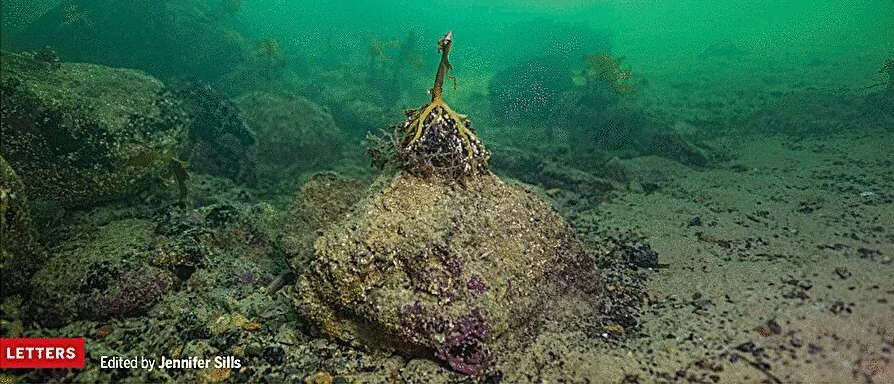
We continue through October with another instance of unsolved mysteries. This is a story with twists and turns, and the potential of a massive government cover-up happening right in the Pacific Northwest. It could also be a big fat nothing burger, but it’s a lot of fun to speculate and explore.

Sandpoint Reader·
Science

Scientists alarmed as super El Niño collides with 'strange uptick' in Galapagos iguana trafficking - Phys.org

Extreme events, such as this South Australian algal bloom that lasted from 2025 to 2026, have devastating effects on marine ecosystems. The only lizard in the world that can live and forage at sea may now be in a fight for survival. International scientists warn black-market trafficking of Galapagos marine iguanas is peaking just as the super El Niño decimates their natural food source. The 2026/27 El Niño event started warming equatorial waters in May, the same month Ecuadorian officials discovered four Galapagos iguanas being kept in a home near Guayaquil. Shortly after, they found a dozen more at a nearby airport, stuffed in handbags with their limbs bound.

Phys.org·
Science

The ProNet Framework: Combining AI and Physical Laws (IMAGE) - EurekAlert!

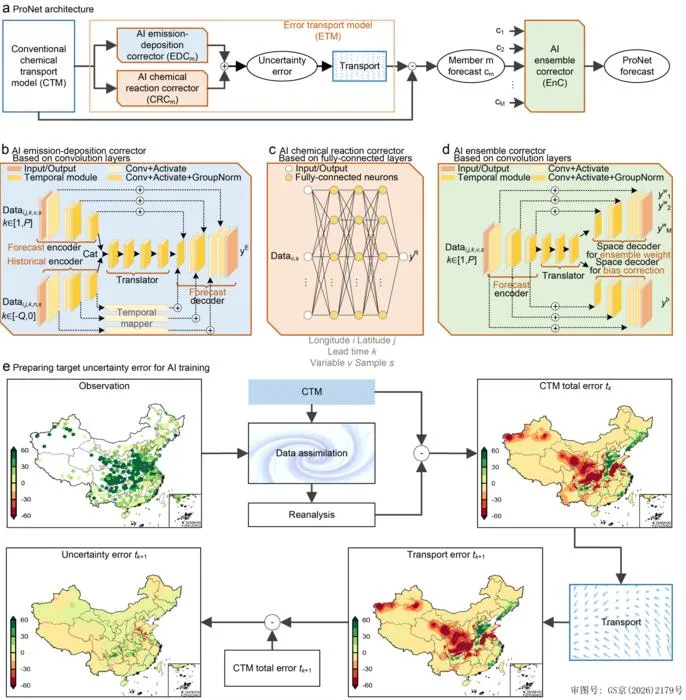
ProNet integrates AI directly into traditional atmospheric equations. This hybrid approach accurately predicts air pollution and corrects multi-day errors without violating the laws of physics, minimizing the unfeasible guesses often made by pure AI systems. Disclaimer: AAAS and EurekAlert! are not responsible for the accuracy of news releases posted to EurekAlert! by contributing institutions or for the use of any information through the EurekAlert system.

EurekAlert!·
Science

Astronomers Have Detected A Mysterious Signal Coming From Empty Space. Nobody Knows What It Is. - ScienceAlert

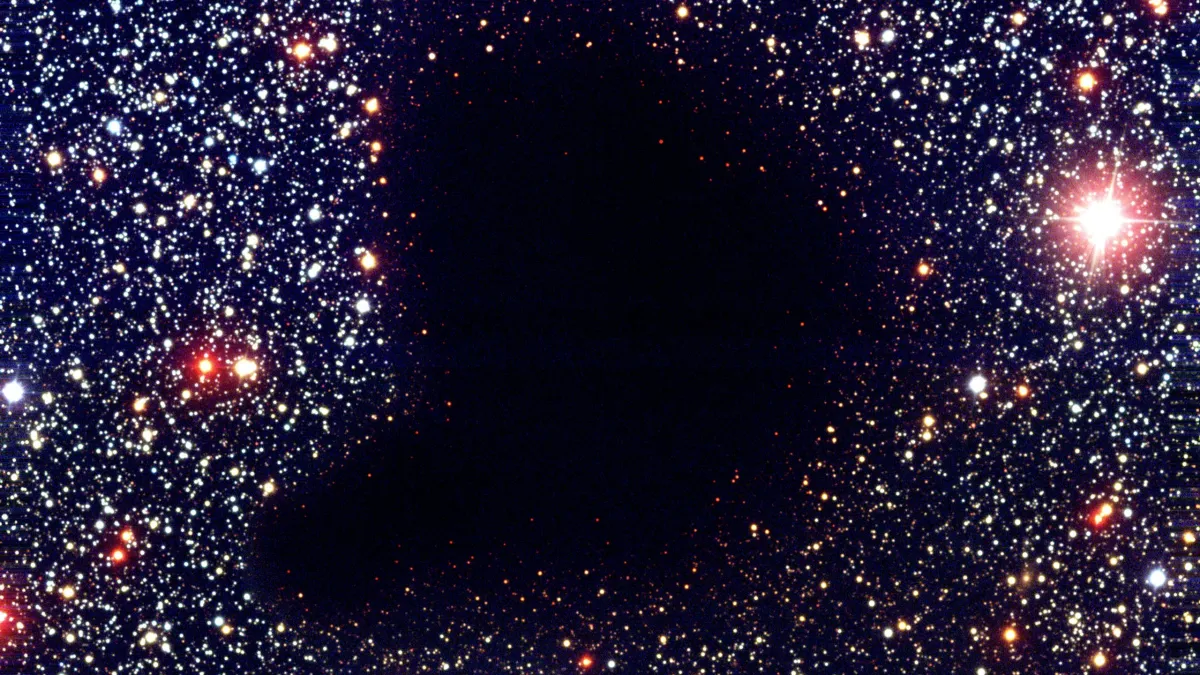
The dark nebula Barnard 68, a dense cloud of dust that blocks the light of stars behind it, creating the appearance of a hole in space. This is an illustrative image, not the location of the mysterious JWST detection. (ESO) In the southern constellation of Fornax lies a tiny patch of sky just like any other. Your eyes may have brushed past it a hundred times without a thought. Yet this otherwise unremarkable speck of the cosmos is among the most well-cataloged in the sky. The Hubble Space Telescope stared at it for more than 270 hours to obtain its famous Ultra Deep Field (HUDF) – and contained therein are nearly 10,000 galaxies extending billions of light-years into the Universe. When the James Webb Space Telescope (JWST) launched, it was only natural that its golden mirrors would turn to the same region of space, using its vastly more sensitive infrared capabilities to find what Hubble may have missed. Now, it has revealed that a patch of space astronomers have been poring over for decades may yet hold some surprises. In a tiny corner of the tiny field, JWST detected a strange signal – not once, but twice, in observations nearly three months apart. There's just one problem.

ScienceAlert·
Science

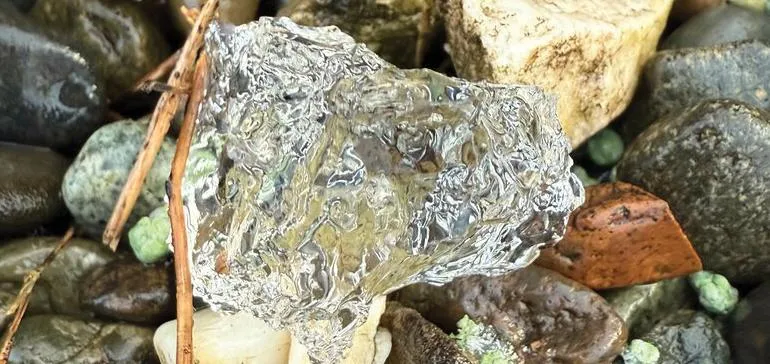
Shear strength behavior of frozen unsaturated sands under thermal loads - Nature

We’re sharing this article early to provide faster access to peer-reviewed, accepted research. It is citable and carries a permanent DOI. This version is subject to further edits and will be replaced automatically by the final Version of Record. All legal disclaimers apply. AbstractUnderstanding the mechanical behavior of frozen unsaturated sand under thermal gradients is crucial for the design and maintenance of infrastructure in permafrost regions. In this study the shear strength of Ottawa sand under varying temperatures, degrees of saturation, and loading conditions is investigated. A series of laboratory experiments were performed to measure the shear strength of Ottawa sand using direct simple shear equipment placed in a temperature controlled environmental chamber. During the experiments, soil temperatures and stress–strain curves were recorded, and they were analyzed to determine the strength behavior. Results show that shear strength increases with decreasing temperature, increasing ice content, strain rate, and normal stress.

Nature·
Science

Evaluating space-based methane detection through a one-year blind test - Nature

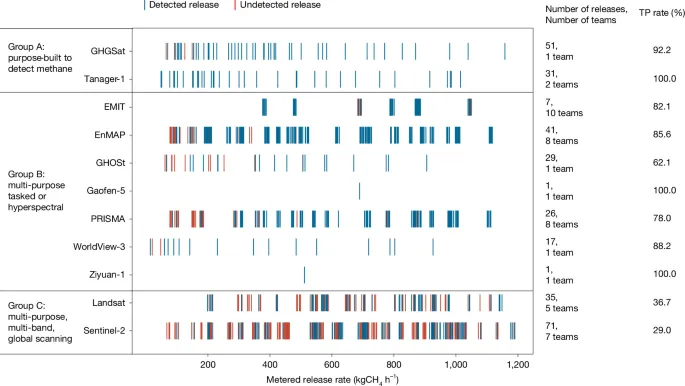
Data availabilityGround-metered flow rate files, meteorology data files and cloud cover imagery from the cooperative phase 0 and all blind experimental phases are provided at https://doi.org/10.25740/QH001QT3946 (ref. 51). Spectral imagery from participating satellites was not collected by the experiment team and will not be made available directly through this study. However, these data can be acquired through public platforms or purchased from commercial platforms for many of the tested satellites, as described in Supplementary Information section 2.1. Source data are provided with this paper. Code availability The code to reproduce the figures in this paper is available at https://doi.org/10.25740/QH001QT3946 (ref. 51).

Nature·
Science

AI ML Now: Gert Desmet on the State of Artificial Intelligence and Machine Learning in Separation Science - LCGC International

Gert Desmet explores the current role of AI/ML in separation science. AI ML Now is a new video interview series from LCGC International that will explore how artificial intelligence (AI) and machine learning (ML) are reshaping separation science, featuring interviews with researchers who are advancing this constantly-evolving field. In the first episode of the series, Gert Desmet of the Vrije Universiteit Brussels, Belgium discusses where AI and ML currently stand in separation science in a video interview conducted at the ISC 2026 conference in Prague, which took place in Prague from 6–10 September 2026. Desmet began the interview by assessing the current state of the field before addressing some of the most common misconceptions about what AI and ML can (and cannot) do for chromatographers. He then evaluated if separation science is particularly amenable or poorly suited, to these data-driven AO/ML approaches. The conversation then turned to whether research in this area could move away from “black-box” AI towards physics-informed and chemically informed machine learning, which builds established theory into the models.

LCGC International·
Science

What the puff is that? Huge ball-like mushrooms sprouting up everywhere - Yahoo News Canada

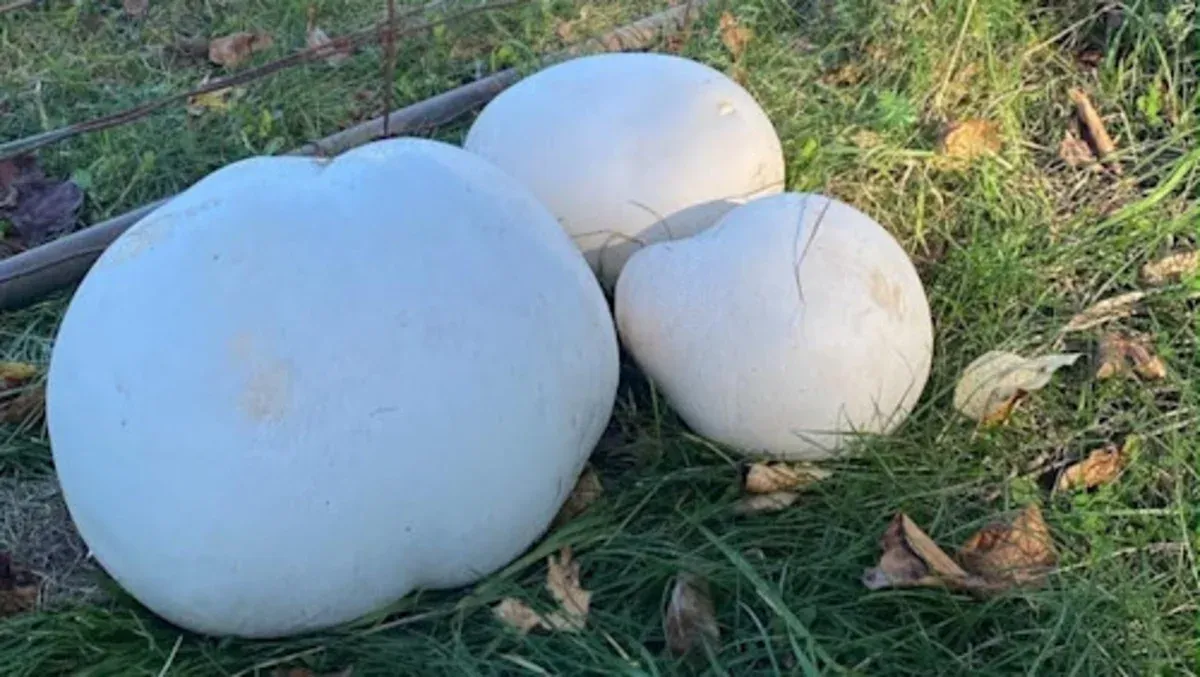
The scientific term for these huge puffballs is Calvatia Gigantea, which translates from Latin as "giant bald head"—exactly what they resemble. They appear in late summer and fall and like many mushrooms, they grow after a good rain. The huge mushrooms may grow anywhere there is organic matter, including forests, lawns and golf courses. They are common across Canada, particularly in Ontario, Quebec and British Columbia. "They do tend to show up in the fall like a lot of mushrooms actually. That's because they kind of show up when conditions of the humidity accumulates and then the nights start being a little cooler. Then this kind of combination of humidity, cool nights and then some warm days then you get these you know these mushrooms are popping out," said Richard Hamelin, a professor at the University of British Columbia in the faculty of forestry and environmental stewardship. DON'T MISS: How the weather is influecing your music tasteThese mushrooms are ones you can eat, but Hamelin cautions amateur foragers.

Yahoo News Canada·
Science

Climate Change Is a Given in Every Extreme Weather Event, Why Do We Keep Needing to Prove It? - The Equation - Union of Concerned Scientists

Why are we constantly trying to prove human influence in extreme weather events when we already know that fossil fuel-driven climate change has fundamentally altered the climate system? In a Nature Climate Action comment released two weeks ago, my colleagues and I propose a significant normative shift in climate attribution science—and ultimately, in how we talk about climate change. Rather than repeatedly asking and testing for human influence in climate or weather extremes, scientists should begin by assuming that fossil fuel-driven climate change impacts every event to some extent.

The Equation - Union of Concerned Scientists·
Science

Scientists reveal 93% of Australia's Indigenous population was lost in just 73 years - Science Daily

New research suggests that Australia's Indigenous population before European colonization was far larger than historical estimates have indicated. Scientists now estimate that approximately 2.22 million Indigenous people lived across the continent before the arrival of the First Fleet in 1788, potentially up to seven times the number suggested by some earlier calculations. The findings also reveal the devastating scale of the population decline that followed colonization. According to the researchers, an estimated 93% of Australia's Indigenous population was lost within less than 80 years of European arrival, a much greater decline than previously recognized.

Science Daily·
Science

BC's Katherine McNeill named to Massachusetts Science Educators Hall of Fame - Boston College

Katherine L. McNeill, the Bryk Faculty Fellow in the Lynch School of Education and Human Development, has been selected for the Massachusetts Science Educators Hall of Fame, which acknowledges individuals who have made extraordinary contributions to the advancement of education in the sciences and/or science teaching in the commonwealth for a minimum of 20 years. McNeill, a professor in the Teaching, Curriculum and Society Department, will be inducted at the Massachusetts Science Education Leadership Association Annual Conference on October 23.  Additionally, she will be honored that evening by the Massachusetts Science Teachers Association at its annual awards dinner.

Boston College·
Science

New chip-scale gyroscope measures rotation with unprecedented sensitivity - Phys.org

Researchers developed an integrated Brillouin laser ring gyroscope that measures rotation as slow as 37 degrees per hour. This image shows a conceptual schematic of the chip-based gyroscope. Researchers have developed a chip-scale optical ring-laser gyroscope that can measure rotation as slow as 37 degrees per hour. This record sensitivity, approaching Earth's rotation rate of 15 degrees per hour, could eventually be useful for precision navigation and orientation systems, particularly where GPS is unavailable. Gyroscopes measure how an object rotates, helping determine its orientation and movement.

Phys.org·