BBlogFlow

Categories

Science

6947 articles

Science

‘Pessimism about our institutions has fueled optimism about disruption’ - The New Atlantis

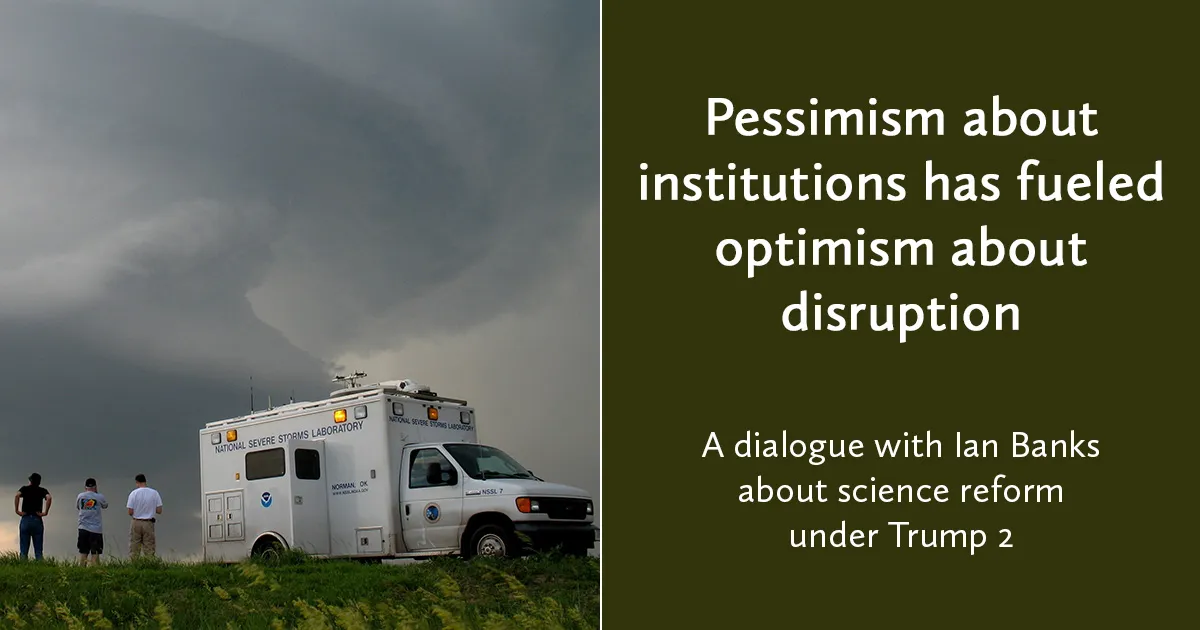
Ari Schulman: Ian, you’re part of what we might loosely call the “science reform community.” Tell us what that means and what your specific focus is in your role at the Foundation for American Innovation. Ian Banks: At FAI, I run the Science and Innovation team, which encompasses federal R&D as well as related efforts including biotechnology and biosecurity, weather and atmosphere policy, and landscape and technology issues such as de-extinction or insect elimination. In this capacity, I help develop and support the enactment of policies on federal science and related issues.

The New Atlantis·
Science

‘To me it’s stupid to just indiscriminately cut science…. But it was also pretty stupid to just keep pouring money into science’ - The New Atlantis

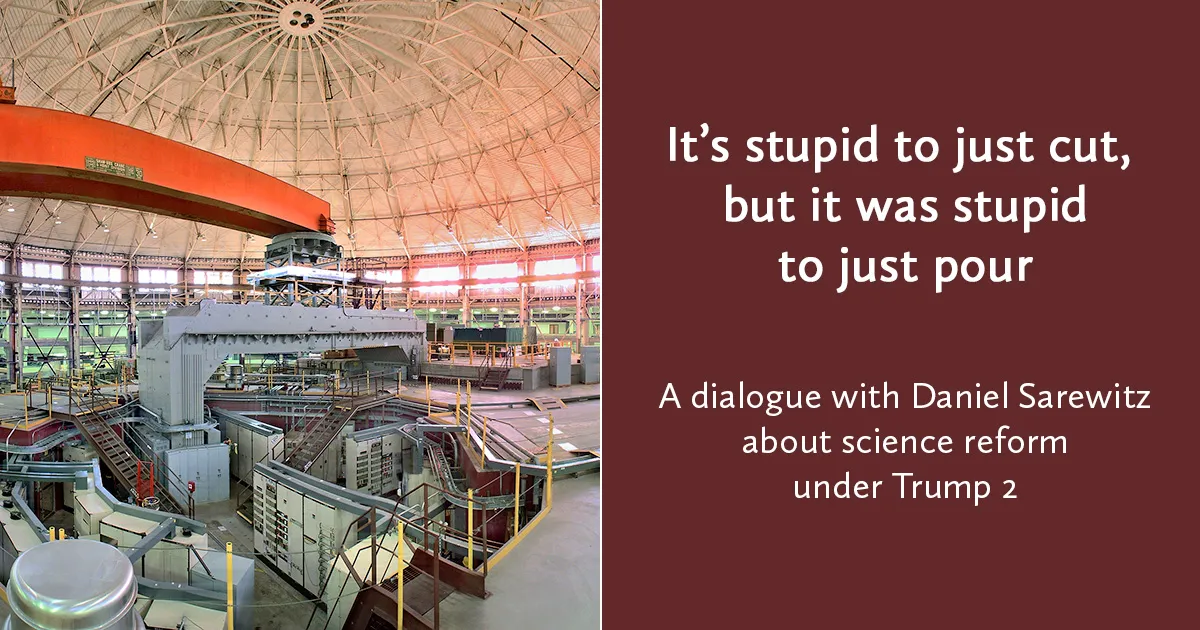
Ari Schulman: Dan, I’d like to start with a worry about science funding that goes back before the Trump era. Ten years ago, you wrote in our pages that much new science “is turning out to be contestable, unreliable, unusable, or flat-out wrong. From metastatic cancer to climate change to growth economics to dietary standards, science that is supposed to yield clarity and solutions is in many instances leading instead to contradiction, controversy, and confusion” (“Saving Science,” Spring/Summer 2016). So before the populists came along, you were already arguing that a lot of government funding of science is useless. Can you rehearse that argument for us?

The New Atlantis·
Science

Global survey sheds light on the forces shaping ice-sheet stability - EurekAlert!

image: An ice cliff near Brown Bluff on the Antarctic Peninsula. Scientists are usingobservations of ice cliffs like this one to test theories about how tall cliffs may influence glacierretreat and future sea level rise. Woods Hole, Mass. (Oct. 15, 2026) — A new study led by the Woods Hole Oceanographic Institution (WHOI) provides the most comprehensive observational analysis yet of the towering ice cliffs that fringe Earth's ice sheets, giving scientists new evidence to evaluate a long-debated process that could influence future sea level rise. Improving these projections is increasingly important as rising seas threaten coastal communities and infrastructure worldwide.

EurekAlert!·
Science

Scientists take aim at weeds with baking soda, corn grits and walnut shells - CBC

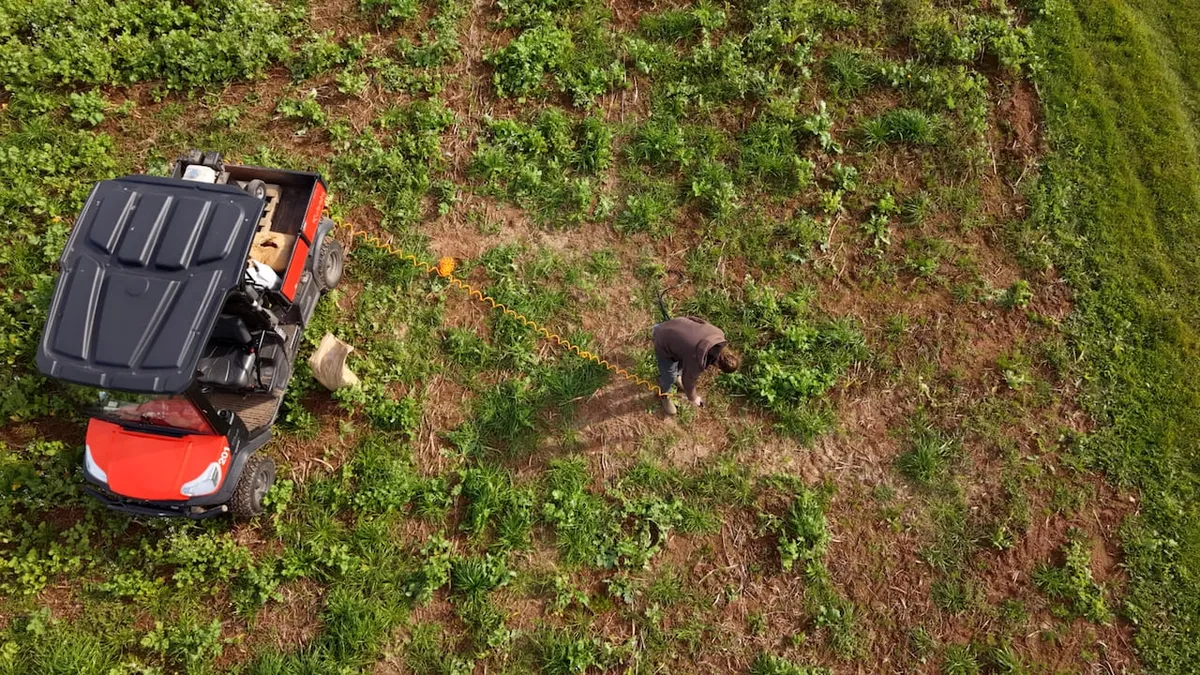
October 14NewsDuration 2:27closed captionA P. E. I. scientist has been taking aim at weeds in potato fields with some unusual substances. He has been blasting them, literally, with corn grits, baking soda and walnut shells. The project fired a few blanks, but researchers hope what they have learned will help them come up with new ways to fight weeds in the future. CBC's Nancy Russell reports.

CBC·
Science

Is AI Leading to Declining Enrollment in Computer Science? - GovTech

(TNS) — About 3,000 fewer students are taking computer science courses in Connecticut compared to the 2022-23 school year. This drop overlaps with the emergence of artificial intelligence models like OpenAI's ChatGPT that have become ubiquitous, including in the classroom. It also mirrors a nationwide trend of fewer college students majoring in computer science; numbers from spring 2026 indicated a decrease of 53,000 at four-year colleges across the United States. Data released by the Connecticut State Department of Education marked the third consecutive year of declining enrollment, with a decline of 1.5 percentage points since 2022. The decline in colleges and in Connecticut schools follows a multiyear climb in computer science enrollment for both higher education and public schools. Student numbers declined the most in courses most aligned to a traditional computer science curriculum, like coding and robotics. More interdisciplinary computer science courses saw a modest increase in enrollment in the last school year.

GovTech·
Science

How Berkeley shaped NASA’s newest space telescope - University of California, Berkeley

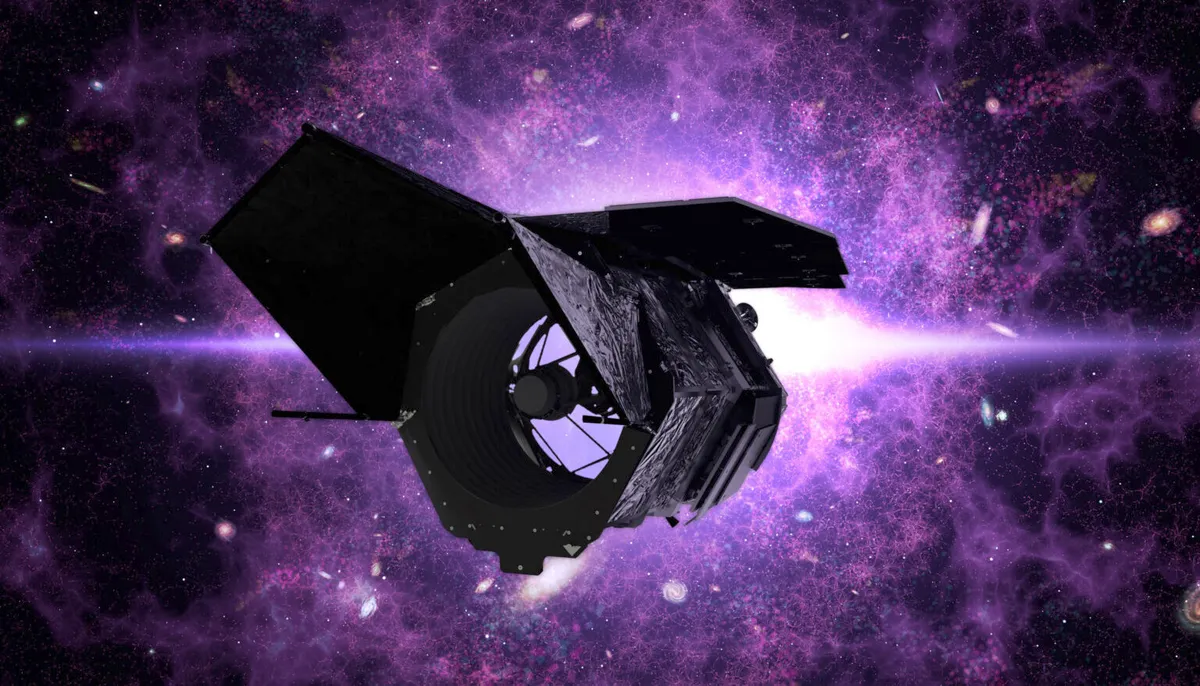
The Roman Space Telescope realizes an idea conceived at UC Berkeley and Berkeley Lab. A Berkeley astronomer now leads a large group of scientists who hope to reap the benefits. NASA’s latest triumph, the Nancy Grace Roman Space Telescope, will be unique in dumping 1.4 terabytes of data onto the internet every day with a clear message to astronomers and citizen scientists alike: Have at it! That’s where UC Berkeley’s Jessica Lu comes in. She and David Weinberg of Ohio State University have created a collaboration of scientists — nearly a thousand and growing — that has been meeting regularly for the past 18 months to determine the most efficient way to digest this daily deluge and mine it for new science.

University of California, Berkeley·
Science

Medical Science Forum at NIAF Annual Meeting Will Discuss ‘One Health’ and Research Shaping the Future of Medicine | Newswise - Newswise

Newswise — For much of its history, medicine has pursued a remarkably productive strategy: to understand the human body by dividing it into smaller and smaller parts. Organs became specialties. Diseases became molecular pathways. The complexity of human biology yielded, gradually and unevenly, to the precision of scientific investigation. The achievements have been extraordinary. But the method has also encouraged a particular way of thinking about health: that it can be understood primarily by studying the individual human being. What happens when that assumption is no longer sufficient? On October 17, the Sbarro Health Research Organization (SHRO) and the National Italian American Foundation (NIAF) will convene One Health: An Italian-American Scientific Forum in Washington, D. C., during NIAF's 51st Anniversary celebrations. The gathering will bring together Italian and American scientific leaders to consider a question that reaches beyond any single medical discipline: how should medicine understand human health when the human organism is only one component of a much larger biological system?

Newswise·
Science

How Berkeley Shaped NASA's Newest Space Telescope - Mirage News

NASA's latest triumph, the Nancy Grace Roman Space Telescope, will be unique in dumping 1.4 terabytes of data onto the internet every day with a clear message to astronomers and citizen scientists alike: Have at it! That's where UC Berkeley's Jessica Lu comes in. She and David Weinberg of Ohio State University have created a collaboration of scientists - nearly a thousand and growing - that has been meeting regularly for the past 18 months to determine the most efficient way to digest this daily deluge and mine it for new science. "Roman is very different from all of our previous space telescopes," said Lu, a Berkeley associate professor of astronomy. "The telescope takes the data, and within 48 hours it's available to the entire world. As a result, we're planning to do science differently as well. The Roman Science Collaboration is a group of 900 astronomers that are interested in working together collectively to get out the highest-impact discoveries from the survey data.

Mirage News·
Science

The surprising afterlife of an elephant in the African savannah - CBC

| CBC News | Posted: October 15, 2026 3:25 PM | Last Updated: October 15New study finds elephants continue to transform the savannah ecosystem years after deathImage | lion_cub_near_elephant_feetCaption: New study reveals elephant carcasses continue to impact the African savanna ecosystem, years after the animal passes away. (Submitted by Courtney Reed)LISTEN | How elephants affect the soil for years after they die:Media Audio | As It Happens : Open full embed in new tab Loading external pages may require significantly more data usage than loading CBC Lite story pages. Across the sun-baked plains of the African savannah, elephants are bringing new meaning to life after death. At least, that’s according to the findings of a new study by an international team of researchers who examined the sites of elephant carcasses in South Africa’s Kruger National Park. These gentle grey giants — often referred to as “ecosystem engineers” — are known to shape the savannah when they’re alive, excavating waterholes, knocking down trees and consuming copious amounts of vegetation. That much, researchers knew already.

CBC·
Science

How to Watch the Northern Lights After ‘Triple Solar Blast’ Tonight - Yahoo News Canada

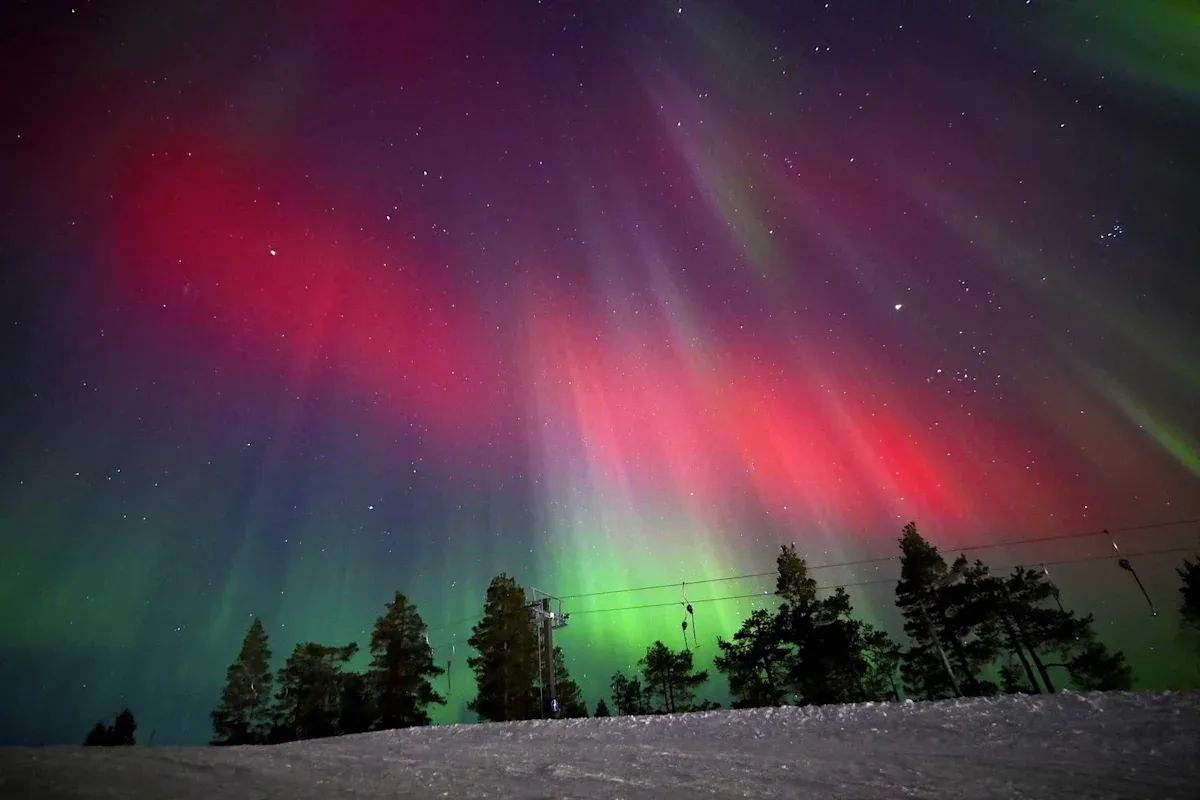
NEED TO KNOWNOAA forecasts below-storm-level activity despite coronal mass ejections reaching EarthViewers in Alaska, northern Canada and some upper Midwest states have the best chance of seeing aurorasSmartphone night mode may capture faint displays better than the naked eyeCould the northern lights be making a surprise cameo tonight? For reference, the northern lights (aurora borealis) are a result of geomagnetic storms, which occur when charged particles from the Sun collide with gases in the Earth's atmosphere, creating brilliant waves of light in the sky. Between Sunday, Oct. 11, and Tuesday, Oct. 13, a series of coronal mass ejections (CMEs) — huge clouds of charged particles and magnetic fields hurled from the Sun — set out toward Earth, and NOAA said their arrival could stir geomagnetic storm conditions late this Thursday, Oct. 15. According to the latest forecast, geomagnetic activity is expected to stay below storm levels, with the strongest three-hour Kp forecast at just 2.67. That's a quiet-to-unsettled backdrop, not the G1 or G2 storm conditions that typically push the auroras farther south.

Yahoo News Canada·
Science

Scientists discover a way to reverse coral bleaching, one of the ocean’s biggest environmental threats - The Brighter Side of News

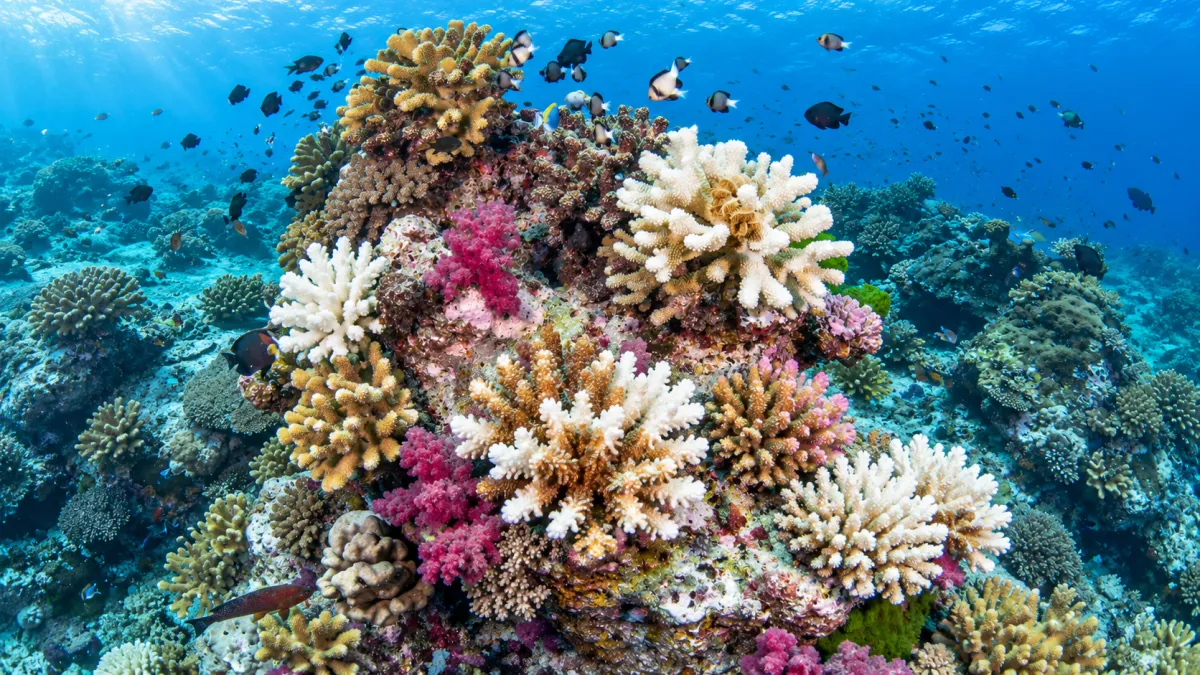
Bleached coral fragments recovered after touching healthy genetic clones in laboratory experiments involving one species and two genotypes. A week of contact supplied enough beneficial algae for fragments to continue recovering after separation. Tissue fusion appears to enable rapid transfer, but mismatched corals competed instead, and reef-scale restoration remains untested. A few millimeters separated recovery from severe decline in tanks of bleached coral. Fragments touching healthy genetic clones regained their beneficial algae and resumed growth. Fragments held nearby without contact largely succumbed to invasive algae and tissue loss. The laboratory findings, published in Science Advances, reveal a route to rapid recovery after bleaching. Stanford University researchers found that about a week of contact could provide enough algae for recovery to continue independently. The results identify a biological mechanism, rather than a method already demonstrated to restore natural reefs. Danny Collins, an oceans doctoral student at the Stanford Doerr School of Sustainability, led the study with colleagues including Steve Palumbi.

The Brighter Side of News·
Science

Scientists Uncover D. Rex: Gigantic New 'King' Fungus From China Traces Its Roots to 65 Million Years - ScienceAlert

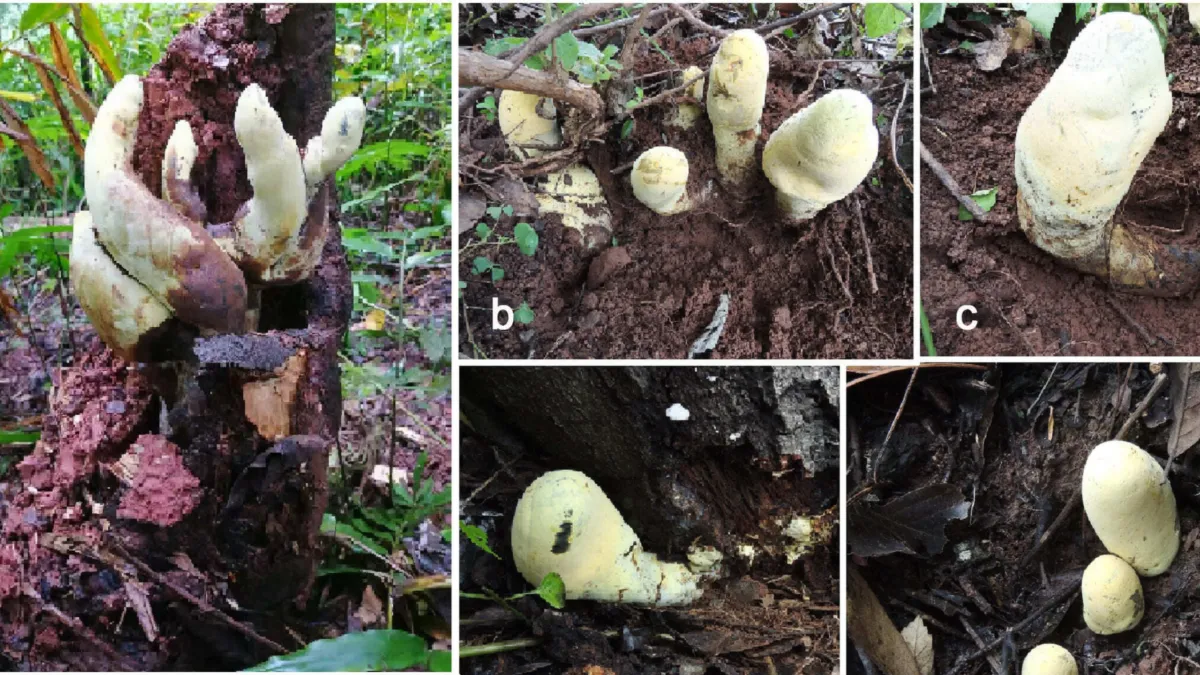
D. rex's fruiting bodies were discovered in the forests of Yunnan Province. (Song et al., Frontiers in Fungal Biology, 2026) Yunnan Province in China is famous for its mushrooms and fungi, but somehow, scientists have only just come across a new species that has rightly earned the name 'king'. Named Dianjunus rex (or D. rex for short), its gigantic, club-like fruiting bodies can grow up to 50 centimeters tall, which is about one and a half feet, or the height of a traffic cone. A researcher holds up two D. rex fruiting bodies to show off their impressive size. (Provided by Indunil Senanayake) But its impressive size is not the only exciting thing about this fungus. Its genes also contain clues about a major moment in the history of life on Earth. Mycologist Indunil Senanayake of the Chinese Academy of Sciences and her colleagues describe the new species in a paper published in Frontiers in Fungal Biology. D. rex is the only known member of its family, Dianjunaceae. "This remarkable species… provides a rare window into the evolution of extreme fungal body forms," says Senanayake.

ScienceAlert·