Left: Movie showing rhythmic communication between cells in intestinal organoids, mini-guts grown in the lab. Right: Graphs showing that the amount of the chemical signal Hes1 oscillates at different rhythms in different intestinal cells.
Hiromune Eto. Copyright: Hubrecht Institute.
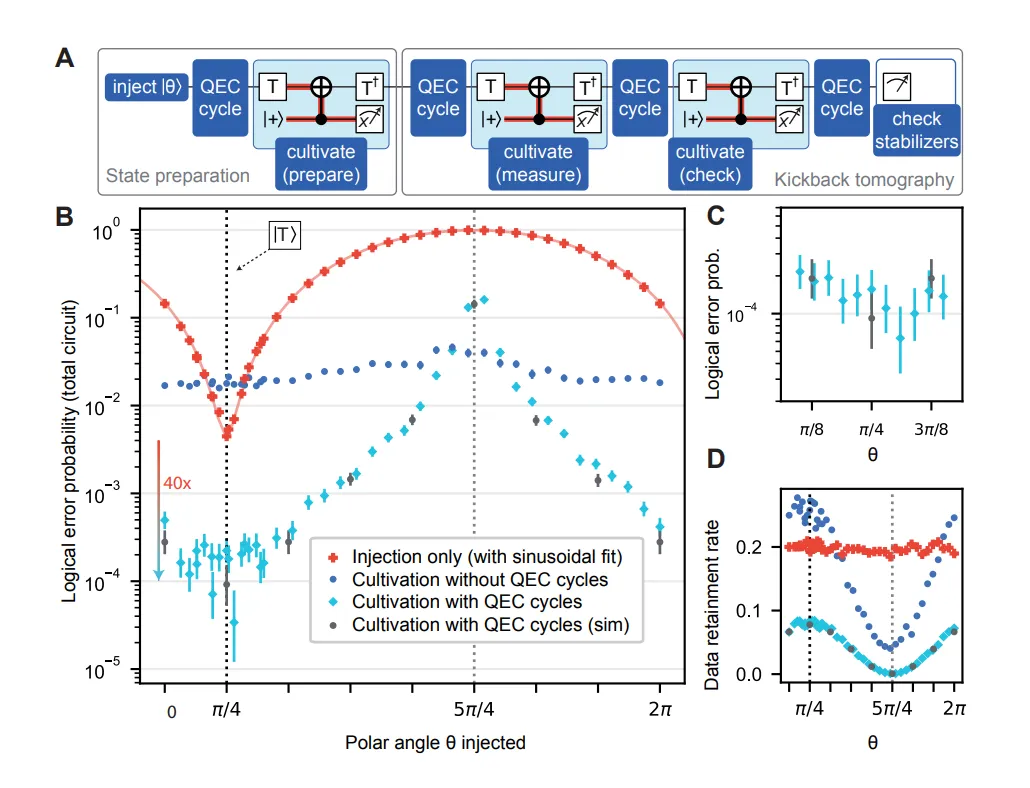
In a milestone study published in Science, experimentalists and software engineers at Google Quantum AI have demonstrated the first physical hardware implementation of magic state cultivation, achieving a 40-fold error reduction and producing T-states with a record 99.99(1)% logical fidelity (error rate ≤ 0.0001) on the company’s Willow superconducting quantum processor.
The research paper (“Magic state cultivation on a superconducting quantum processor“) addresses one of fault-tolerant quantum computing’s most severe physical bottlenecks. For over two decades, generating the non-Clifford T-states required for universal, fault-tolerant quantum computation via traditional distillation protocols was projected to consume 90% to 95% of a quantum computer’s total physical qubit footprint. Cultivation creates these states in a fraction of the spatial footprint by utilizing small, interactive color codes before grafting the purified states into surface codes.
It’s weird to think there was a time when people didn’t logically assume that inhaling cigarette smoke several times a day didn’t have some kind of native effect on the body. Some doctors even recommended smoking at one point. Now we know smoking causes a range of issues, like cancer and emphysema. But those are the broad implications that affect everyone. According to new research, cigarettes can impact our reproductive organs, but those impacts may affect men and women differently.
A study published in Frontiers in Toxicology by researchers at the Universities of Nottingham and Sheffield looked at how cigarette smoke extract affected male and female mice over twelve weeks. The team found that while tobacco smoke wrecks reproductive health across the board, regardless of whatever factors you threw in front of it, it does operate through distinct biological routes depending on sex.
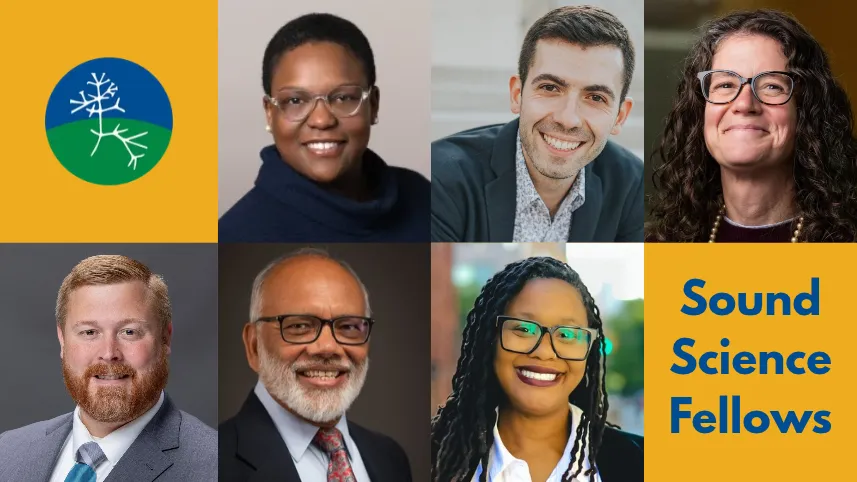
The National Center for Science Education welcomes its third cohort of Sound Science Fellows. The six new fellows join other higher education faculty and museum educators to enhance professional learning opportunities in climate science, evolution, and the nature of science for K-12 science teachers, identify and resolve common misconceptions about those topics, and conduct research to develop best practices for science education. The 2027 fellows are: Tajma Cameron, Assistant Professor of Science Education and Research Faculty at the National Center for the Elimination of Educational Disparities (NCEED) at Morgan State University; Pradeep (Max) Dass, Professor of Science Education at the University of Texas at Tyler; Jennifer Kreps Frisch, Associate Professor and Department Head of Education at the University of Minnesota Duluth; Daniel Pimentel, Assistant Professor of Science Education at the University of Alabama; Jennifer Redfearn, Senior STEM Specialist for the North Carolina Center for the Advancement of Teaching; and Ryan Summers, Associate Professor of Science Education at the University of North Dakota.
A Swan Hellenic expedition can now come with a planetary scientist, an astrophysicist or a radio specialist on board, depending on the sailing. The line has named six guest experts for its 2027 Explore Space at Sea series, with one assigned to each of six departures between March and November.
The useful choice is not simply whether to book a science cruise, but which researcher and route match your interests. As our cruise planning guide explains, settle the kind of trip you want before comparing ships and cabins; this program adds a specific intellectual interest to that decision.
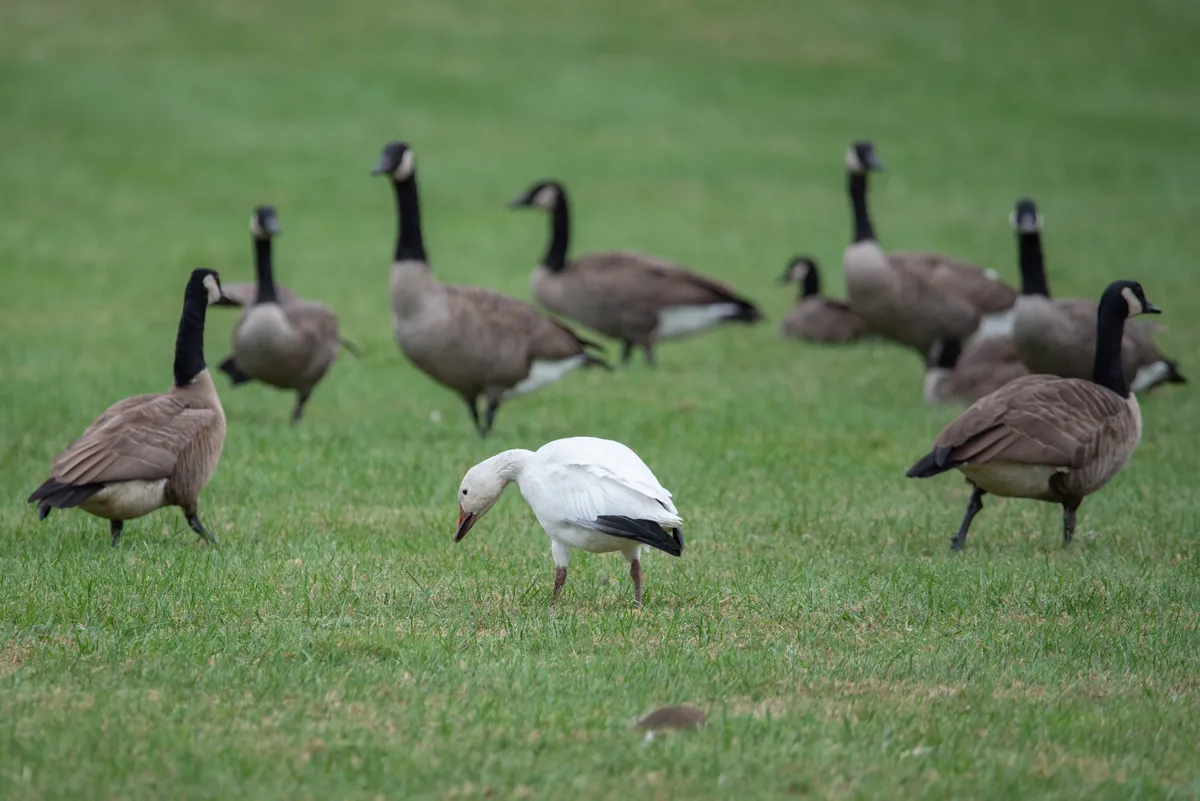
Newswise — Millions of people worldwide, likely without realizing it, are capturing rare and valuable data that can help researchers assess trends in ecosystem health. Such data, however, are hidden in an ocean of comments on free online platforms like eBird and iNaturalist used by birdwatchers and other nature enthusiasts. A new study led by the University of Michigan has shown that artificial intelligence can help researchers identify comments with pertinent data, then extract and categorize the information to build robust datasets. In this proof-of-concept study, the team found evidence of non-native plant species creeping into ecosystems along America's West Coast that might have been otherwise missed. "The potential here is really big," said Hengxing Zou, the lead author of the study who performed the work as a postdoctoral scholar in the U-M Institute for Global Change Biology. "The approach is really versatile and we have a lot of data out there basically waiting to be mined. "The work was supported in part by federal funding from the U. S. National Science Foundation and the U. S.
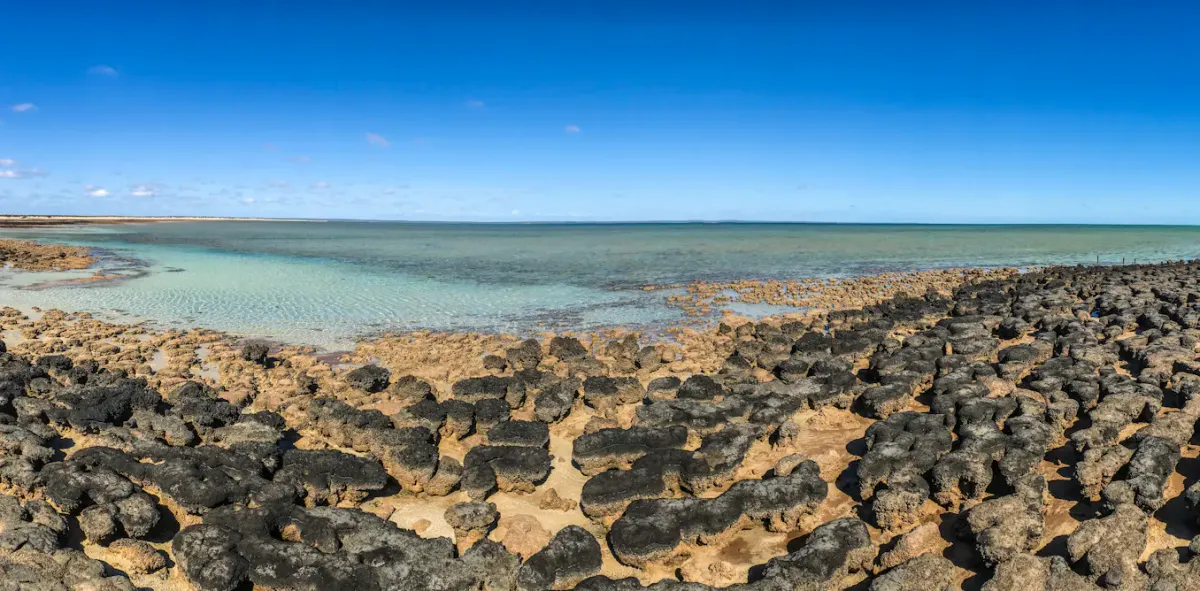
Today, our planet is teeming with life, but it has not always looked the same. Long before forests reached skyward, animals walked on land, and the rise and fall of dinosaurs, our planet was shaped by a much smaller, more unassuming form of life. And we can still find traces of it today.
These ancient fossils, the earliest visible evidence of life on Earth, are known as microbialites.
Now PlayingFOR SUBSCRIBERS24:57FOR SUBSCRIBERSUP NEXTOct. 14: How Inflation Is Shaping Battleground Races; Is Ukraine Getting Cut Off From Allies?20:50FOR SUBSCRIBERSOct. 13: Why Kimberly Guilfoyle Resigned; Food Pantries Are Struggling with ‘A Perfect Storm’ of Hunger; And Christy Turlington is Tackling Maternal Mortality25:40FOR SUBSCRIBERSOct. 12: Saudis Respond to Houthi Attacks; Florida Deals With Aftermath of Deadly Hurricane24:44FOR SUBSCRIBERSExtended Interview: Why Michelle Buteau’s next special is a “love letter to tired Americans”18:41FOR SUBSCRIBERSElection Edition: Can You Trust the Vote?37:57FOR SUBSCRIBERSOct 9: AI Hurricane Tracking; Livestreaming an Execution; Michelle Buteau ‘Survives and Thrives’ in Comedy26:59FOR SUBSCRIBERSOct 08: Fact Checking Trump’s Drug Price Claims; Could Putin Use a Stalemate To Push Beyond Ukraine?24:24FOR SUBSCRIBERSOct. 07: Why Republicans Are Breaking With Trump; And, What Are Students Protesting in France?25:03FOR SUBSCRIBERSOct. 06: Cornell Students Call On President to Resign; Inside Israel and Gaza for Oct. 7 Anniversary29:51FOR SUBSCRIBERSOct.
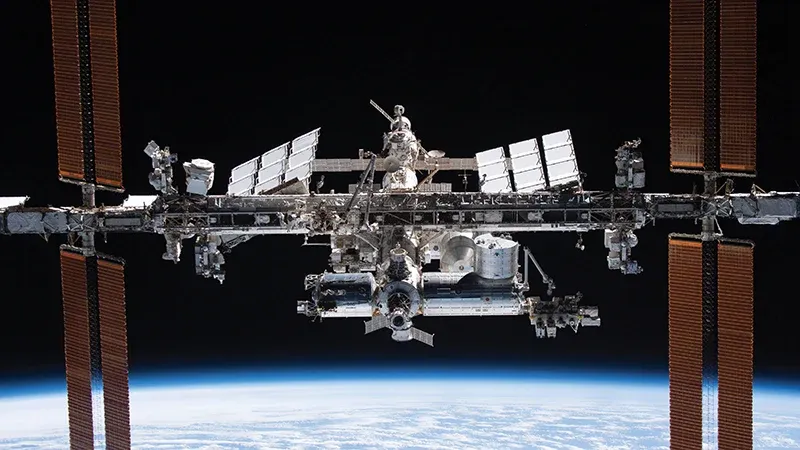
NASA is looking for commercial alternatives to host astronauts and microgravity research programs in low Earth orbit after the International Space Station is decommissioned in four years.
NASA has finally opened the door to the next era of human presence in low Earth orbit. On Oct. 9, the agency issued the final request for proposals for Phase 2 of its Commercial Low-Earth-Orbit Destinations program—a 648-page solicitation that asks private companies not only to design a space...
From SkyTram stargazing to a drone show, free concerts and fireside chats inspired by the solar system, Jasper’s 10-day celebration offers plenty of ways to get lost in space.
A marquee experience of the Jasper Dark Sky Festival is stargazing with the Royal Astronomical Society of Canada at Lake Annette. // Courtesy Tourism Jasper
Human timekeeping rests on two main clocks, and they don’t always run at the same speed. For decades, the solution was the leap second, a minor adjustment added to international time to keep atomic accuracy aligned with the Earth’s natural motion. But on Thursday, the General Conference on Weights and Measures, or the CGPM (abbreviated from its French name), voted to abolish the leap second, closing a long-standing chapter in global time sync.
Most modern clocks rely on Coordinated Universal Time, a hybrid system caught between atomic time, which flows at a near-perfectly constant rate, and astronomical time, which fluctuates as the Earth’s rotation speeds up and slows down. To bridge the gap, UTC periodically inserted a leap second to keep pace with the planet. But reconciling physical planetary shifts with precise digital systems ultimately created more technical disruptions than it solved.
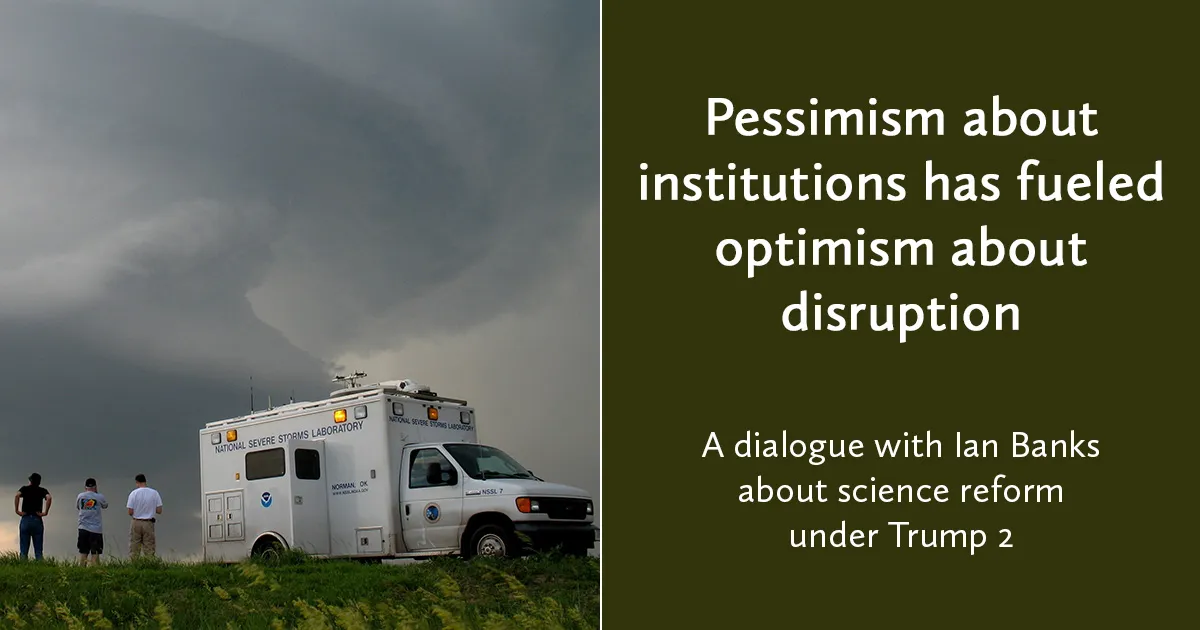
Ari Schulman: Ian, you’re part of what we might loosely call the “science reform community.” Tell us what that means and what your specific focus is in your role at the Foundation for American Innovation.
Ian Banks: At FAI, I run the Science and Innovation team, which encompasses federal R&D as well as related efforts including biotechnology and biosecurity, weather and atmosphere policy, and landscape and technology issues such as de-extinction or insect elimination. In this capacity, I help develop and support the enactment of policies on federal science and related issues.
Ari Schulman: Dan, I’d like to start with a worry about science funding that goes back before the Trump era. Ten years ago, you wrote in our pages that much new science “is turning out to be contestable, unreliable, unusable, or flat-out wrong. From metastatic cancer to climate change to growth economics to dietary standards, science that is supposed to yield clarity and solutions is in many instances leading instead to contradiction, controversy, and confusion” (“Saving Science,” Spring/Summer 2016).
So before the populists came along, you were already arguing that a lot of government funding of science is useless. Can you rehearse that argument for us?
image: An ice cliff near Brown Bluff on the Antarctic Peninsula. Scientists are usingobservations of ice cliffs like this one to test theories about how tall cliffs may influence glacierretreat and future sea level rise.
Woods Hole, Mass. (Oct. 15, 2026) — A new study led by the Woods Hole Oceanographic Institution (WHOI) provides the most comprehensive observational analysis yet of the towering ice cliffs that fringe Earth's ice sheets, giving scientists new evidence to evaluate a long-debated process that could influence future sea level rise. Improving these projections is increasingly important as rising seas threaten coastal communities and infrastructure worldwide.