How Berkeley Shaped NASA's Newest Space Telescope - Mirage News
This story deserves to be shared
Send it to someone who'd care, or post it on your networks.
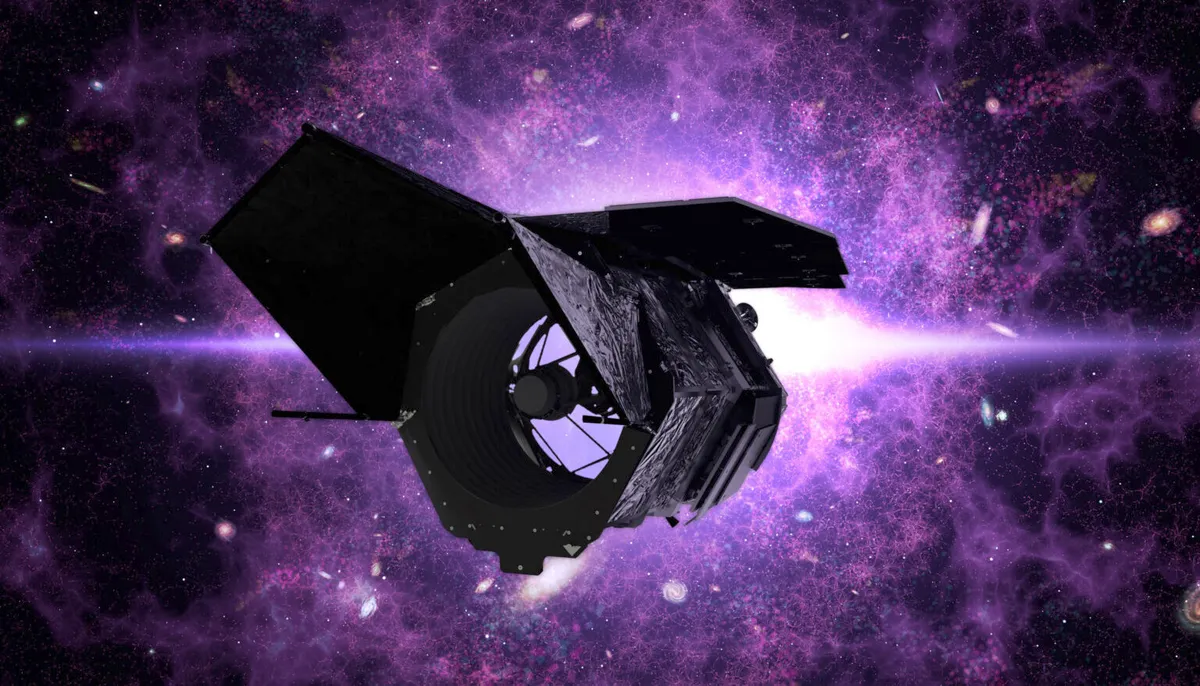
NASA's latest triumph, the Nancy Grace Roman Space Telescope, will be unique in dumping 1.4 terabytes of data onto the internet every day with a clear message to astronomers and citizen scientists alike: Have at it! That's where UC Berkeley's Jessica Lu comes in. She and David Weinberg of Ohio State University have created a collaboration of scientists - nearly a thousand and growing - that has been meeting regularly for the past 18 months to determine the most efficient way to digest this daily deluge and mine it for new science. "Roman is very different from all of our previous space telescopes," said Lu, a Berkeley associate professor of astronomy. "The telescope takes the data, and within 48 hours it's available to the entire world. As a result, we're planning to do science differently as well. The Roman Science Collaboration is a group of 900 astronomers that are interested in working together collectively to get out the highest-impact discoveries from the survey data.
This article is an excerpt. To read the full content, visit the original source. Mirage News
Related articles
How Berkeley shaped NASA’s newest space telescope - University of California, Berkeley
The Roman Space Telescope realizes an idea conceived at UC Berkeley and Berkeley Lab. A Berkeley astronomer now leads a large group of scientists who hope to reap the benefits. NASA’s latest triumph, the Nancy Grace Roman Space Telescope, will be unique in dumping 1.4 terabytes of data onto the internet every day with a clear message to astronomers and citizen scientists alike: Have at it! That’s where UC Berkeley’s Jessica Lu comes in. She and David Weinberg of Ohio State University have created a collaboration of scientists — nearly a thousand and growing — that has been meeting regularly for the past 18 months to determine the most efficient way to digest this daily deluge and mine it for new science.

Four Berkeley Lab Scientists Receive DOE Early Career Research Awards - Berkeley Lab News Center (.gov)
Four scientists from Lawrence Berkeley National Laboratory (Berkeley Lab) have received Early Career Research Program (ECRP) awards from the U. S. Department of Energy (DOE). Established in 2010 to bolster the nation’s scientific workforce, the ECRP program supports exceptional researchers at the outset of their careers, when many scientists do their most formative work. Recipients use the funding to pursue projects that have the potential to solve scientific challenges and advance the country’s STEM capabilities. To be eligible for the program, a researcher must be an untenured, tenure-track assistant or associate professor at a U. S. academic institution, or a full-time employee at a DOE national laboratory or Office of Science user facility, who is within 10 years of having earned their doctorate. Awards to an institution of higher education will be approximately $875,000 over five years, and awards to a DOE national laboratory or Office of Science user facility will be approximately $2,750,000 over five years.
Claude-shaped science - Anthropic
Becoming America: How science shaped a nation - The Past website

Simulations explore nuclear mitigation of asteroid threats - Phys.org
Lawrence Livermore National Laboratory researcher Isaiah Santistevan led the development of three-dimensional simulations exploring how a nuclear device could deflect or disrupt an asteroid threatening Earth. Credit: Blaise Douros/LLNL Lawrence Livermore National Laboratory (LLNL) researchers are developing three-dimensional simulations to examine how a nuclear device could be used to deflect or potentially disrupt an asteroid threatening Earth.
0 comments
No comments yet. Be the first to share your thoughts!