Claude-shaped science - Anthropic
This story deserves to be shared
Send it to someone who'd care, or post it on your networks.
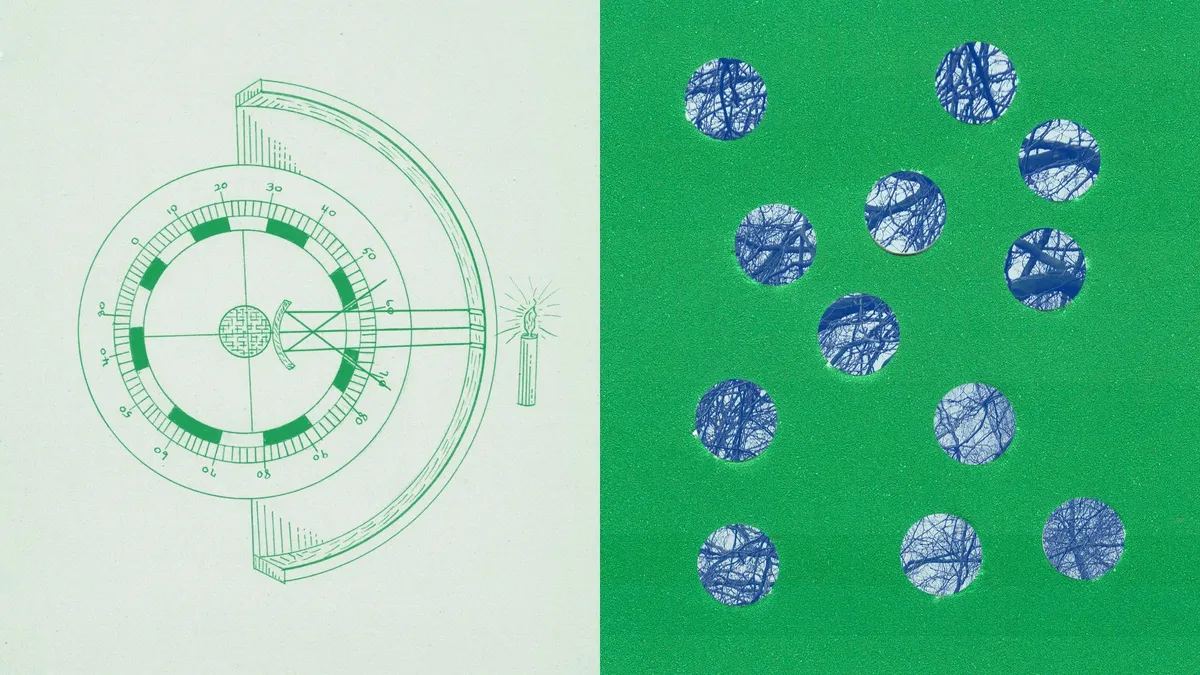
Summary: In this guest post, Prof. Matthew Schwartz returns to describe a new approach to AI-accelerated science. In Vibe Physics, Schwartz discussed similarities in capability between Claude and a physics graduate student. Here, he describes what happened when he stopped fighting Claude and allowed Claude to find “Claude-shaped” problems: ones best suited to the capabilities of the current generation of LLM tools. This led him to build BootLoops, a toolkit for exact calculations in quantitative science. Because similar calculations often turn up across very disparate areas of science, Claude found connections to ecology, population genetics, and a dozen other fields. These connections were often technically correct but scientifically unremarkable at first, so Schwartz worked with domain experts to steer BootLoops toward questions those fields care about. Below, we share more about these projects and how BootLoops came about. Agentic AI is improving rapidly. Everyone notices the models seem smarter: they know more, make fewer mistakes, and have better ideas. If you follow the trend lines, it is easy to speak confidently about the potential of AI to revolutionize science.
This article is an excerpt. To read the full content, visit the original source. Anthropic
Related articles
How Berkeley shaped NASA’s newest space telescope - University of California, Berkeley
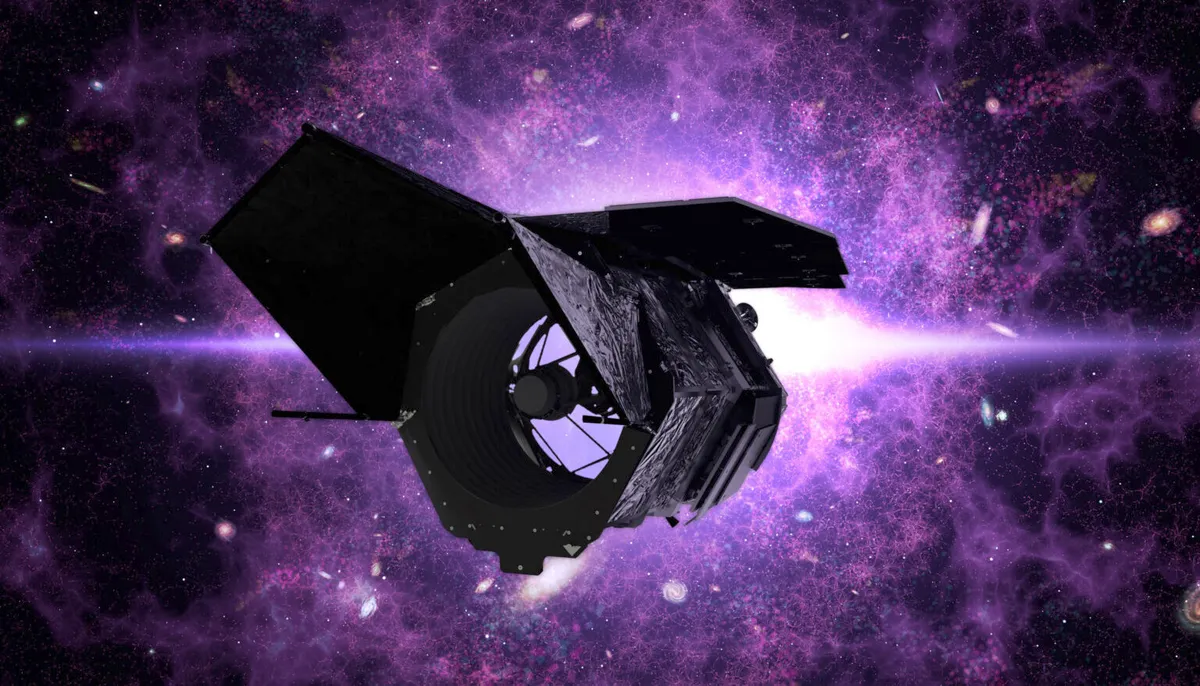
The Roman Space Telescope realizes an idea conceived at UC Berkeley and Berkeley Lab. A Berkeley astronomer now leads a large group of scientists who hope to reap the benefits. NASA’s latest triumph, the Nancy Grace Roman Space Telescope, will be unique in dumping 1.4 terabytes of data onto the internet every day with a clear message to astronomers and citizen scientists alike: Have at it! That’s where UC Berkeley’s Jessica Lu comes in. She and David Weinberg of Ohio State University have created a collaboration of scientists — nearly a thousand and growing — that has been meeting regularly for the past 18 months to determine the most efficient way to digest this daily deluge and mine it for new science.
How Berkeley Shaped NASA's Newest Space Telescope - Mirage News
NASA's latest triumph, the Nancy Grace Roman Space Telescope, will be unique in dumping 1.4 terabytes of data onto the internet every day with a clear message to astronomers and citizen scientists alike: Have at it! That's where UC Berkeley's Jessica Lu comes in. She and David Weinberg of Ohio State University have created a collaboration of scientists - nearly a thousand and growing - that has been meeting regularly for the past 18 months to determine the most efficient way to digest this daily deluge and mine it for new science. "Roman is very different from all of our previous space telescopes," said Lu, a Berkeley associate professor of astronomy. "The telescope takes the data, and within 48 hours it's available to the entire world. As a result, we're planning to do science differently as well. The Roman Science Collaboration is a group of 900 astronomers that are interested in working together collectively to get out the highest-impact discoveries from the survey data.
Becoming America: How science shaped a nation - The Past website

Simulations explore nuclear mitigation of asteroid threats - Phys.org
Lawrence Livermore National Laboratory researcher Isaiah Santistevan led the development of three-dimensional simulations exploring how a nuclear device could deflect or disrupt an asteroid threatening Earth. Credit: Blaise Douros/LLNL Lawrence Livermore National Laboratory (LLNL) researchers are developing three-dimensional simulations to examine how a nuclear device could be used to deflect or potentially disrupt an asteroid threatening Earth.

A Black Hole 12,000 Light-Years Away Is Firing a Plasma Jet Toward Earth - Gadget Review
Milky Way’s first microblazar candidate sits 12,000 light-years away, offering a rare ground-level lab for studying relativistic jetsA black hole 12,000 light-years away is firing a jet of plasma almost directly toward Earth. At that distance, no known or expected danger to Earth has been identified by the researchers or the institutions involved. What astronomers have actually found is rarer and more interesting than a threat. Researchers have identified IRAS 18293-0941 as a compelling candidate for the Milky Way’s first microblazar, a class of object that gives astrophysicists a close-up laboratory for studying some of the most violent physics in the galaxy. What Astronomers FoundThe discovery centers on a binary system whose black hole expels plasma jets at close to three-quarters the speed of light, pointed almost directly toward Earth. The system pairs a hot, massive star with a black hole that completes a full orbit roughly every 11.38 days. Material drawn from the companion star feeds the black hole, and some of that matter gets expelled outward as opposing jets traveling at approximately three-quarters the speed of light. Terminology matters here.
0 comments
No comments yet. Be the first to share your thoughts!