The surprising afterlife of an elephant in the African savannah - CBC
This story deserves to be shared
Send it to someone who'd care, or post it on your networks.
| CBC News | Posted: October 15, 2026 3:25 PM | Last Updated: October 15New study finds elephants continue to transform the savannah ecosystem years after deathImage | lion_cub_near_elephant_feetCaption: New study reveals elephant carcasses continue to impact the African savanna ecosystem, years after the animal passes away. (Submitted by Courtney Reed)LISTEN | How elephants affect the soil for years after they die:Media Audio | As It Happens : Open full embed in new tab Loading external pages may require significantly more data usage than loading CBC Lite story pages. Across the sun-baked plains of the African savannah, elephants are bringing new meaning to life after death. At least, that’s according to the findings of a new study by an international team of researchers who examined the sites of elephant carcasses in South Africa’s Kruger National Park. These gentle grey giants — often referred to as “ecosystem engineers” — are known to shape the savannah when they’re alive, excavating waterholes, knocking down trees and consuming copious amounts of vegetation. That much, researchers knew already.
This article is an excerpt. To read the full content, visit the original source. CBC
Related articles
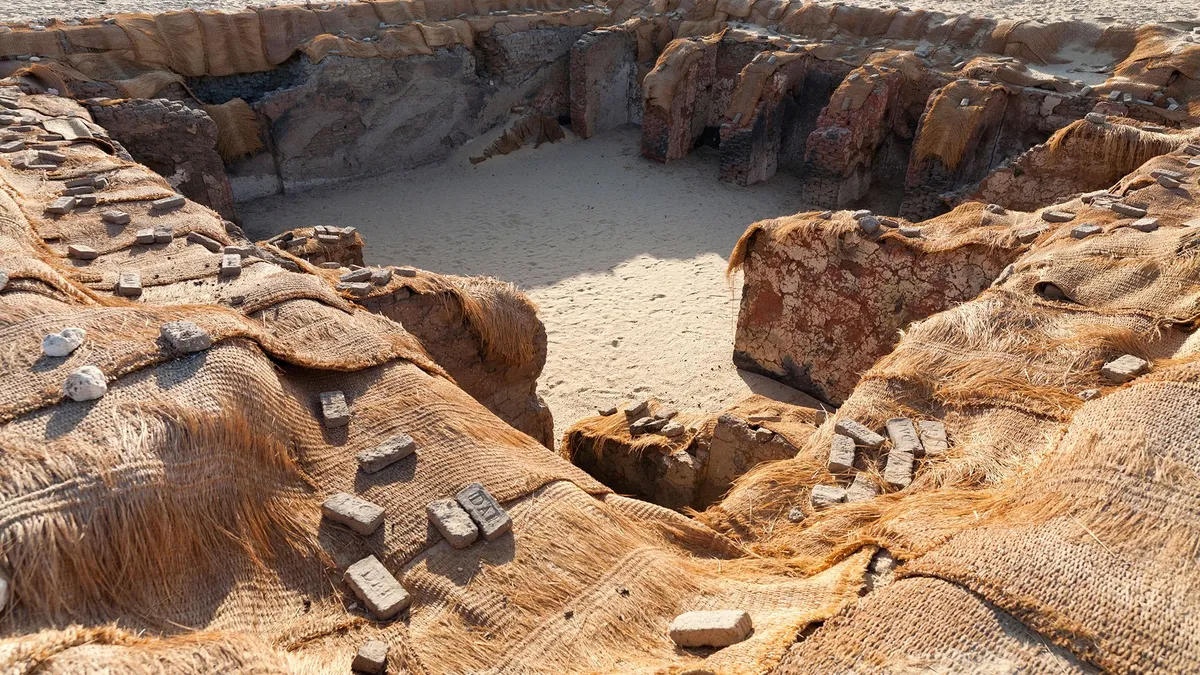
Ancient Egyptians sacrificed pharaohs' servants so they could continue to serve their king in the afterlife, new study finds - Live Science
The ancient Egyptians practiced human sacrifice around 5,000 years ago, a new study finds.
Why the wildly popular Savannah Bananas are bringing their baseball show to Toronto - Toronto Sun
Skip to Content Subscribe FAQ My Account News Toronto & GTA Ontario Canada World Crime True Crime Weird Money Technology Tech Essentials Gaming Gadgets Weather Podcasts Opinion Editorials Columnists Editorial Cartoons Letters Send Letter to the Editor Sports Hockey PWHL Toronto Maple Leafs NHL Soccer Toronto FC MLS Baseball Toronto Blue Jays MLB Basketball Toronto Raptors NBA WNBA Football Toronto Argonauts CFL NFL Golf Other Sports Olympics Curling Tennis Horse Racing Wrestling Entertainment Celebrity Movies Music Television TV Listings Life Eat Fashion & Beauty Relationships Advice Sex Files Health Healthing Diet & Fitness Homes Travel Travel International Travel USA Travel Canada Ontario Travel Travel Essentials Contests Lives Told Tails Told Shopping Savings Toronto Sun Store Driving Vehicle Research Reviews News Gear Guide Obituaries Place an Obituary Place an In Memoriam Advertising Advertising With Us Advertising Solutions Postmedia Ad Manager Sponsorship Requests Classifieds Place an Ad Business Card Directory Celebrations Working Business Ads This Week's Flyers ePaper SUNShine Girls Become a Sunshine Girl Puzzmo Diversions Comics Puzzles Horoscopes Newsletters Manage Print

Savannah Bannas coming to Canada, Mexico in 2027 - Sportsnet.ca
The Savannah Bananas are going to need passports with Banana Ball going international for the first time in 2027.

Simulations explore nuclear mitigation of asteroid threats - Phys.org
Lawrence Livermore National Laboratory researcher Isaiah Santistevan led the development of three-dimensional simulations exploring how a nuclear device could deflect or disrupt an asteroid threatening Earth. Credit: Blaise Douros/LLNL Lawrence Livermore National Laboratory (LLNL) researchers are developing three-dimensional simulations to examine how a nuclear device could be used to deflect or potentially disrupt an asteroid threatening Earth.
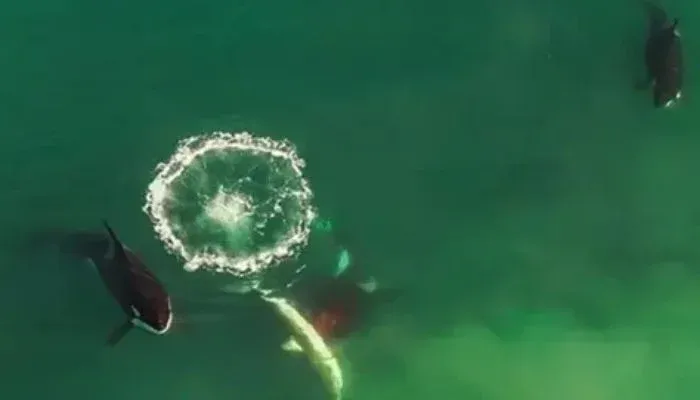
Orcas are hunting great White Sharks around the world, scientists confirm - Geo News
Orcas are hunting great White Sharks around the world, scientists confirmThe killing of great whites by orcas has been reported in the waters of South Africa, California, and Australia, and the implications that the hunting behaviour would have on the marine ecosystem have been considered. In fact, it all started back on May 3, 2017, when the body of a female great white, weighing 1,100 kilograms, washed ashore in Gansbaai, close to Cape Town, with a deep gash through which its 90-kilogram liver had been extracted. Five more corpses of great whites appeared with similar wounds in the coming months, as claimed by shark biologist Alison Towner of Rhodes University. Two adult males, called Port and Starboard, who are supposed to be brothers judging by their dorsal fins that fold differently, were identified as the most probable perpetrators. The connection was officially established in 2022 based on video footage of a drone that caught three orcas chasing and biting a 3-meter great white off Mossel Bay. The sharks quickly disappeared from Dyer Island, one of the best places in the world to witness a great white.

A Black Hole 12,000 Light-Years Away Is Firing a Plasma Jet Toward Earth - Gadget Review
Milky Way’s first microblazar candidate sits 12,000 light-years away, offering a rare ground-level lab for studying relativistic jetsA black hole 12,000 light-years away is firing a jet of plasma almost directly toward Earth. At that distance, no known or expected danger to Earth has been identified by the researchers or the institutions involved. What astronomers have actually found is rarer and more interesting than a threat. Researchers have identified IRAS 18293-0941 as a compelling candidate for the Milky Way’s first microblazar, a class of object that gives astrophysicists a close-up laboratory for studying some of the most violent physics in the galaxy. What Astronomers FoundThe discovery centers on a binary system whose black hole expels plasma jets at close to three-quarters the speed of light, pointed almost directly toward Earth. The system pairs a hot, massive star with a black hole that completes a full orbit roughly every 11.38 days. Material drawn from the companion star feeds the black hole, and some of that matter gets expelled outward as opposing jets traveling at approximately three-quarters the speed of light. Terminology matters here.
0 comments
No comments yet. Be the first to share your thoughts!