BBlogFlow

Categories

Arts & Culture

2676 articles

Arts & Culture

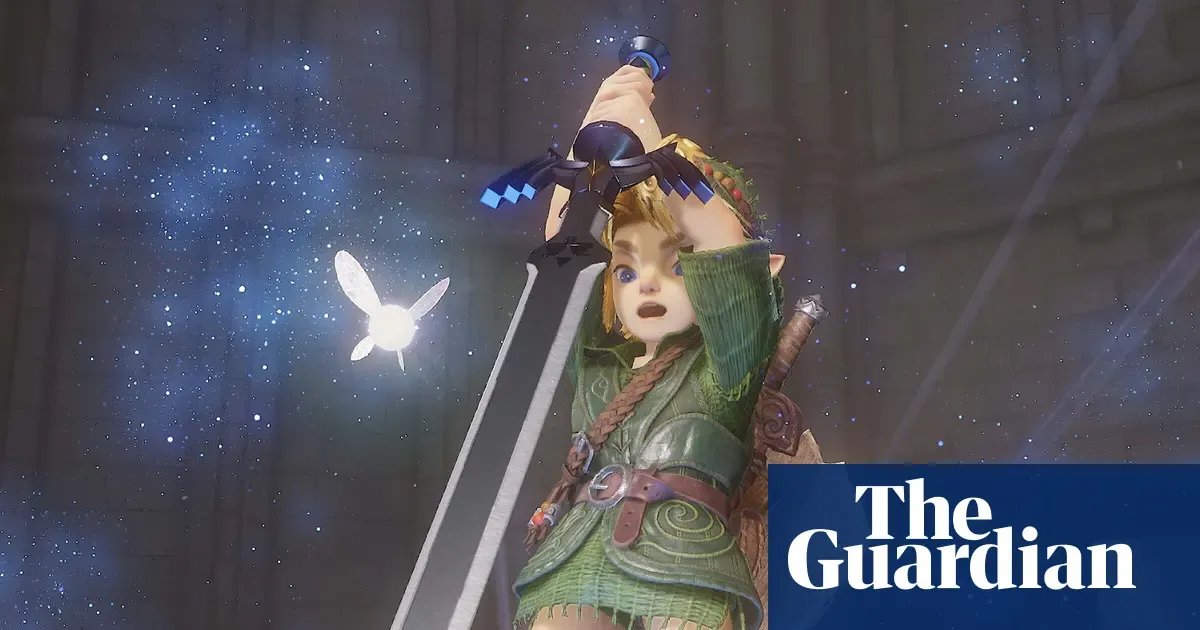
The Legend of Zelda: Ocarina of Time preview – Link faces his scariest challenge yet: the 4K era

When beloved art is revisited and revised, a familiar cry is often heard: “You’re ruining my childhood!” But with Nintendo’s Switch 2 remake of Ocarina of Time, there are also livelihoods at risk: specifically, the man running the shooting gallery in Castle Town. In the original 1998 version of the game, he’d rip off players as they funnelled rupees and fudged the then still novel analogue-stick aiming. But in 2026 we have more responsive frame rates and a motion-controlled slingshot that allows precision adjustments. His targets tumble on the first go, and with them his entire business model. Even in Hyrule, the death of the high street seems inevitable. Bad news for him but great news for Link, a child of the forest who, as in 1998, steps into a vast fantasy kingdom to vanquish a great evil, but now does so with a number of improvements. The boy can now sprint, preventing the ignominy of endless roly-polies to zip across grassy plains. He has a manual jump, free-rotating camera, a scrolling inventory bar that replaces menu screen faff and, crucially, a fatter wallet for holding all those gems he fleeces from struggling shooting gallery owners.
The Guardian Culture·
Arts & Culture

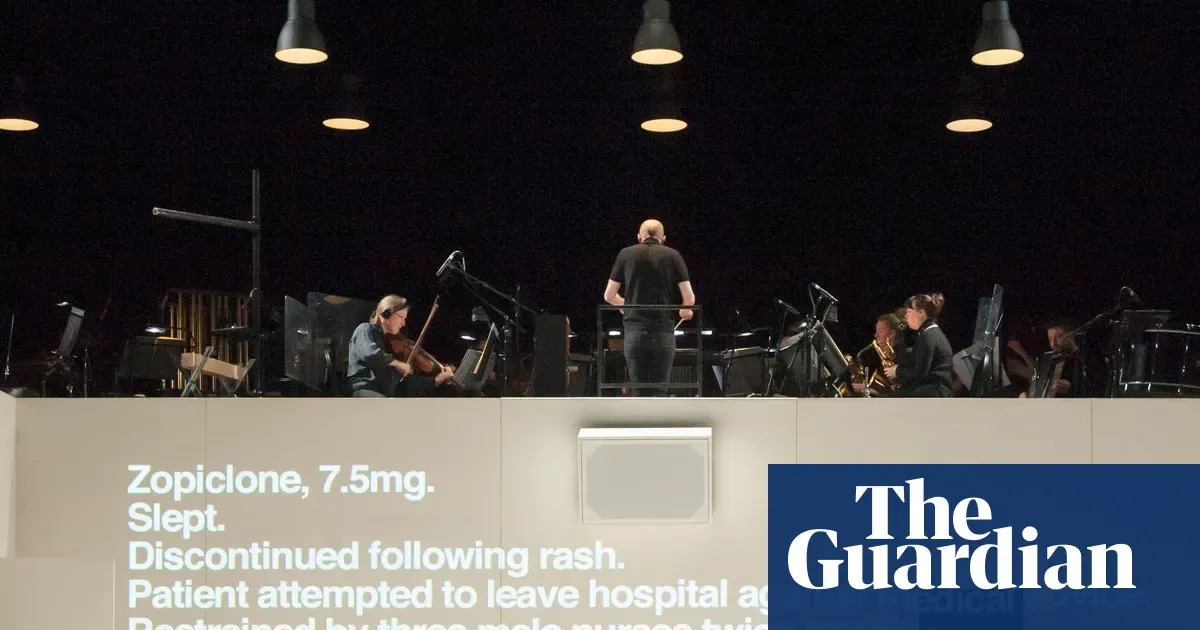
‘It put me in a fever dream’: Philip Venables on turning Sarah Kane’s 4.48 Psychosis into a shocking opera

In January 2015, I was on an overnight flight coming back from New York, having attended Prototype, a festival of new opera. I didn’t sleep a wink, but worked without stopping in a packed, dark, sleepy cabin, reading and annotating a book and furiously making notes on my laptop. As if in a fever dream, my mind whirled with text, music, dramaturgy, theatre. Those six nocturnal hours were some of the most creatively fertile of my life. The book was 4.48 Psychosis; the annotations became the blueprint for an opera. Sarah Kane’s text had unlocked something in me, a fervour, a deluge of ideas. I could barely keep up, noting every impulse, every fantasy, as my mind pinballed around. I landed back home, back to real life, with a thud. That year turned out to be tough: a messy and protracted relationship breakup and a threat of bankruptcy and losing my house, a victim of rogue builders. I broke out in a bleeding stress rash, and, for the first time in my life, suffered insomnia. I was not composing. Time slipped by. Philip Venables: ‘my mind whirled with text, music, dramaturgy, theatre.’ Photograph: Charl MaraisIn late summer, I managed to pull myself together.

The Guardian Culture·
Arts & Culture

‘Arcana Borealis’ Summons the Power of Spirituality and Artist Communities

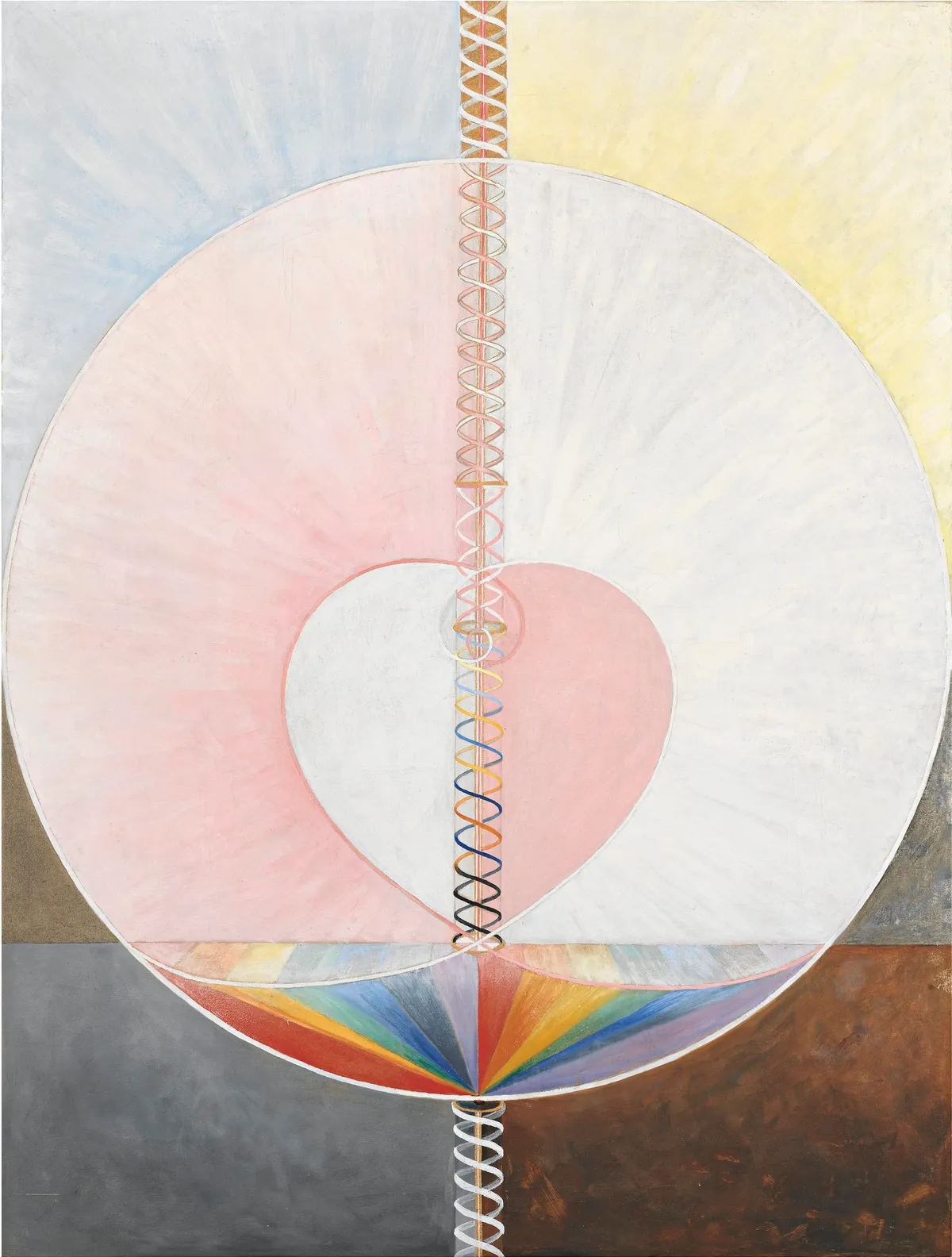
Around 1906, Hilma af Klint was living in Stockholm, where she kept a studio. Deeply engaged with Christian esotericism, she channeled her mystic visions into a series of otherworldly paintings that art historians acknowledge to be the first known abstract works in the canon, a paradigm shift in 20th-century art that had previously been credited to Wassily Kandinsky starting around 1910. What continues to awe us today about af Klint’s works is she didn’t view her vibrant paintings strictly as artworks, but as a result of spiritual channeling. Their production also coincided with a period of incredible scientific discovery. Nikola Tesla had just developed the alternating current (AC) electricity system, plus generated the first radio transmissions, when he then used to create a remote control. And 1905 was Einstein’s “miracle year” with the publication of his seminal theory of relativity.

Colossal·
Arts & Culture

Meet the Lap Easel, a Portable Companion for Taking Creativity Anywhere

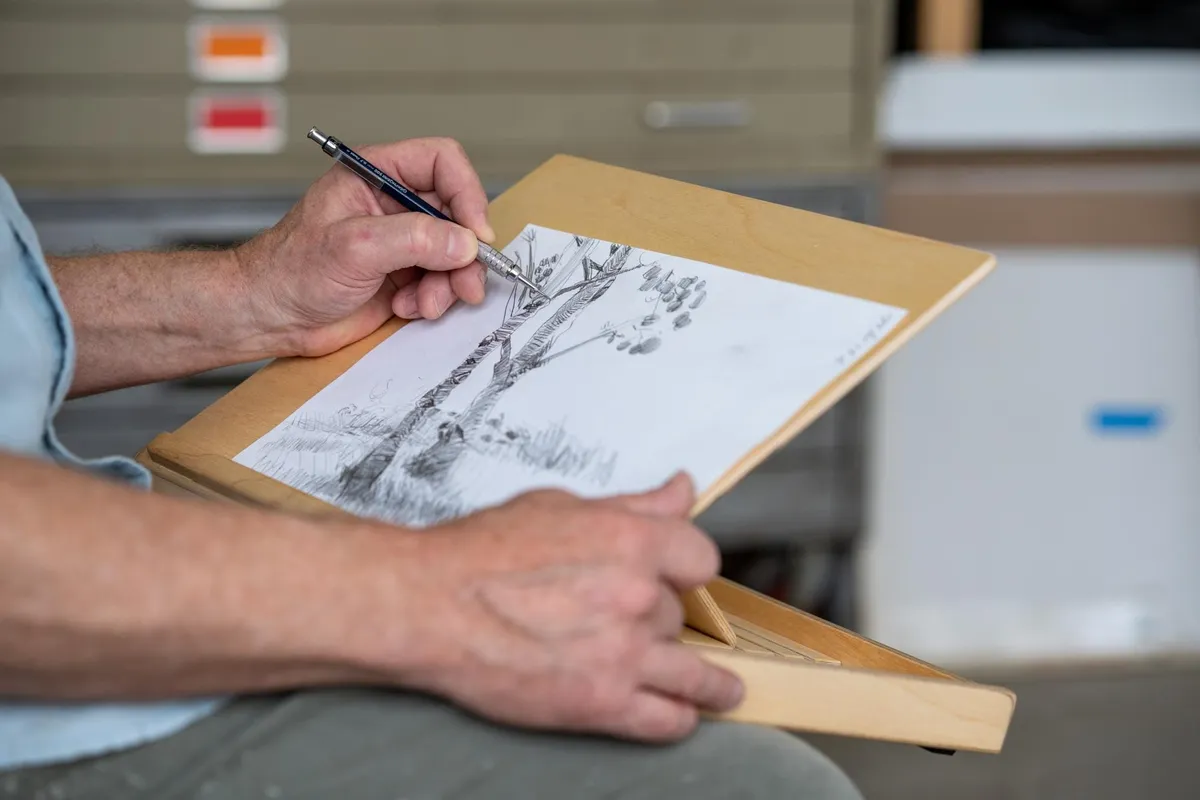
From birch plywood and select solid maple, birch, cherry, and other native hardwoods, Chicago maker and designer Bill Groot crafts handmade Lap Easels in small batches. The ingenious device is a portable, adjustable support that sits comfortably on your lap or tabletop. It’s perfect for a multitude of creative activities, like drawing and painting, reading books and magazines, writing, relaxing with a screen, holding a cookbook, and more. The Lap Easel’s strong and lightweight design features five angled height settings to reduce hand and neck fatigue, and basic supplies can be tucked into the body compartment. Order yours today in the Colossal Shop.

Colossal·
Arts & Culture

Atlantic Requiem review – Önaç gives historical slavery documents howling raging life

How do you put a value on a human life? If you’re an insurance underwriter that’s not a philosophical question, it’s a practical one. The answer, incidentally, as calculated by Lloyds of London in 1779 was £45: the figure placed on each enslaved person transported across the Atlantic alongside corn, fish and other cargo. Court transcripts from two decades later describe a woman quarantined for smallpox, subsequently bound, blindfolded and tossed overboard tied to a chair. The captain later expressed his regret for the loss of “so good a chair”. Archives can tell us what, but it takes art to give us the human how of the past. Enter composer David Önaç – commissioned to take the historical documents unearthed from the Lloyds archive and give them howling, raging life in his new Atlantic Requiem, premiered this weekend by the London Symphony Orchestra, an expanded BBC Singers, three soloists and (in a last-minute step-in) conductor Malcolm J Merriweather. This is a big piece – in theme and scope. Önaç’s score is beautifully, seriously constructed, turning the pitches of the piano’s white and black keys into symbolic gestures of opposition, equality and – perhaps – reconciliation.

The Guardian Culture·
Arts & Culture

Kerry Washington takes A-listers back to the streets they grew up on: best podcasts of the week

Pick of the weekStreet You Grew Up OnScandal star Kerry Washington’s web series is now a podcast, with big-name guests talking about the places they were raised. Cambridge, Massachusetts local Ben Affleck is the first to have a frank conversation on his parents’ divorce, and the things he didn’t tell his mum – such as being mugged at knifepoint at 14. “I loved hearing everything he shared,” says Washington. “Even though he tried to interview me at times.” Hannah J Davies Widely available, episodes weeklyDeep SecretsAfter becoming a father, comedian Hunter Hill decided to make a parenting podcast. Until, that is, an attempt to research his dad threw him down a rabbit hole that made him question everything he knew about his family – including whether his goat-farming grandad was really a secret CIA operative. It’s a wild, detail-packed listen told in highly hooky fashion. Alexi Duggins

The Guardian Culture·
Arts & Culture

Jonathan Knight’s Meditative Series ‘Exhale’ Invites Us to Slow Down and Practice Noticing

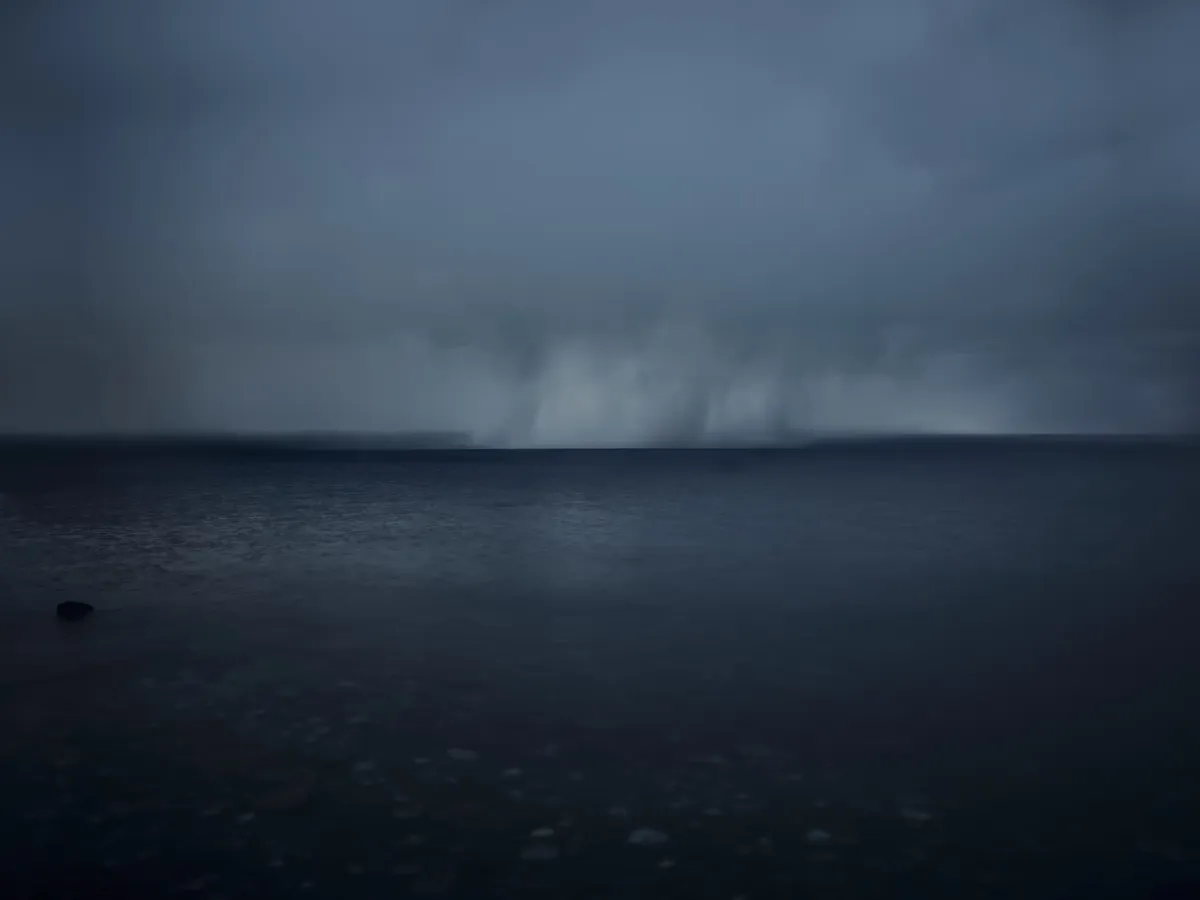
“A wealth of information creates a poverty of attention,” economist and computer scientist Herbert Simon warned in 1971. In our era of digital overload, it feels increasingly urgent—ironically—to remember to slow down. Too often we’re distracted by one thing or the next, looking down at our screens or paying attention to our surroundings just briefly enough to snap a photo before moving on. Jonathan Knight is captivated instead by the quiet moments, the beauty in stillness, and the gentle, gradual changes around us that take time to fully appreciate. Known for his ethereal, minimalist images, Knight conceived of Exhale as a way to explore the nuances of color and “the emotional experience of looking,” he says in a statement. On one hand, the photos are of water, but it may be more apt to describe them as portraits of atmosphere. Clear skies brimming with stars complement foggy mornings and a billowing release of rain from a heavy cloud.

Colossal·
Arts & Culture

Symmetry Meets the Sacred in Shuling Guo’s Dreamy, Diffused Paintings

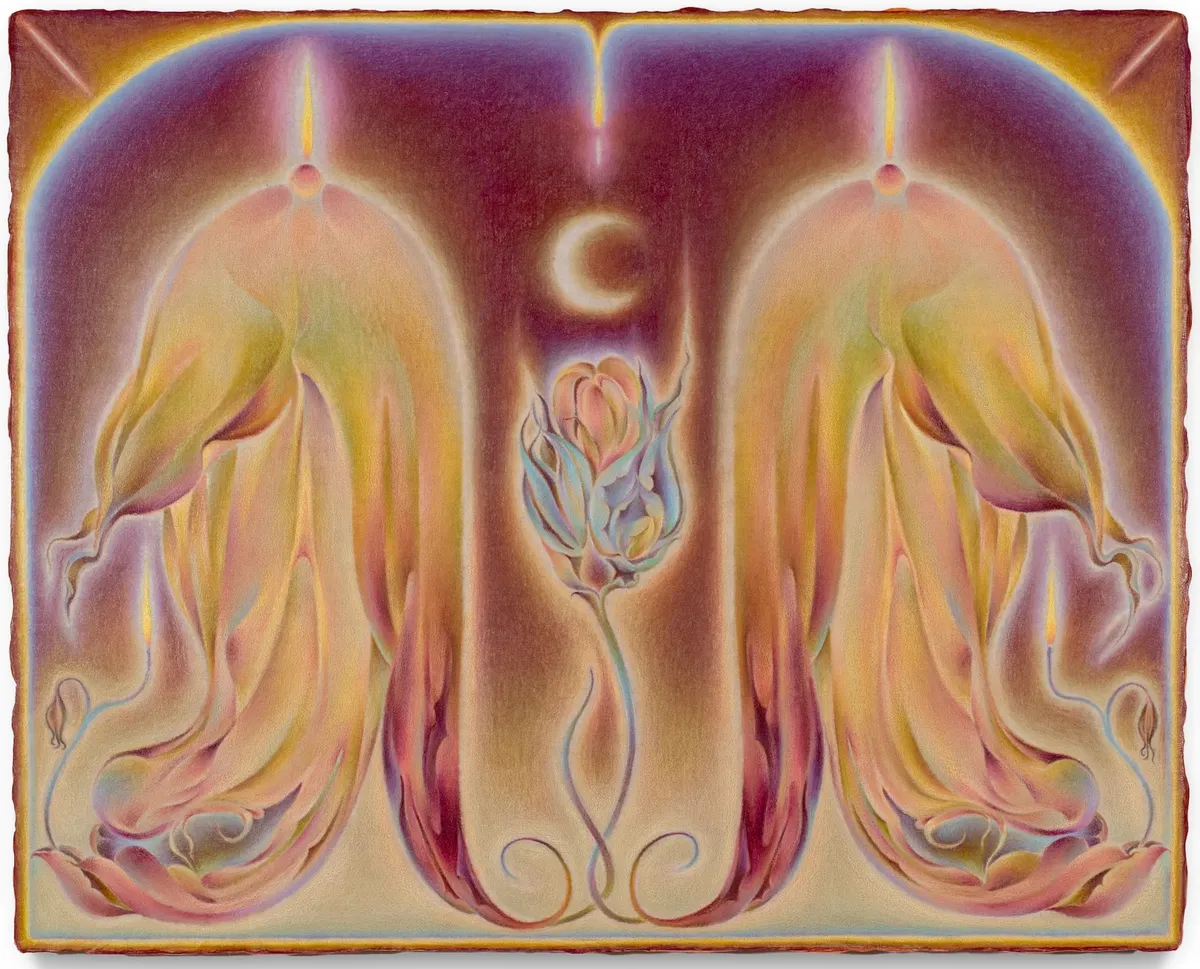
“I left my hometown / My hometown appears,” begins a poem by artist Shuling Guo titled “Temple II,” which shares its name with her forthcoming solo exhibition at Hollis Taggart Downtown. Drawing on sacred symbolism and nature, Guo delves into her memories of growing up in Chaoshan, Guangdong Province, China, and the area’s unique mixture of spiritual and folk traditions. Her dreamlike, symmetrical works speak to the harmony of the cosmos as much as they nod to the balance of life and the sublime. Guo’s paintings in Temple II explore memory, presence, and loss, and their creation coincided with both the birth of her daughter and the death of her grandmother. Burgeoning blossoms, delicate flames, and glowing ribbon-like tendrils allude to the transience of life, its beauty, and its fragility.

Colossal·
Arts & Culture

Another taste of honey: Shelagh Delaney’s long-lost play about a teenage truant is a little gem

Was Shelagh Delaney a one-hit wonder? Absolutely not. Aside from A Taste of Honey which, in the words of Dominic Dromgoole, “has a rock-solid heart and the gleam of the natural”, she wrote the screenplays for the films Charlie Bubbles and Dance With a Stranger, TV series including The House That Jack Built and several radio plays. But now a 30-minute piece, Catch Me Who Can, has come to light, been released as an audio drama and turns out to be a little gem. Its origins are fascinating. It deals with a teenage truant and was discovered by Delaney’s daughter, Charlotte, after her mother’s death in 2011. But why did it lay hidden for so long? According to Charlotte, who has adapted it for audio: “It imagines my last few hours on the lam having run away from home and school when I was 14 in 1978. I was gone for three days and two nights. I’d suggest it’s a racing certainty that the reason nothing has ever been heard of it is that it’s about me and my mum had rules about that kind of thing.”The bulk of the play consists of a testy confrontation between the runaway Hattie (Ivy Sheehan) and her maths teacher (Toby Jones) who tries to persuade her to return home.

The Guardian Culture·
Arts & Culture

The Guide #257: What we lose when a medium ​built for the ear surrender​s to the camera

This has been the year that podcasting properly, unapologetically “pivoted to video”. Yes, it’s been a progression that has been in the making for quite a while, arguably ever since Joe Rogan first trained a webcam at himself and whichever guest he was smoking weed with in his studio back in 2009 – but in 2026 the medium’s transformation from purely aural to audio/visual (often with more of an emphasis on the visual) is truly complete. In January, Netflix started broadcasting video versions of popular podcasts from The Ringer, iHeartMedia, Barstool and more, as well as continuing to make video pods of their own. That landgrab was a slightly desperate response to YouTube’s phenomenal success with visualised pods; after becoming the preferred podcast platform for most Americans in 2024, it managed the same feat in the UK in 2026, overtaking Spotify. No wonder, then, that Spotify has – as part of a wider push to get people sticking to its platform for pods – continued to bolster viewing capabilities for its own pods too.

The Guardian Culture·