Zhejiang Soybean Genomes Reveal Clues to Flowering and Stress Responses | Newswise - Newswise
This story deserves to be shared
Send it to someone who'd care, or post it on your networks.
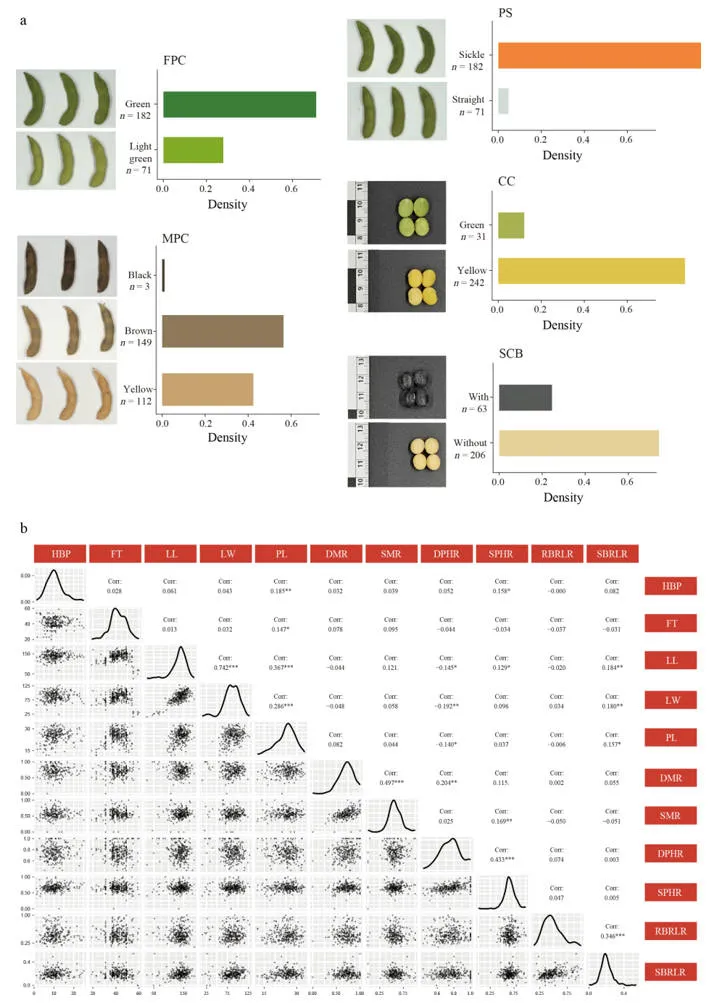
Newswise — Soybean is a major source of edible oil, plant protein, and animal feed, while vegetable soybean is harvested before full maturity for direct consumption. Previous genetic studies have mapped thousands of regions associated with soybean traits, providing tools for improving productivity and quality. However, much of this work has focused on improved cultivars or broad collections, leaving locally adapted landraces less thoroughly characterized. Zhejiang has a long history of soybean cultivation and rich resources for high-protein and vegetable soybeans, but the genetic basis of their distinctive characteristics remains incompletely understood. Identifying useful variation in these resources could help breeders retain regional adaptation while improving commercially important traits. A study (DOI: 10.48130/seedbio-0026-0018) published in Seed Biology on 27 August 2026 by Na Liu's team, Zhejiang Academy of Agricultural Sciences, identifies extensive regional genetic diversity and candidate genes associated with flowering time, growth under salt stress, and seed characteristics.
This article is an excerpt. To read the full content, visit the original source. Newswise
Related articles
Scabies mite genomes reveal genetic differences linked to host origin - EurekAlert!
image: Population structure of Sarcoptes scabiei inferred from genome-wide nuclear single-nucleotide polymorphism (SNP) data. (A) ADMIXTURE analysis showing estimated ancestry proportions for 83 quality-filtered sample-level datasets from diverse host species, assigned to seven ancestry clusters (K1–K7). (B) Principal component analysis (PCA) of genome-wide SNP data. Each point represents one sample-level dataset and is coloured according to its ADMIXTURE cluster assignment. (C) Phylogenetic relationships inferred from high-quality, linkage-pruned nuclear SNPs. Each bar in panel A represents one dataset derived from an individual mite or a pool of mites. Colours indicate estimated ancestry proportions, not transmission routes. Credit: Fang Fang, Pasi K. Korhonen, Siyi Huang, Barbara Moroni, Luca Rossi, Anna R. Molinar Min, Zhijun Hou, Vito Colella, Qingyou Liu, Jacques Guillot, Robin B. Gasser.

Polynesian Wayfinding Is Written in the Genomes of Island Populations - UC San Diego Today
UC San Diego research reveals how Polynesian seafaring shaped the genomes of island populations, offering new clues to health risks and medical discoveries in rarely studied communities For centuries, Polynesian navigators crossed thousands of miles of open ocean, using their knowledge of stars, currents, birds, clouds and the sea to settle islands across the Pacific. Now, a new University of California San Diego study shows the history of voyaging is also reflected in the genomes of Polynesian populations today.

Ancient warmth helped flowering plants dominate Earth, study finds - CGTN
Plants with white, cotton-like tufts grow on a rocky hillside. /VCG Plants with white, cotton-like tufts grow on a rocky hillside. /VCG
Could this new soybean keep the air cleaner and beat drought?
Scientists are testing deep-rooted soybeans that could survive drought and store more carbon underground.
0 comments
No comments yet. Be the first to share your thoughts!