The immortal jellyfish can beat ageing and death. Its genetics could help human cells rejuvenate - BBC
This story deserves to be shared
Send it to someone who'd care, or post it on your networks.
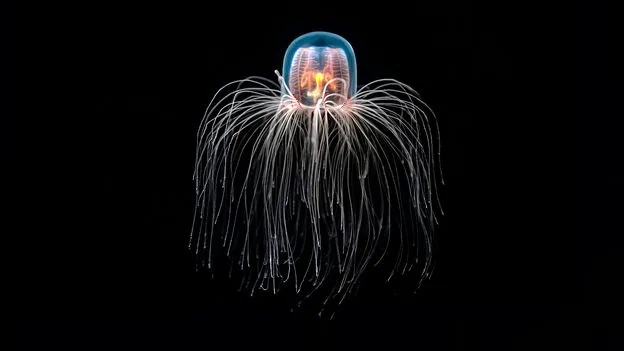
)The immortal jellyfish is capable of winding back its lifecycle to become young again. Scientists are unlocking its cellular secrets for new strategies to treat diseases of old age. The tiny translucent jellyfish Turritopsis dohrnii is surprisingly hard to kill. The marine biologist Maria Miglietta of Texas A&M University at Galveston has cut them, boiled them, starved them, overloaded their tanks with salt or plopped them in fresh water – but the nifty creatures seem to cheat death every time. Under duress, they stop in their tracks and fall to the bottom of their tank. Then something astonishing happens: the animals transform into balls of cells that bear no resemblance to the tentacled umbrella shape of adult jellyfish, known as the medusa. Within one to three days, a structure called a polyp – an early jellyfish life stage – buds off from this ball of cells and then grows into a colony, which will eventually sprout new medusae. "From one jellyfish that doesn't die, then you get this colony that can form hundreds more," Miglietta says.
This article is an excerpt. To read the full content, visit the original source. BBC
Related articles
A new way to rejuvenate the immune system - MIT Technology Review
Giant 'Phantom' Jellyfish Found With Entourage of Fishy Passengers Hitching a Ride - ScienceAlert
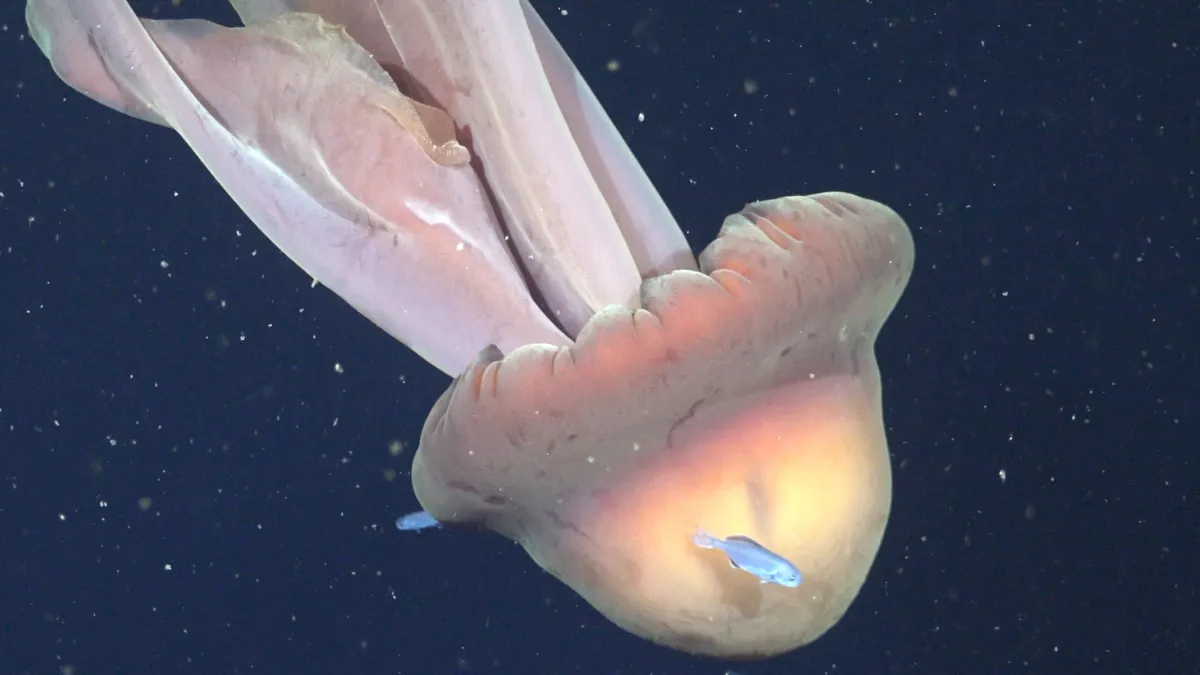
If you're just a wee fish swimming around the big, scary ocean, it can help to have a bit of muscle on your side. For some fish, that's the protection offered by stinging coral. For others, it's adhering to the sandpaper skin of a deadly shark. And for one species of fish, it may be cozying up to one of the most enigmatic denizens of the deep – the giant phantom jellyfish (Stygiomedusa gigantea). During an ROV dive into mesopelagic waters off the coast of Argentina, marine researchers beheld a rare and stunning sight. They witnessed a majestic jelly languidly pulsing through the darkness, and with it, an entire entourage of juvenile rudderfish (Centrolophus niger), flitting beneath its bell and among its enormous, trailing arms. It's an interspecies relationship scientists have suspected for more than 50 years – and now, hundreds of meters below the waves off Patagonia, here it is. "Both are poorly known and rarely observed cosmopolitan mesopelagic species, representing the first documented observation of this association in the deep ocean," writes a team led by marine ecologist María Emilia Bravo of the University of Buenos Aires in Argentina.
0 comments
No comments yet. Be the first to share your thoughts!