The Chemistry in Stellar Nurseries is Complex, and a New 3D Model Highlights It - Universe Today
This story deserves to be shared
Send it to someone who'd care, or post it on your networks.
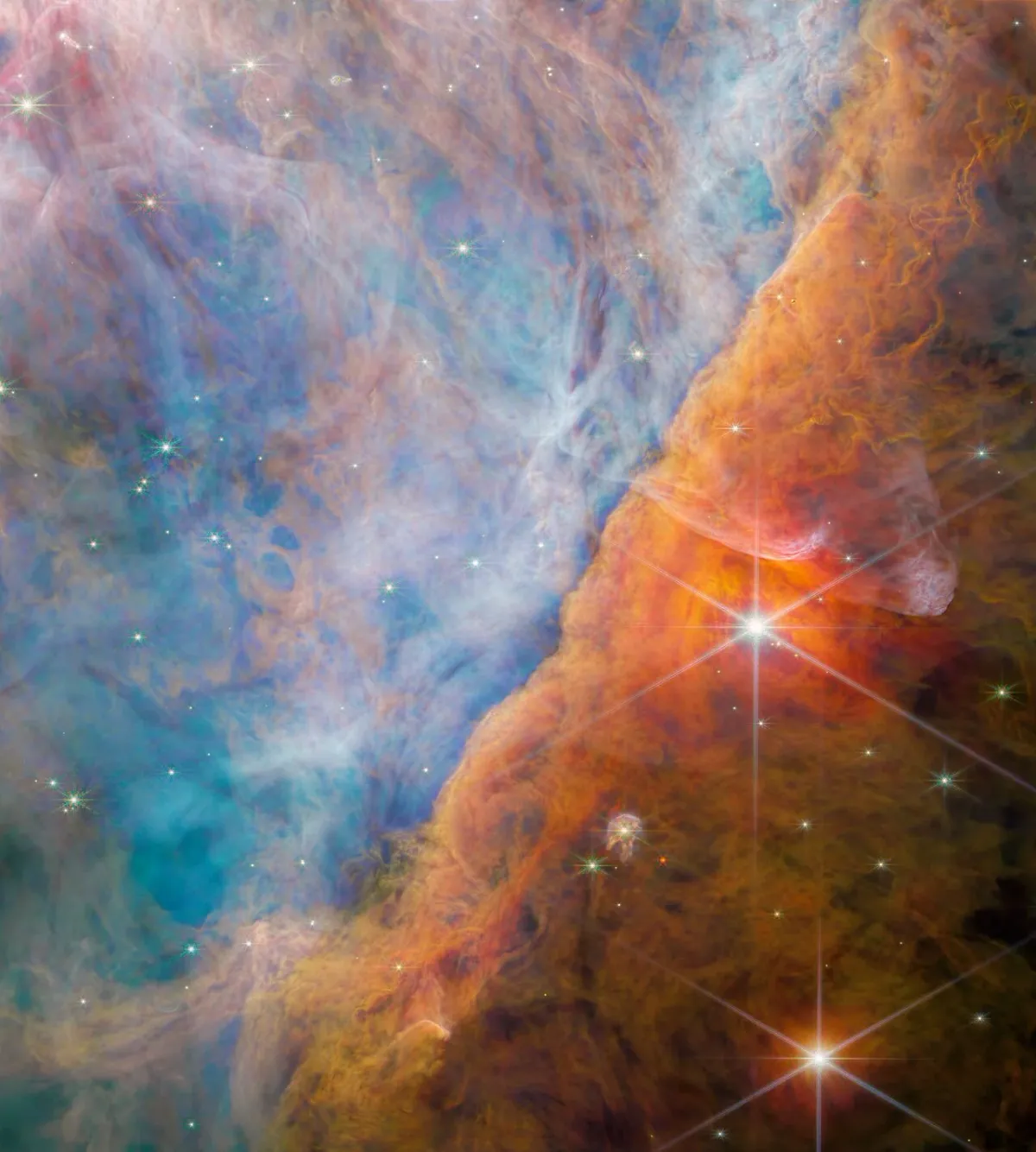
Molecular hydrogen is the raw stuff of star formation. Stars form in massive clouds of it called Giant Molecular Clouds (GMCs). When young stars form, their radiation shapes the clouds they formed in. Stars need cold, dense hydrogen gas to form, and the young stars heat up and disperse the surrounding gas, creating a barrier against further star formation. This much is known.
But there's still much more to learn about stellar feedback and how it shapes GMCs and their chemistry. There's a lot of complex chemistry inside what are called photodissociation regions, and new research shows how they shape the overall structure of a GMC.
This article is an excerpt. To read the full content, visit the original source. Universe Today
Related articles
New 3D model reveals how shadows reshape chemistry in stellar nurseries - Phys.org
Model and observation: Left, a 3D model of an Orion Bar analog shows density and chemical processes. Red contours mark H₂ formation; blue contours show C⁺ recombining to C. Right: James Webb data of the Orion Bar, with the modeled region marked. Credit: Brandt A. L. Gaches/ESA/Webb, NASA, CSA, PDRs4ALL ERS Team, Mahdi Zamani (ESA/Webb) How do young stars reshape the clouds from which they are born? A new high-resolution 3D model developed by an international team led by Dr Brandt Gaches from the University of Duisburg-Essen shows how the uneven structure of stellar nurseries creates shadows that alter their chemistry and influence the infrared emission observed by the James Webb Space Telescope. The model has now been published in Astronomy & Astrophysics.
Molecular switch controls how cells load cargo for recycling - Phys.org
Cells constantly recycle proteins and other cellular components. But how do they ensure that the right cargo ends up in the right recycling vesicle—one of the cell's transport carriers? A team at the University of Basel has identified a molecular switch that controls this process. The small protein ARF-1 ensures that recyclable cargo is efficiently loaded into transport vesicles and returned to the cell's surface.
Who speaks for Mars? Scientists call for ethical debate before terraforming begins - Phys.org
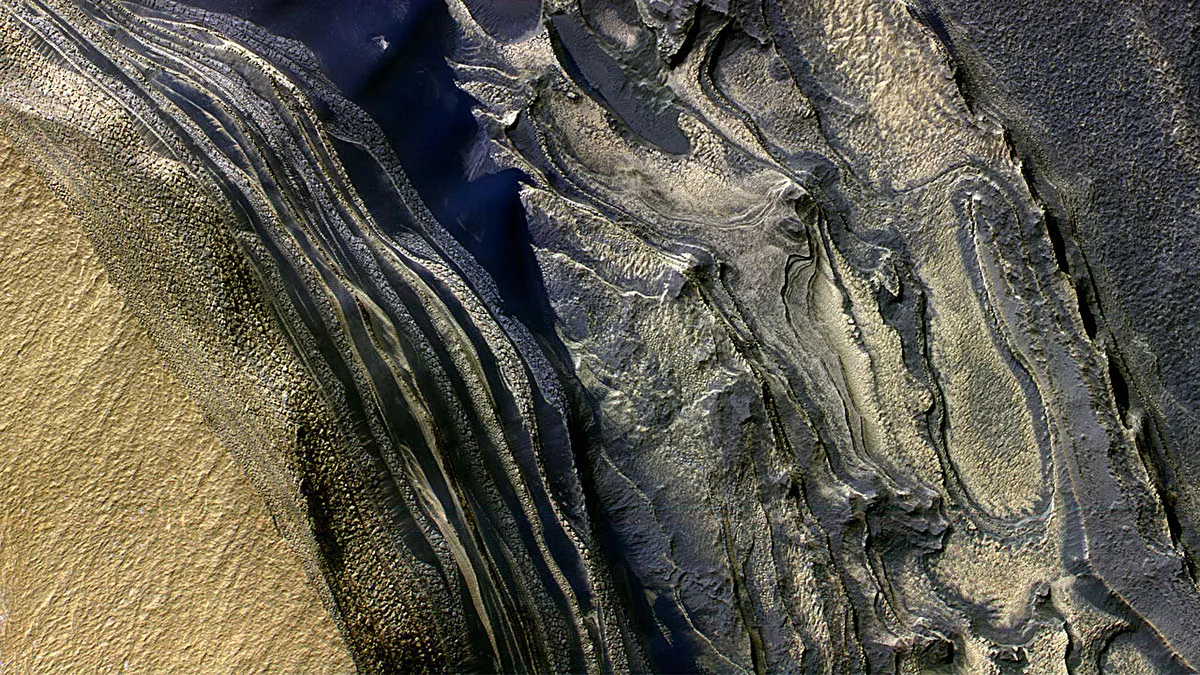
Layers of ice on Mars, like those viewed in Chasma Boreale by the High Resolution Imaging Science Experiment (HiRISE), hold a fragile record of climate fluctuations. Credit: NASA/JPL/Univ. of Arizona Transforming Mars into a more Earth-like world could irreversibly destroy scientific evidence about the planet's history and the possibility of extraterrestrial life. In an opinion article published in Eos, a team of Dutch, French and U. S. planetary scientists and ethicists warns that humanity risks destroying Mars' scientific record before it has been fully explored.
0 comments
No comments yet. Be the first to share your thoughts!