Planetary 'twins' Uranus and Neptune may have different origin stories - Phys.org
This story deserves to be shared
Send it to someone who'd care, or post it on your networks.
This article is an excerpt. To read the full content, visit the original source. Phys.org
Related articles
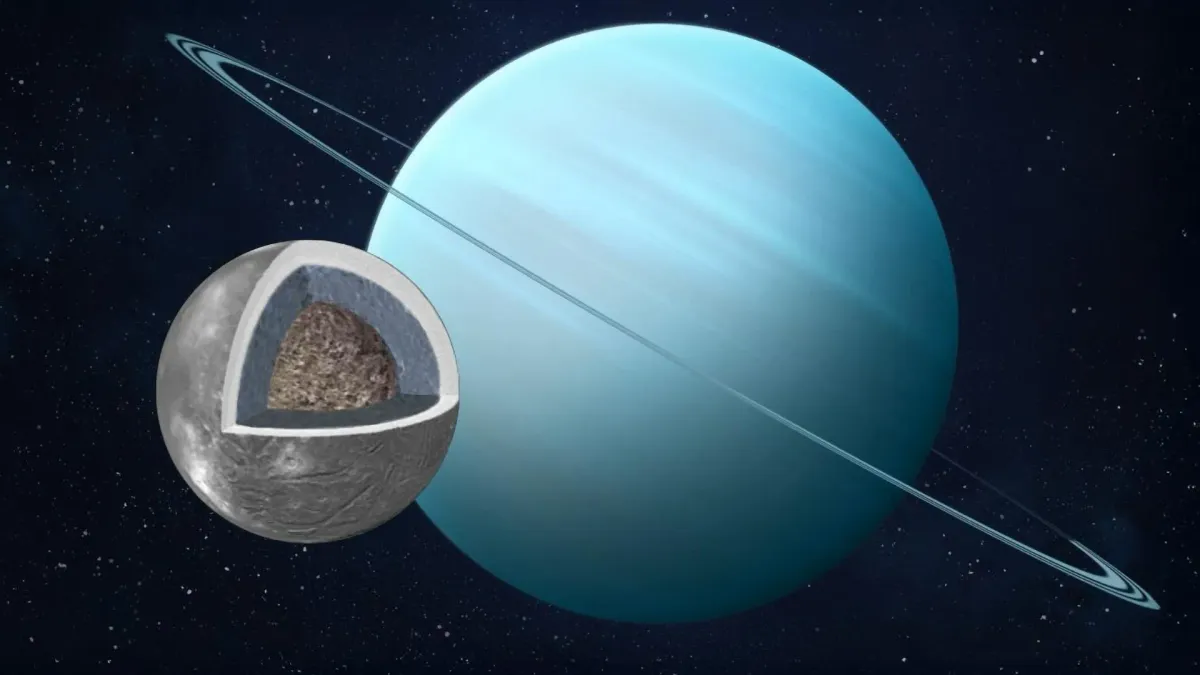
“We just need to go back” – Uranus’ moon Ariel may have hidden a 100-mile-deep ocean - Science Daily
Evidence is building that Uranus' moon Ariel may once have contained a vast ocean beneath its frozen exterior. Research published in Icarus explores how that hidden ocean may have changed over time and suggests it could once have been more than 100 miles (170 kilometers) deep. By comparison, the Pacific Ocean has an average depth of about 2.5 miles (4 kilometers). "Ariel is pretty unique in terms of icy moons," said paper co-author Alex Patthoff, a Planetary Science Institute senior scientist.

MBARI and Mission Neptune highlight polar science collaborations at New York Climate Week - MBARI
This week, MBARI President and CEO Antje Boetius participated in Mission Neptune’s Polar Oceans Challenge during New York Climate Week, seeking to raise awareness about the urgent need for sustained research in polar regions. Polar environments are integral to the health of our planet and host unique communities of life, but are experiencing dramatic changes due to the rapid warming of Earth, especially in the Arctic and increasingly in Antarctica. MBARI and our peers in the global scientific community are working to answer fundamental questions about polar ecosystems to inform about the future of the Arctic and Antarctic. International scientific collaboration—including joint missions aboard icebreaker ships, networked deployment of robotic floats through the Southern Ocean Carbon and Climate Observations and Modeling (SOCCOM) program, buoys, and sailing and drift studies—is essential to observe ice loss, ocean change, and the fate of endemic polar life.
0 comments
No comments yet. Be the first to share your thoughts!