The assumption about farm automation that may be wrong - Phys.org
This story deserves to be shared
Send it to someone who'd care, or post it on your networks.
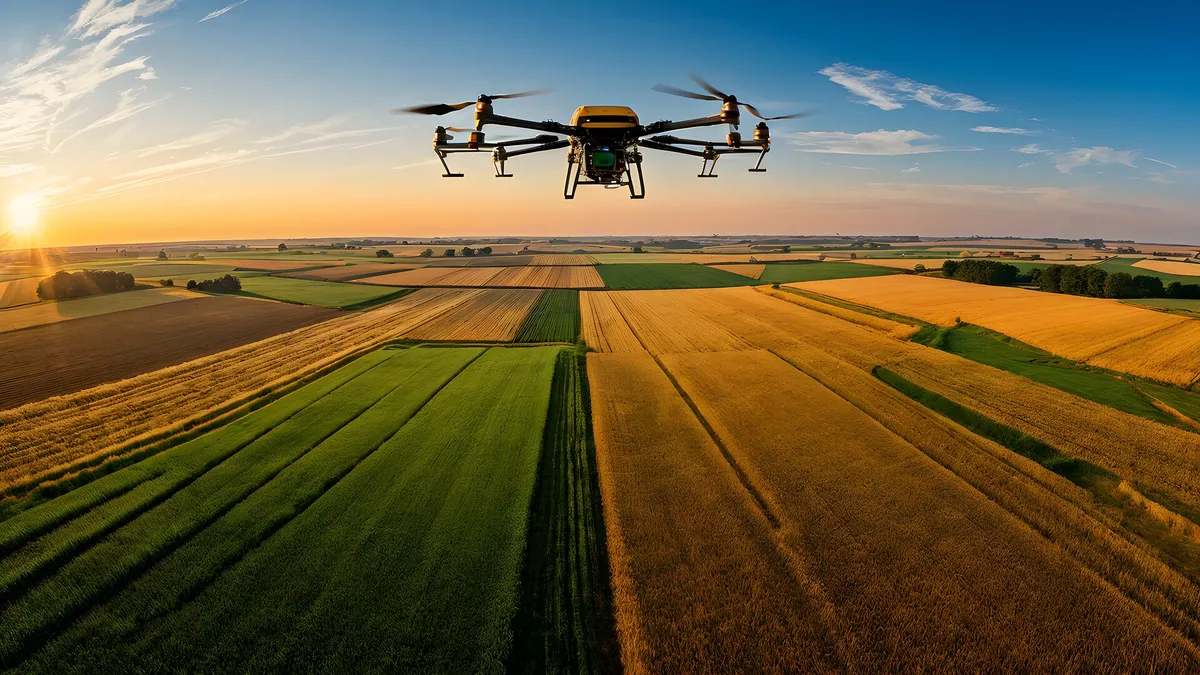
You've likely heard this assumption: When AI-enabled and autonomous machines arrive on the farm, jobs will disappear. But researchers at the University of California, Davis, who studied 16 fruit tree operations in California and Washington for three years, found that automation still takes human knowledge. What changes is how the work gets done. The study, drawing on 165 in-depth interviews with workers and growers, was published in the journal New Technology, Work and Employment.
The study examined what researchers call the "last mile" of agricultural automation: what happens after robotic and AI-enabled tools arrive on the farm and have to work in real conditions that can change by the hour.
This article is an excerpt. To read the full content, visit the original source. Phys.org
Related articles

Scientists just overturned a century-old physics assumption - Science Daily
Carnegie Mellon University researchers have identified an unusual magnetic response that overturns a long-standing assumption about the Hall effect, a foundational principle used to study how materials behave electrically and magnetically. The findings, published in Nature Materials, expand scientists' understanding of the Hall effect and could eventually support simpler and more flexible magnetic sensors for electronics, transportation and medical imaging.

Cambridge scientists create a $10 chip that could put a medical lab on your wrist - Science Daily
A new optical sensor costing just $10 could bring laboratory-level precision to wearable health monitors, potentially allowing people to track blood glucose without needles. The technology could also transform food testing, industrial quality control, and environmental monitoring. Researchers at the University of Cambridge and GlitterinTech (a start-up founded by the same research group) have developed a new type of optical spectrometer that combines exceptional accuracy with a remarkably small size and low cost. Measuring just centimeters across, the device could be incorporated into portable electronics and wearable health technology. Its potential applications range from monitoring important health markers in real time to identifying materials and detecting changes in chemical composition.
Autonomous triangular modules could build tomorrow's mega-observatories - Phys.org
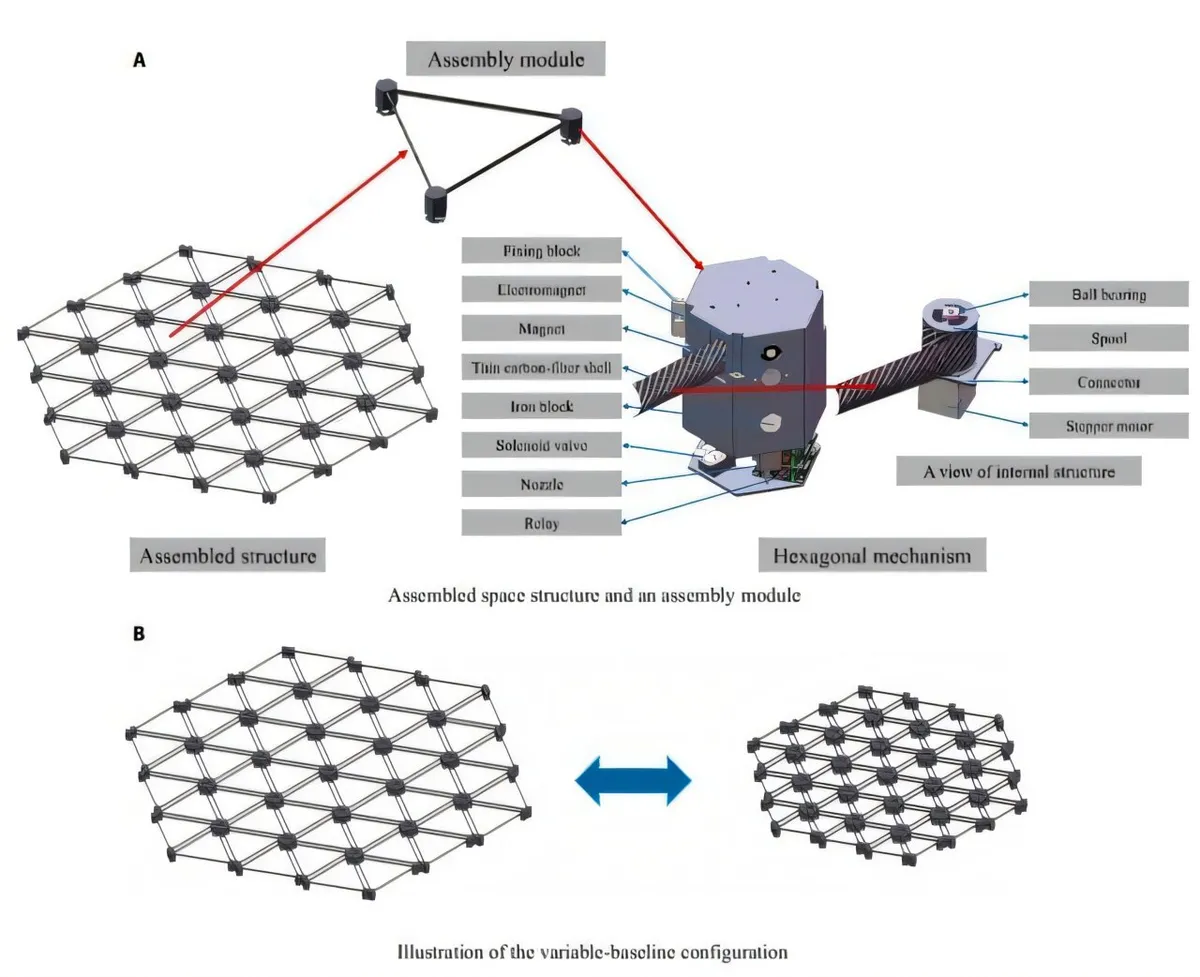
Private companies are getting better at launching more mass into space with larger rockets. But there is still a major constraint on the size of objects we can get into orbit—fairing size. This places physical constraints on the overall shape of what we can launch and severely limits the sizes of, say, a communications array or a power satellite. But a new paper from researchers at Nanjing University of Aeronautics and Astronautics and the Beijing Institute of Technology offers a solution—a self-shaping, deployable module that can fine-tune both its positioning and its own dimensions. The findings are published in the journal Space: Science & Technology. To understand how that offers an advantage, it's best to look at how engineers currently solve this problem. Typically, they use a rollable deployable boom—a stiff, thin strip of carbon fiber that can coil up like a tape measure, then unwind to snap straight once deployed in microgravity. The problem is that these systems almost never deploy perfectly in real environments, and when talking about snapping together multiple modules, even a few millimeters of error can cause the entire mission to fail.
0 comments
No comments yet. Be the first to share your thoughts!