Teaching AI How Science Actually Works - Institute for Progress (IFP)
This story deserves to be shared
Send it to someone who'd care, or post it on your networks.
This article is an excerpt. To read the full content, visit the original source. Institute for Progress (IFP)
Related articles
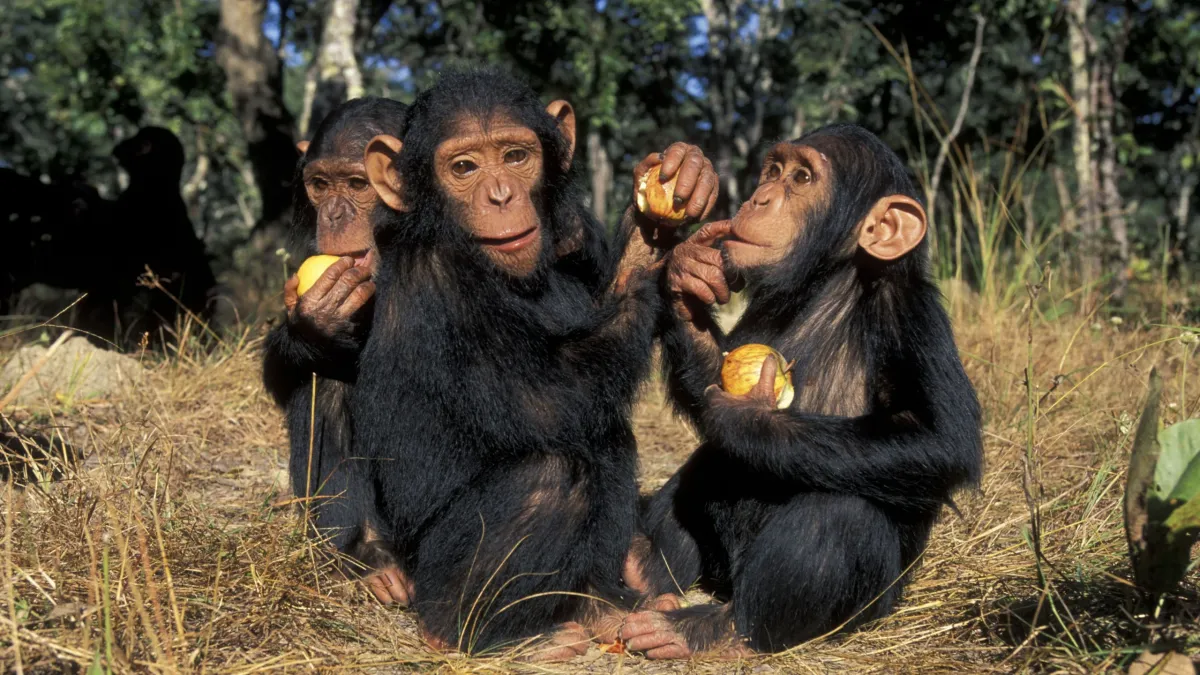
Tiny Genetic Tweak From An Ancient Virus Might've Prevented Chimpanzees From Developing Brains Like Ours - ScienceAlert
Young chimpanzees enjoy some fruit. (Martin Harvey/The Image Bank RF/Getty Images) Humans and chimpanzees are remarkably similar, despite the major differences in how our societies have panned out. After about 5-6 million years of evolution from a common ancestor, only 1.2 percent of our DNA is different. A virus that infected chimpanzees (Pan troglodytes) – but not humans – about 4 million years ago is partly responsible. This ancient retrovirus made a tiny tweak to chimp DNA that has led to some major differences in how our brains develop, according to a new study published in Science Advances today. "We wanted to understand how human and chimpanzee brains could have evolved differently when so many of their protein-making genes are similar," lead author Patricia Gerdes told ScienceAlert. Gerdes is a molecular neurogeneticist at Lund University in Sweden. "We knew that ancient viruses can leave DNA behind in the genome, and those remnants can affect nearby genes," she said. "PTERV1 (Pan troglodytes endogenous retrovirus-1) was a particularly interesting candidate because it is found in chimpanzees and other African apes but not in humans.
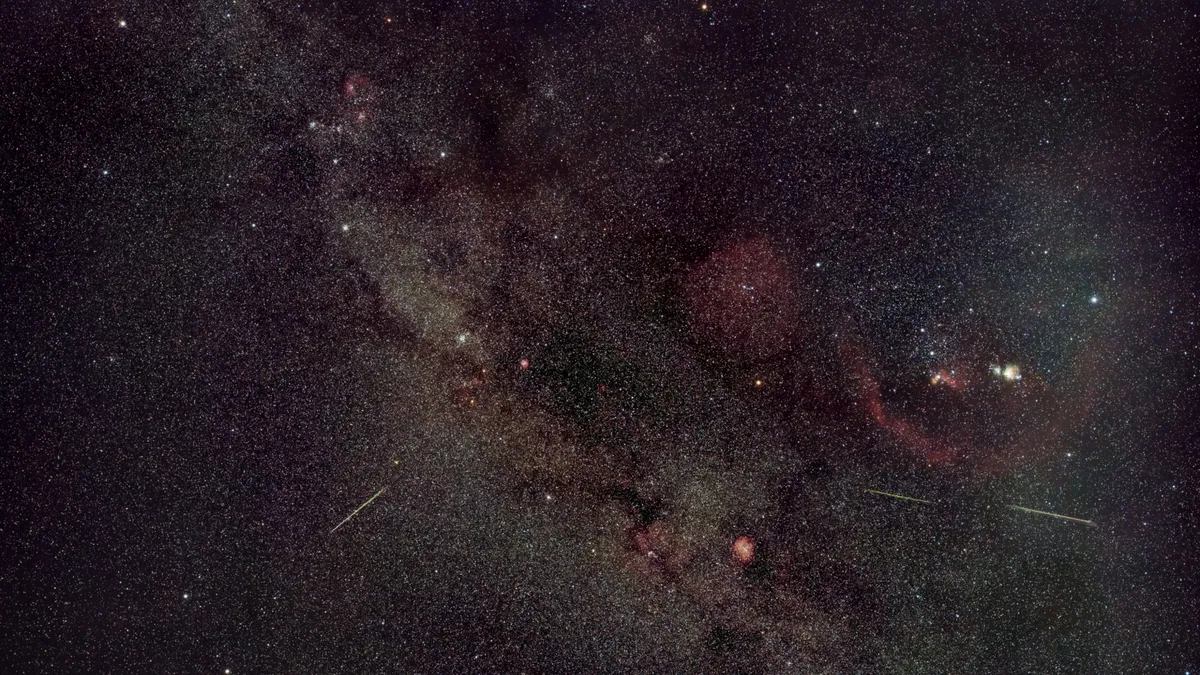
Halley's Comet dazzles from afar in spectacular astrophoto of Orionid meteor shower - Space
This incredible composite image of Orionid meteors was captured as Earth passed through the debris trail shed by Halley's Comet.
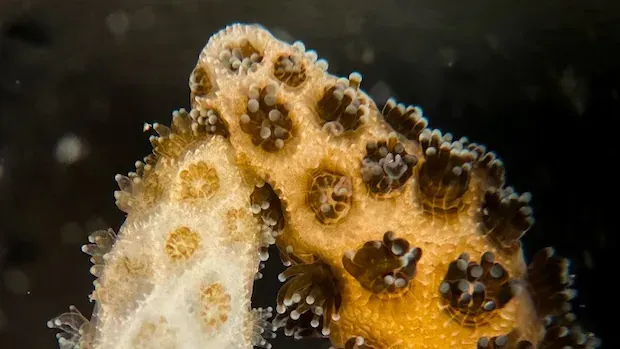
Scientists put a dying coral next to a healthy one — and watched it heal before their eyes - CBC
As It HappensScientists at Stanford University in California stumbled on a promising discovery when two coral fragments in the lab — one bleached and one healthy — tipped over in a tank and touched.'This could open a door to possible reef restoration,' says Stanford researcherSheena Goodyear · CBC News · Posted: Oct 23, 2026 1:37 PM EDT | Last Updated: 28 minutes agoListen to this articleEstimated 5 minutesThe audio version of this article is generated by AI-based technology. Mispronunciations can occur. We are working with our partners to continually review and improve the results. Scientists at Stanford University in California found that when a bleached coral fragment makes contact with a healthy one, the dying fragment can make a full recovery. (Danny Collins)The best medicine for a dying coral may be the power of touch. Scientists at Stanford University in California stumbled on a promising discovery when two coral fragments in the lab — one bleached and one healthy — tipped over in a tank and touched.

A random lab accident just revealed the unusual technique that can revive dying coral in weeks - Yahoo
The oceans are in trouble. Rising temperatures due to climate change not only raise sea levels but also put enormous stress on coral reefs. When waters get too warm, healthy coral will expel the helpful algae living inside them. The coral then becomes drained of color, severely weakened, and vulnerable to disease. In other words, "bleached coral" is dying coral. The loss of coral and coral reefs devastates vast amounts of ocean wildlife, and humans too. So finding ways to stop, slow, or reverse coral bleaching is of major interest to scientists. And the latest breakthrough was completely unintentional. Lab studying coral encounters a "happy accident"Steve Palumbi is a professor of marine sciences at Stanford and an ocean researcher. One of his major research areas is coral, and his work recently led him to notice something pretty strange in his lab. According to Science Alert, Palumbi had collected various samples from the same coral colony when two of the samples "fell" into each other inside their tank. One was bleached, or dying, and the other was completely healthy.

Dinosaurs may have chowed down on washed-up seafood - Futurity
Dinosaurs might have been beachcombers that dined on washed-up seafood, researchers report. Researchers looked at carbon isotope traces in fossilized teeth and bones from coastal-dwelling dinosaurs and found a signature that could be linked to the consumption of seafood. The work highlights the connections terrestrial and marine ecosystems have had for millions of years.

Machine Learning Speeds Analysis and Design in All-Atom Molecular Dynamics Simulations - Spectroscopy Online
Siddhartha Das explains how machine learning helps his group sift through roughly a trillion simulation data points. It reveals water and electroosmotic flow behavior and could speed the design of sensor-like channels. In this interview conducted at SciX 2026, which took place in Sparks, Nevada from October 4–9, Siddhartha Das, a Professor of Mechanical Engineering at the University of Maryland, describes how machine learning has become a major tool in his group’s work with all-atom molecular dynamics (MD) simulations. He also explains how pairing the two approaches can accelerate the design of engineered channels. The starting point, Das explains, is the sheer volume of data these simulations produce. A system of one million particles tracked over one million time steps yields roughly one trillion data points. Das describes this as fertile ground for analysis, but notes that working through it manually is impractical. Machine learning, he says, can reveal insights that even the most sophisticated atomistic simulations might miss, and can surface findings far faster than conventional analysis. Das offers two examples.
0 comments
No comments yet. Be the first to share your thoughts!