Tiny Genetic Tweak From An Ancient Virus Might've Prevented Chimpanzees From Developing Brains Like Ours - ScienceAlert
This story deserves to be shared
Send it to someone who'd care, or post it on your networks.
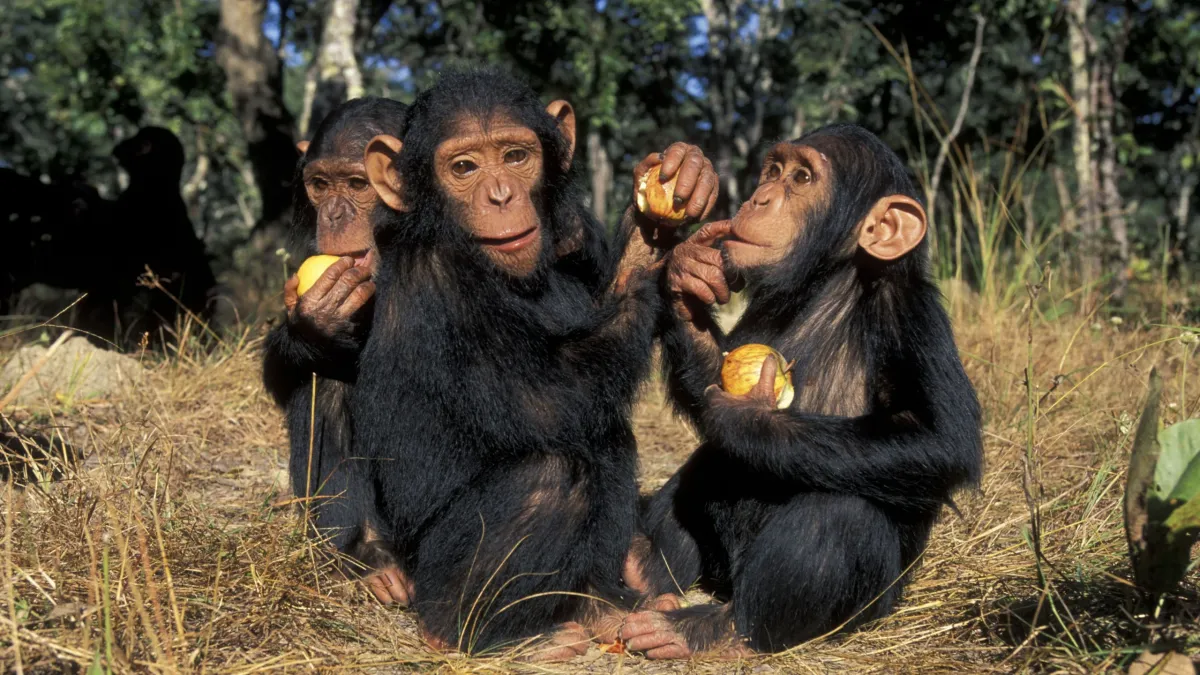
Young chimpanzees enjoy some fruit. (Martin Harvey/The Image Bank RF/Getty Images)
Humans and chimpanzees are remarkably similar, despite the major differences in how our societies have panned out. After about 5-6 million years of evolution from a common ancestor, only 1.2 percent of our DNA is different. A virus that infected chimpanzees (Pan troglodytes) – but not humans – about 4 million years ago is partly responsible. This ancient retrovirus made a tiny tweak to chimp DNA that has led to some major differences in how our brains develop, according to a new study published in Science Advances today. "We wanted to understand how human and chimpanzee brains could have evolved differently when so many of their protein-making genes are similar," lead author Patricia Gerdes told ScienceAlert. Gerdes is a molecular neurogeneticist at Lund University in Sweden. "We knew that ancient viruses can leave DNA behind in the genome, and those remnants can affect nearby genes," she said. "PTERV1 (Pan troglodytes endogenous retrovirus-1) was a particularly interesting candidate because it is found in chimpanzees and other African apes but not in humans.
This article is an excerpt. To read the full content, visit the original source. ScienceAlert
Related articles

Climate Change Prevented Next Ice Age - Mirage News
Two thousand years ago, the Arctic remnants of a once-vast ice sheet started to grow again. It was the beginning of a new glacial period, more conversationally known as the next ice age—but by the 1960s, summer temperatures were already so high that the ice sheet started to shrink. In other words, global warming ended a period of glaciation that had already begun. "It was just getting started, everything was normal, the next glaciation was about to happen—and yet it stopped," says Nicolás Young , a geochemist at the Lamont-Doherty Earth Observatory, part of the Columbia Climate School. "It's a very powerful example of how we have jolted the system. "In a new study published in the journal Science, Young, fellow Lamont geochemist Joerg Schaefer and their colleagues describe their research on the Laurentide Ice Sheet, and his colleagues describe their research on the Laurentide Ice Sheet, which covered much of Canada and the northern United States from about 95,000 to 20,000 years ago. At its largest, it stretched from above the Arctic Circle to Illinois, and in places the ice was over two miles thick.
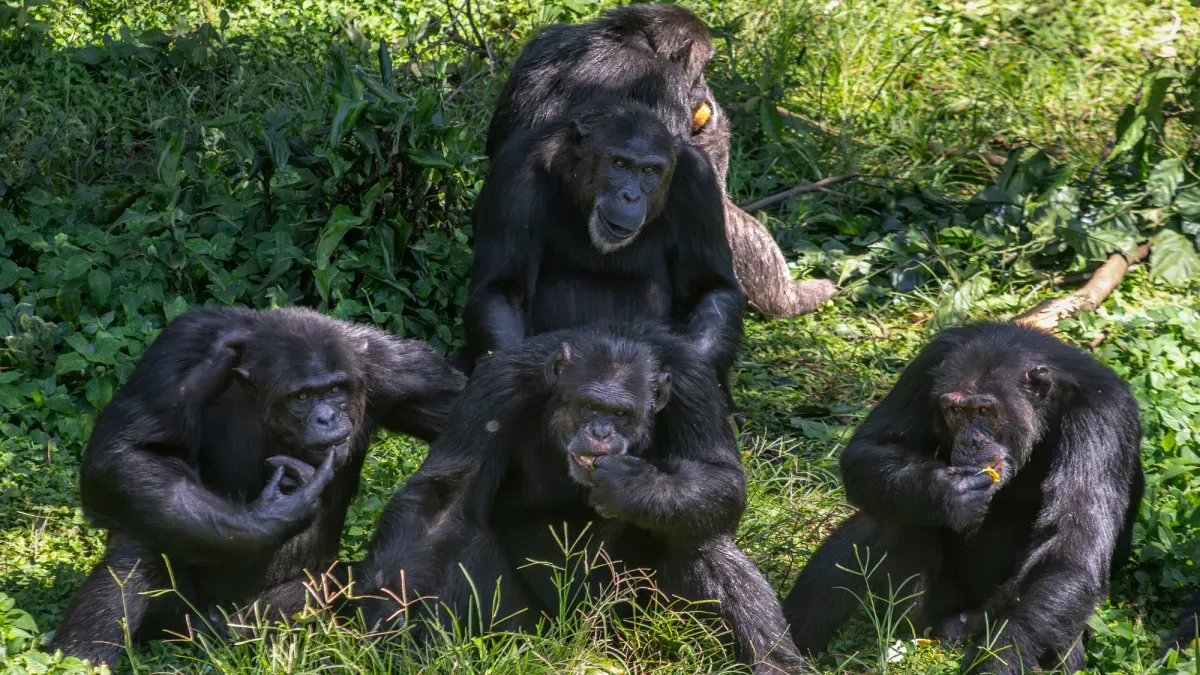
Chimpanzees steal less pineapple from their friends - Popular Science
A group of chimpanzees feeding together in a natural forest environment on Ngamba Island, Uganda. How likely is a chimpanzee (Pan troglodytes) to steal food from another chimp? It depends on whether they’re a friend or a foe. A team of biologists discovered that chimps pilfer less from their friends, and that the relationship between the victim and the thief influenced the emotional display of both parties. The findings are described in a study recently published in the journal Evolution and Human Behavior.
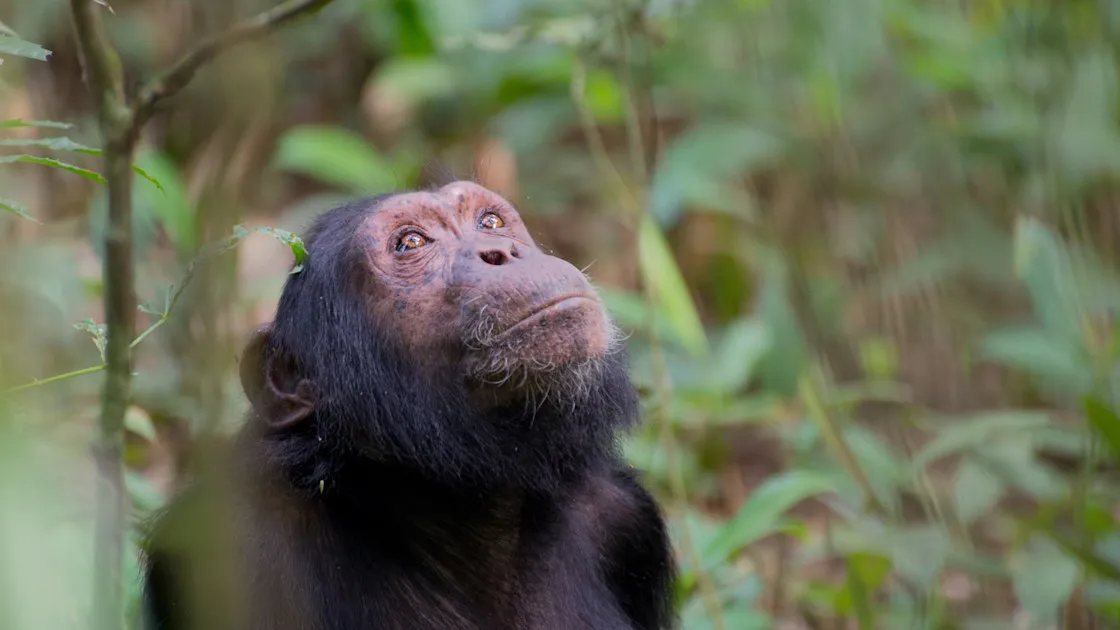
Chimpanzees give youngsters the tools to learn tricky techniques - Frontiers
Researchers show how western chimpanzees in Senegal give stick tools and baobab fruit to each other. This transfer was typically between relatives, especially by mothers to their immature offspring. The authors present and analyze unique footage of two occasions on which adults – a mother and a juvenile male – displayed complex and previously undescribed behavior involving demonstration followed by the transfer of objects to infants, with the apparently deliberate aim to teach technological behaviors to the latter. Both of these teaching instances were successful, in that the receiving infants successfully copied the actions. Two-thirds of a century after Jane Goodall observed ‘David Greybeard’ break off a twig to fashion a fishing rod for termites, researchers following in her footsteps have found that adult chimpanzees in Senegal literally hand youngsters the tools for learning. Darwin noted in 1871 that chimpanzees use stones to crack nuts, striking a blow to human hubris. Over the 20th century, a select few animals as diverse as octopuses and parrots have been observed making and using tools.
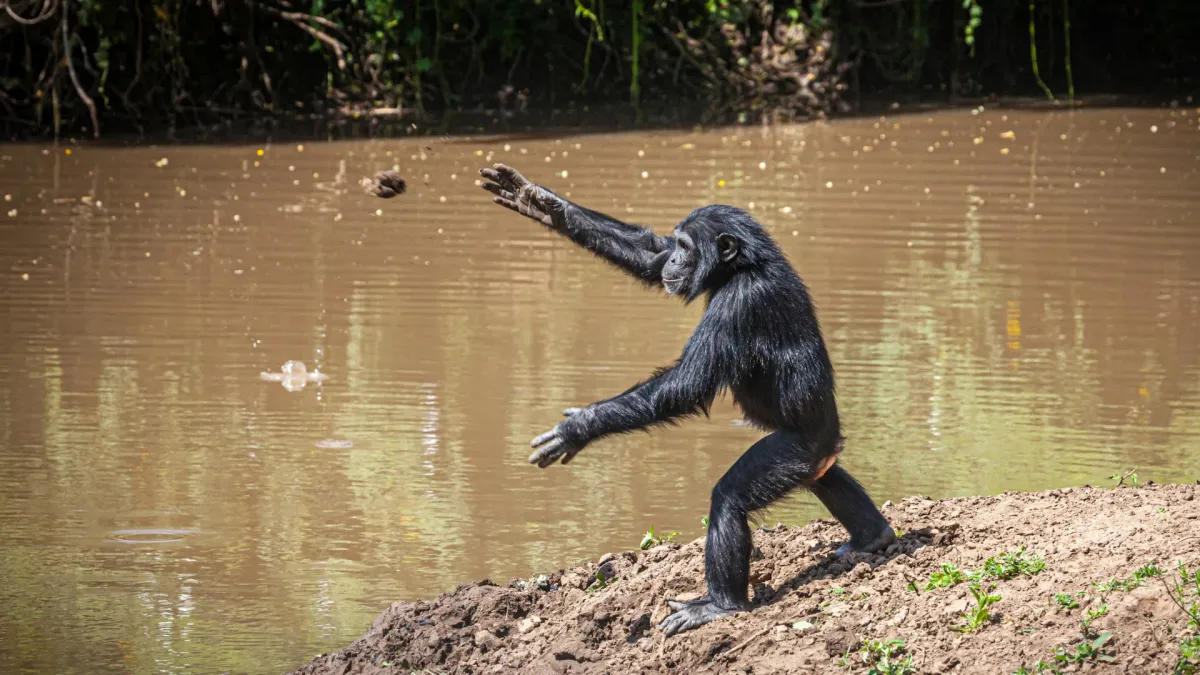
Chimpanzees have been hurling rocks at the same trees for more than a decade - Science Daily
Walking through the savanna-woodland landscape of Boé National Park, Guinea-Bissau, you might encounter a tree covered in gnarled scars, with an accumulation of rocks surrounding its base. The chimpanzees may have left the area, but you are lucky nonetheless, because you have stumbled upon evidence of a rare — and potentially cultural — chimpanzee behavior: accumulative stone throwing.
0 comments
No comments yet. Be the first to share your thoughts!