Scientists put a dying coral next to a healthy one — and watched it heal before their eyes - CBC
This story deserves to be shared
Send it to someone who'd care, or post it on your networks.
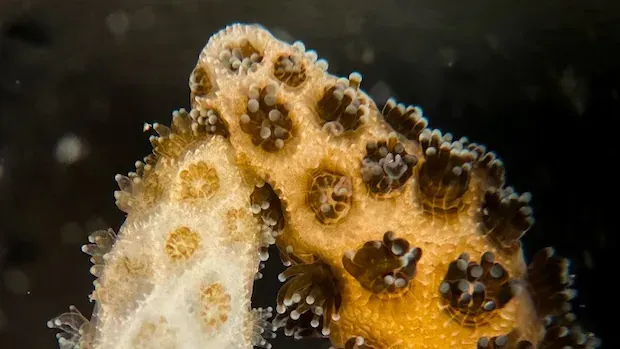
As It HappensScientists at Stanford University in California stumbled on a promising discovery when two coral fragments in the lab — one bleached and one healthy — tipped over in a tank and touched.'This could open a door to possible reef restoration,' says Stanford researcherSheena Goodyear · CBC News · Posted: Oct 23, 2026 1:37 PM EDT | Last Updated: 28 minutes agoListen to this articleEstimated 5 minutesThe audio version of this article is generated by AI-based technology. Mispronunciations can occur. We are working with our partners to continually review and improve the results. Scientists at Stanford University in California found that when a bleached coral fragment makes contact with a healthy one, the dying fragment can make a full recovery. (Danny Collins)The best medicine for a dying coral may be the power of touch. Scientists at Stanford University in California stumbled on a promising discovery when two coral fragments in the lab — one bleached and one healthy — tipped over in a tank and touched.
This article is an excerpt. To read the full content, visit the original source. CBC
Related articles
Boo Jihyun, Hyewon Kwon, eco orot: Aqua Paradiso - E-Flux
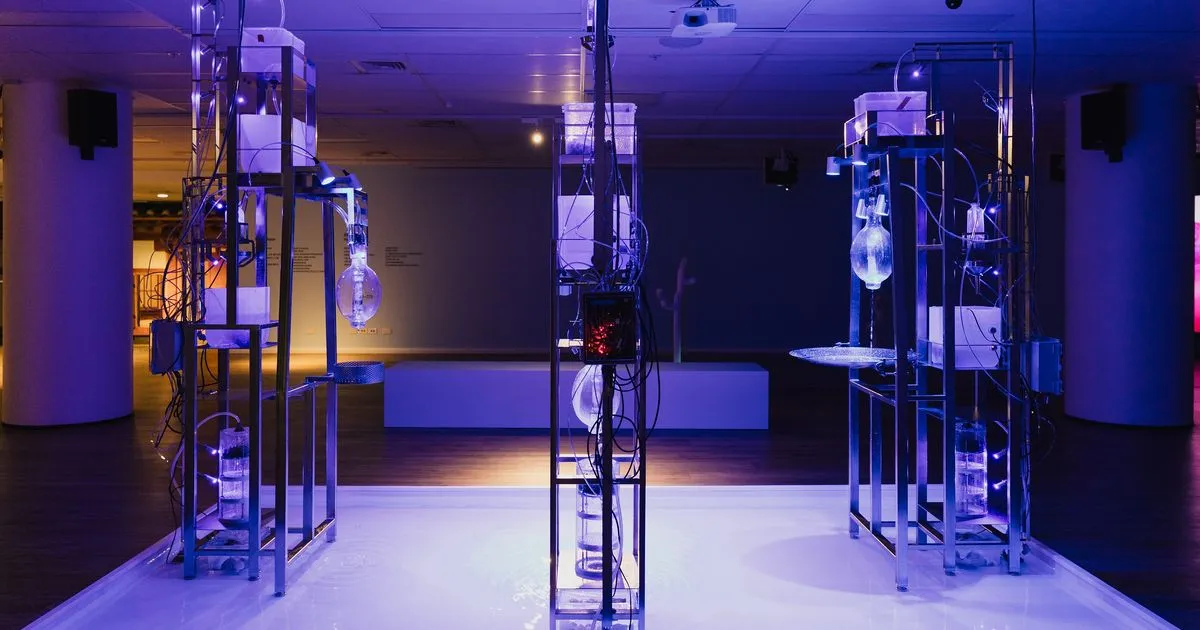
AustraliaAqua Paradiso was an exhibition curated in 2022 by the National Asian Culture Center (ACC). This contemporary art project brought together 11 artists from Asia and around the world to explore the theme of “water” from aesthetic, philosophical, and ecological perspectives. The exhibition took place over a three-month period at ACC in Gwangju, offering a multilayered examination of the primordial nature of life contained within water and its relationship with human society. Aqua Paradiso now continues in 2026 as a touring exhibition at Korean Cultural Centres in India and Australia. This edition features three of the Korean artists who took part in the original exhibition: Hyewon Kwon, Boo Jihyun, and Eunhae Jung (eco orot). Each uses a different visual language to approach the responsiveness and dynamics of water and the transformative sensibilities of the Anthropocene era. More than just a resource or part of the backdrop, the exhibition looks at water as a sensory presence and ecological actor. Ancient civilizations viewed water as the emotional product of transcendent deities, harboring feelings of the sublime in the face of its overwhelming majesty.

Japan launches spacecraft to moons of Mars to bring home soil samples - Griffin Daily News
A Japanese spacecraft rocketed toward Mars on Tuesday on a quest to explore its mysterious moons and bring back samples. Five of the world’s space agencies joined forces for the five-year mission that will attempt to land a robotic prospector plus a rover on Phobos, the larger and closer of Mars’ two pint-sized moons. The Japan Aerospace Exploration Agency, which is leading the bold sampling effort, launched the spacecraft before dawn from the country’s main spaceport on Tanegashima Island. Officials declared success an hour later when the spacecraft separated as planned from the rocket’s upper stage. Flight controllers burst into applause and jumped to their feet, shaking hands and embracing. No one has managed to get samples from Mars or its moons yetWhile NASA has successfully landed nine spacecraft on Mars over the past 50 years and China scored a 2021 touchdown, no one has ever reached Phobos or its sidekick Deimos. And no one has managed to fetch samples from Mars, let alone its moons. If successful, bits of dust, soil and rocks from Phobos will arrive on Earth in 2031.

Surveying the genetic battlefield to uncover the rules of rapid evolution - Phys.org
HHMI investigator Harmit Malik is uncovering the evolutionary rules that guide genetic conflicts—competitions between different entities trying to maximize their success at the expense of another. Credit: Robert Hood The Malik Lab thrives on competition. But for HHMI investigator Harmit Malik and his team at the Fred Hutchinson Cancer Center, it's the genomes—not the people—that are in conflict. The lab studies rapid evolution—the genetic changes that happen in a species over a few generations rather than thousands of years. These fast changes are often fueled by genetic conflicts—competitions between different entities trying to maximize their success at the expense of another.
Deficiency of non-muscle myosin IIA promotes neuroinflammation by impairing autophagic degradation of VCAM-1 in brain endothelium - Nature
Haiyi Zhang1,2 na1, Yawei Li1,3 na1, Xinhong Zhao1, Yujie Zhao1, Jinchao Gu1, Hao Pan1, Aijun Liu1, Jiangguo Lin4, Yuanyuan Peng5, Lijun Wang5, Huantian Zhang6 & … Jiahui Cao1 We’re sharing this article early to provide faster access to peer-reviewed, accepted research. It is citable and carries a permanent DOI. This version is subject to further edits and will be replaced automatically by the final Version of Record. All legal disclaimers apply.
VDAC1 regulates disulfidptosis susceptibility and associates with the immune microenvironment via multi-omics analysis in lung adenocarcinoma - Nature
We’re sharing this article early to provide faster access to peer-reviewed, accepted research. It is citable and carries a permanent DOI. This version is subject to further edits and will be replaced automatically by the final Version of Record. All legal disclaimers apply. AbstractLung adenocarcinoma (LUAD), the predominant subtype of non‑small cell lung cancer, continues to exhibit high incidence and mortality due to tumor heterogeneity and therapy resistance, underscoring the need for novel biomarkers and therapeutic targets. This study aimed to systematically characterize the expression, prognostic value, immune‑microenvironment modulation, and functional role of VDAC1 in LUAD, with a focus on its regulation of glucose‑deprivation–induced disulfidptosis. By integrating multi‑omics data from public resources, we performed differential expression, copy‑number variation, survival, immune‑infiltration, pathway‑enrichment, and single‑cell/spatial transcriptomic analyses. Findings were validated using immunohistochemistry on 15 paired LUAD samples and functional assays in A549 and PC‑9 cell lines.

Newly discovered protein controls the space between mitochondrial membranes - News-Medical
Mitochondria are the tiny powerpacks that supply most of the energy our cells need. Their ability to generate this energy relies on a distinctive architecture: two membranes, one tucked inside the other, separated by a narrow gap called the intermembrane space (IMS). This tiny space helps sustain the chemistry of energy production, making its organization critical to how these cellular powerpacks function. Now, a new study led by a University of Ottawa Faculty of Medicine investigator reports a potentially transformative discovery: the volume of the IMS is genetically controlled and adjustable. By controlling where this space expands or narrows within each mitochondrion, cells can actively shape the internal architecture of their powerpacks and tune how they function.
0 comments
No comments yet. Be the first to share your thoughts!