Sub-micron IR spectroscopic imaging for cellular and biomolecular research - News-Medical
This story deserves to be shared
Send it to someone who'd care, or post it on your networks.
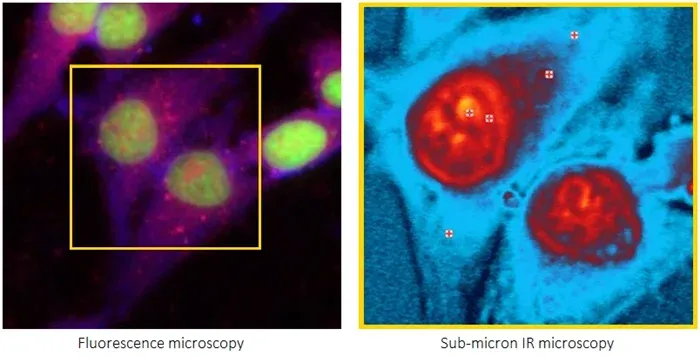
Submicron IR microscopy is opening new opportunities in biological sciences with the development of a new technique: optical photothermal infrared (O-PTIR) spectroscopy.
Developments in life sciences research are playing an increasingly important role in global health, and advancements in technology have the potential to offer new and improved approaches to support the health and wellbeing of people worldwide.
This article is an excerpt. To read the full content, visit the original source. News-Medical
Related articles
Photometric and Spectroscopic Observations of Comet 2P/Encke's Nucleus in the Mid-Infrared Wavelength Region - Astrobiology Web
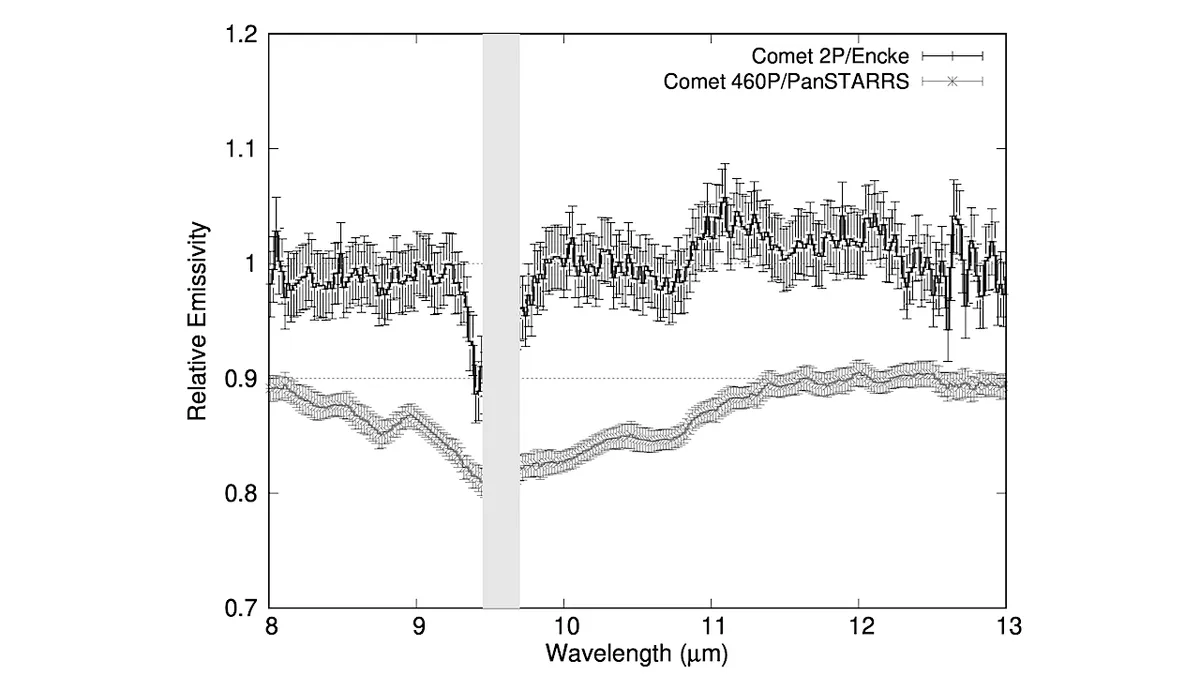
Relative emissivity spectrum of 2P/Encke’s nucleus obtained by the COMICS observations, in comparison with that of 460P/PanSTARRS (T. Ootsubo et al. 2021). The spectrum of 460P/PanSTARRS (in grey) is shifted by 0.1 for the readability. The grey hatched area is the wavelength region influenced by the telluric ozone absorption. -- [astro-ph. EP] [astro-ph. EP] We observed comet 2P/Encke with the Cooled Mid-Infrared Camera and Spectrometer (COMICS) on the Subaru telescope on UT 2003 November 12.3, when the comet was at heliocentric and geocentric distances of 1.09 and 0.27 au, respectively.
How Claude is uplifting biomolecular modeling - Anthropic
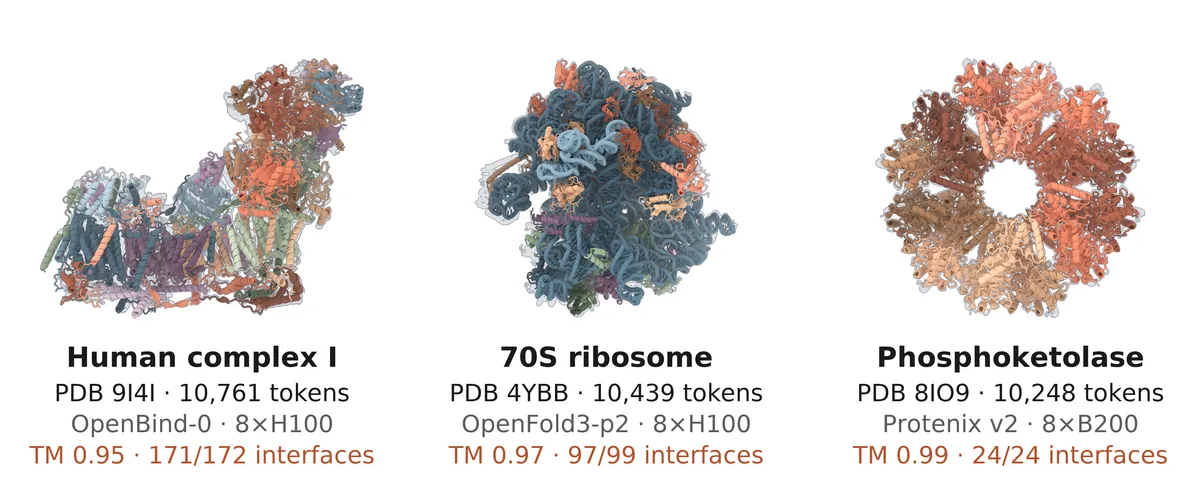
In this post, we share how Claude made the open-source models that scientists use to predict and design biomolecules faster and more memory-efficient. Claude, working within Claude Science, optimized more than 30 of these models in just under four weeks, speeding them up roughly 4x on average. It also created a low-memory mode that enables the accurate prediction of biomolecular systems larger than 10,000 tokens (amino acids, nucleotides, and atoms from small molecules and ions) on a single NVIDIA GPU node. We are open-sourcing all of the optimized code and announcing a protein design competition co-sponsored with Adaptyv Bio, backed by up to $1 million in Claude credits and wet lab validation for over 5,000 designs. Recently, we shared results demonstrating Claude’s abilities to design de novo protein binders through expert-level orchestration of open-source protein design and structure prediction models. De novo binders are small, computationally designed proteins that attach tightly to a specific target molecule to activate, block, or deliver something to it.
Spatial map of the lung reveals cellular mechanisms driving damage and fibrosis in severe COVID-19 - Medical Xpress
A lung affected by deadly forms of COVID-19 not only loses essential cells for breathing but also undergoes profound changes in its internal organization and the way its cells communicate with each other. A study involving the Sant Pau Research Institute (IR Sant Pau), published in Nature Communications, has created a spatial map of this transformation and identified some of the molecular mechanisms that accompany the progression of lung damage and fibrosis.
From a single cell to 1.2 million: Scientists successfully create the largest cellular “family tree” for a mammal - EurekAlert! Science News Releases
image: A circular lineage tree of a 13-day old mouse embryo, originating from a single cell at the center expanding outward over developmental time. Cells derived from the first cell division are marked in blue or red. How does a single fertilized egg produce all the cells in an animal’s body? This question has hung over science for decades, and it’s critical to understanding how diseases like cancer take hold and spread in the body. A new study in the journal Science led by researchers from the Seattle Hub for Synthetic Biology (Seattle Hub)—comprised of the Allen Institute, UW Medicine, and Biohub—moves us closer to the answer.
0 comments
No comments yet. Be the first to share your thoughts!