Spatial map of the lung reveals cellular mechanisms driving damage and fibrosis in severe COVID-19 - Medical Xpress
This story deserves to be shared
Send it to someone who'd care, or post it on your networks.
A lung affected by deadly forms of COVID-19 not only loses essential cells for breathing but also undergoes profound changes in its internal organization and the way its cells communicate with each other. A study involving the Sant Pau Research Institute (IR Sant Pau), published in Nature Communications, has created a spatial map of this transformation and identified some of the molecular mechanisms that accompany the progression of lung damage and fibrosis.
This article is an excerpt. To read the full content, visit the original source. Medical Xpress
Related articles
From a single cell to 1.2 million: Scientists successfully create the largest cellular “family tree” for a mammal - EurekAlert! Science News Releases
image: A circular lineage tree of a 13-day old mouse embryo, originating from a single cell at the center expanding outward over developmental time. Cells derived from the first cell division are marked in blue or red. How does a single fertilized egg produce all the cells in an animal’s body? This question has hung over science for decades, and it’s critical to understanding how diseases like cancer take hold and spread in the body. A new study in the journal Science led by researchers from the Seattle Hub for Synthetic Biology (Seattle Hub)—comprised of the Allen Institute, UW Medicine, and Biohub—moves us closer to the answer.

Regular exercise reshapes the immune system at a cellular level, study suggests - Live Science
Regular exercise makes our immune cells more vigilant, potentially contributing to better long-term health, a new study finds.
Slow down a honey bee stinging and you see impressive mechanisms at work - CBC
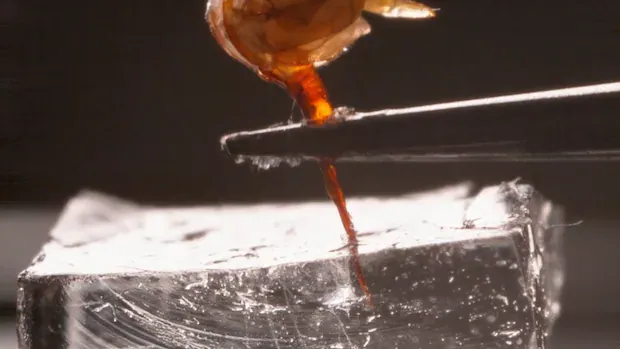
ScienceNew research is showing what makes honeybee stings an effective, self-driving weapon. High speed cameras reveal how the stinger uses a double-piston that pumps up and down to drive it deeper while delivering its poison. New research slows down and shines light on a fatal defense mechanismAnand Ram · CBC News · Posted: Oct 12, 2026 3:00 PM EDT | Last Updated: October 12Listen to this articleEstimated 5 minutesThe audio version of this article is generated by AI-based technology. Mispronunciations can occur. We are working with our partners to continually review and improve the results. High speed videography of an experiment captures how a western honey bee's stinger embeds itself deeper. (Ramirez Esquivel et al. 2026)The stinger of a western honey bee (Apis mellifera) is a weapon of last resort, designed to embed itself and deposit venom in flesh — most often resulting in the worker bee's death. New research published in the Proceedings of the National Academy of Sciences is quite literally shedding light on what makes this defence mechanism so effective.
0 comments
No comments yet. Be the first to share your thoughts!