Steroid Signaling: A hormonal message for a longer life - eLife
This story deserves to be shared
Send it to someone who'd care, or post it on your networks.
This article is an excerpt. To read the full content, visit the original source. eLife
Related articles

Older Than Stonehenge: The Mysterious Man-Made Island Shocking Scientists - Futura, le média qui explore le monde
The Futura Team represents the pulse of Futura’s editorial department, bringing together a collective expertise dedicated to the dissemination of scientific knowledge. Rather than the work of a single author, every article published under this signature is the result of a rigorous collaborative process involving journalists, editors, and fact-checkers. Specializing in news analysis via desk research and international wire services, the team focuses on transforming raw information into accessible, verified content. This curation and synthesis process ensures constant monitoring of technological innovations and major scientific breakthroughs. By cross-referencing sources and conducting multiple rounds of peer review, the Futura Team guarantees scientific accuracy and pedagogical clarity. This collective signature serves as a hallmark of trust, providing reactive, cross-disciplinary information at the forefront of current events For centuries, the crannog of Loch Bhorgastail looked just like any rocky outcrop scattered across Scotland’s Outer Hebrides.
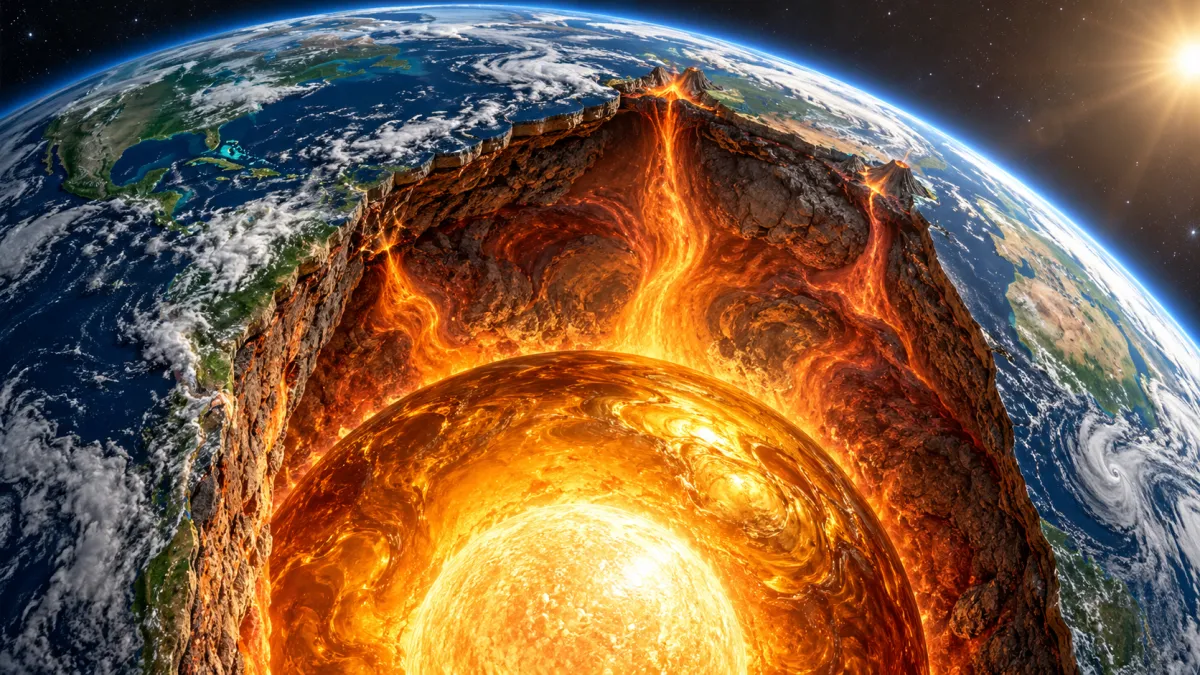
Earth’s core may be leaking hydrogen into the mantle and its volcanic rocks - The Brighter Side of News
Simulations suggest Earth’s ancient magma ocean could not create the unusually light hydrogen signatures found in some volcanic rocks. The modeled mantle retained nearly uniform hydrogen isotope ratios, despite differences among minerals and crystallization conditions. The findings strengthen the case for hydrogen escaping Earth’s core, although the transfer mechanism remains unresolved. Some volcanic rocks carry hydrogen signatures that may trace back to Earth’s metallic core. Lavas from Baffin Island in the Canadian Arctic and Iceland contain unusually little deuterium, hydrogen’s heavier stable isotope. Explaining that imbalance could reveal whether the core has supplied material to the mantle over billions of years. Work led by Wenzhong Wang at the University of Science and Technology of China tests a competing explanation. Published in Science Advances, the study examines whether crystallization of Earth’s ancient magma ocean could have created those distinctive signatures. Its simulations indicate that this process produced far too little separation between hydrogen isotopes.
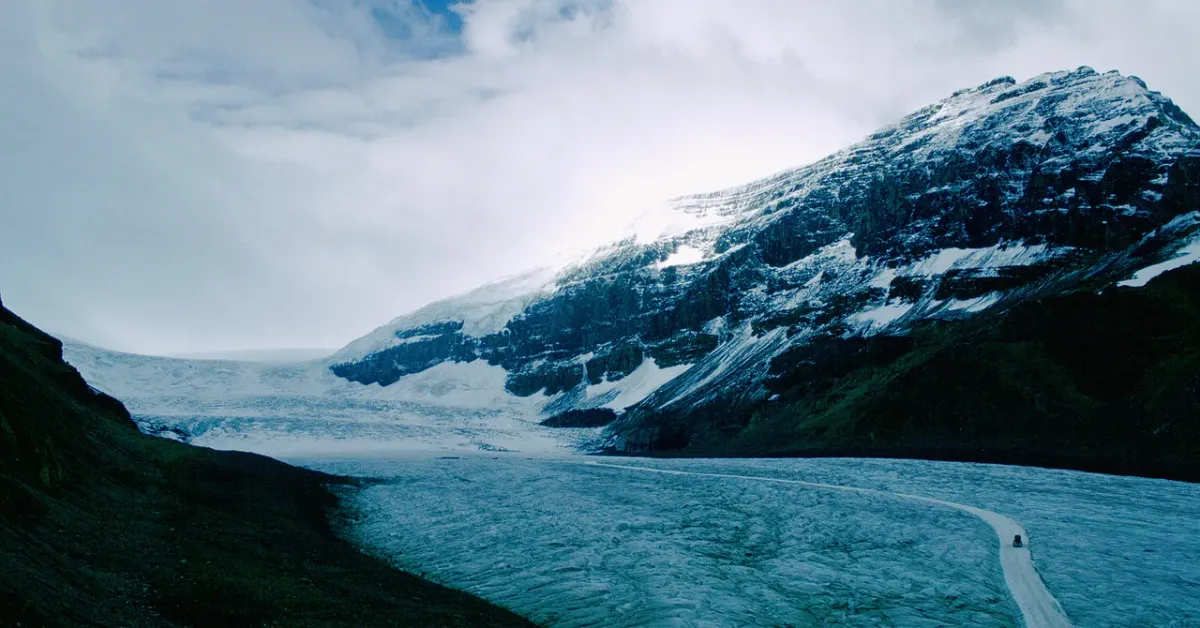
A New Ice Age Was Beginning. Then Humans Started Burning Fossil Fuels - WIRED
Burning fossil fuels may have stopped the Earth from entering another ice age, a new study suggests. The research, published Thursday in the journal Science, uses samples of ancient vegetation and rock records to analyze the growth—and sudden retreat—of an ice cap that is the last vestige of an ice sheet that once covered much of North America. The findings shows the Barnes Ice Cap, which covers parts of Canada’s Baffin Island, started growing a few thousand years ago before rapidly reversing course beginning in the 1960s as carbon pollution ramped up. “A question that’s in the popular consciousness is, have we caused enough global warming to stop the next ice age from happening?” says Andrew Wickert, an associate professor of environmental science at the University of Minnesota Twin Cities, who was not involved in the research. The new research shows that “even as we were just starting to ramp up emissions, we’ve already done enough damage to cause the major North American ice sheet to already start retreating.
0 comments
No comments yet. Be the first to share your thoughts!