A New Ice Age Was Beginning. Then Humans Started Burning Fossil Fuels - WIRED
This story deserves to be shared
Send it to someone who'd care, or post it on your networks.

Burning fossil fuels may have stopped the Earth from entering another ice age, a new study suggests. The research, published Thursday in the journal Science, uses samples of ancient vegetation and rock records to analyze the growth—and sudden retreat—of an ice cap that is the last vestige of an ice sheet that once covered much of North America. The findings shows the Barnes Ice Cap, which covers parts of Canada’s Baffin Island, started growing a few thousand years ago before rapidly reversing course beginning in the 1960s as carbon pollution ramped up. “A question that’s in the popular consciousness is, have we caused enough global warming to stop the next ice age from happening?” says Andrew Wickert, an associate professor of environmental science at the University of Minnesota Twin Cities, who was not involved in the research. The new research shows that “even as we were just starting to ramp up emissions, we’ve already done enough damage to cause the major North American ice sheet to already start retreating.
This article is an excerpt. To read the full content, visit the original source. WIRED
Related articles

Seed Factories Come Pre-Assembled Before Sprouting Time - Science and Culture Today
A computer lies silent on the desk. Nothing is happening. Inside it are fans, a CPU, memory chips, a power supply, and gigabytes of software. At the flick of a switch, the power supply operates the fan and the boot sequence. Operating system processes begin and within a minute, multiple applications appear on the monitor, ready to respond to user input. Any applications scheduled for immediate startup are already operating at full capability. Expand this familiar experience to a factory assembly line with robotic machines powered down for the night. The morning crew arrives to punch in, flicks a switch to turn on the lights. After a few more switches, the entire factory floor is operational, ready for the crew to put in the day’s work. The machinery was all in place through the night. It just needed the signal to run.
The assumption about farm automation that may be wrong - Phys.org
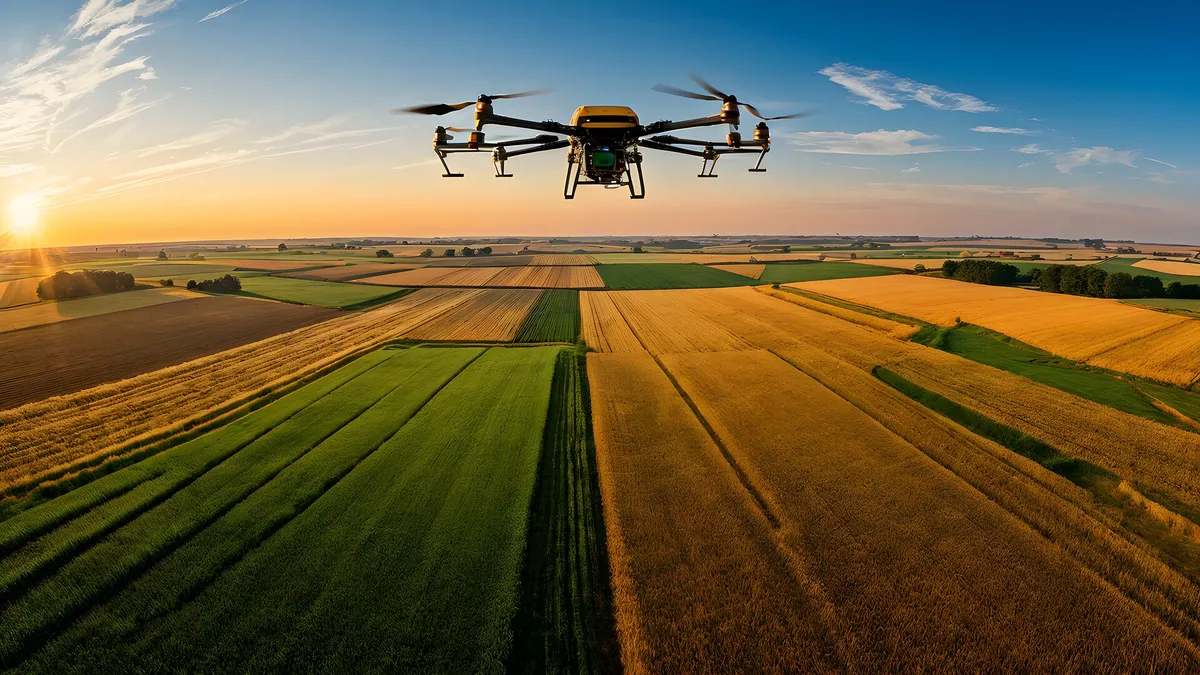
You've likely heard this assumption: When AI-enabled and autonomous machines arrive on the farm, jobs will disappear. But researchers at the University of California, Davis, who studied 16 fruit tree operations in California and Washington for three years, found that automation still takes human knowledge. What changes is how the work gets done. The study, drawing on 165 in-depth interviews with workers and growers, was published in the journal New Technology, Work and Employment. The study examined what researchers call the "last mile" of agricultural automation: what happens after robotic and AI-enabled tools arrive on the farm and have to work in real conditions that can change by the hour.
Stream restoration improves biodiversity but not necessarily ecosystem functioning - Phys.org
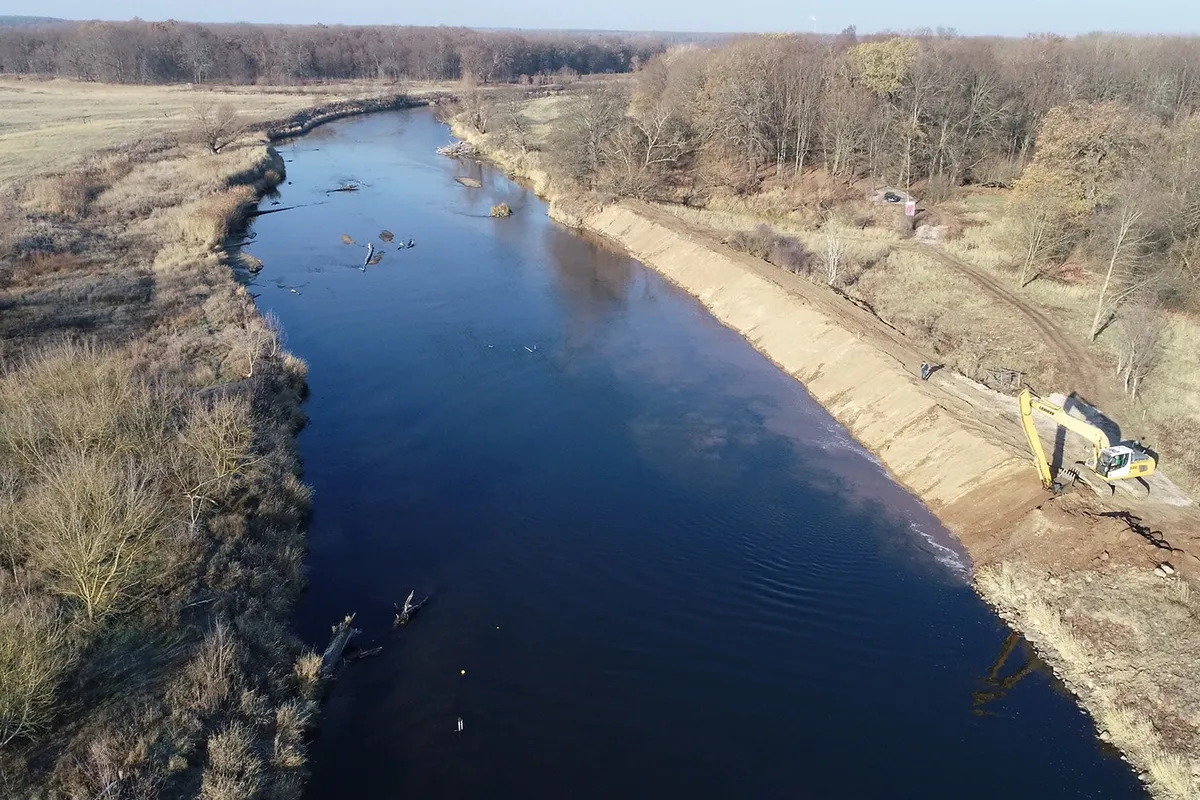
Stream restoration measures along the Mulde River in Germany: Bank reinforcement structures are being removed to restore more natural riverbank conditions. Credit: M. Vieweg The EU Nature Restoration Regulation adopted in 2024 establishes the restoration of ecosystem functions as an objective of stream restoration. But can conventional measures that focus primarily on restoring the physical structure of rivers and streams fulfill this task?

Ants break a basic rule of biology to help them adapt to new environments - Phys.org
Pheidole genus (commonly known as big-headed ants). Credit: Hugo Darras A new study led by researchers in the Eco-Evo-Devo lab at the University of Ottawa finds that ants can decouple antenna size from both head and body size as they develop into different social castes, revealing how social signals and hormones help shape traits for specialized colony roles.
A Strange Radio Signal in The Far Reaches of The Milky Way Is Behaving Like Nothing Else in The Galaxy - ScienceAlert
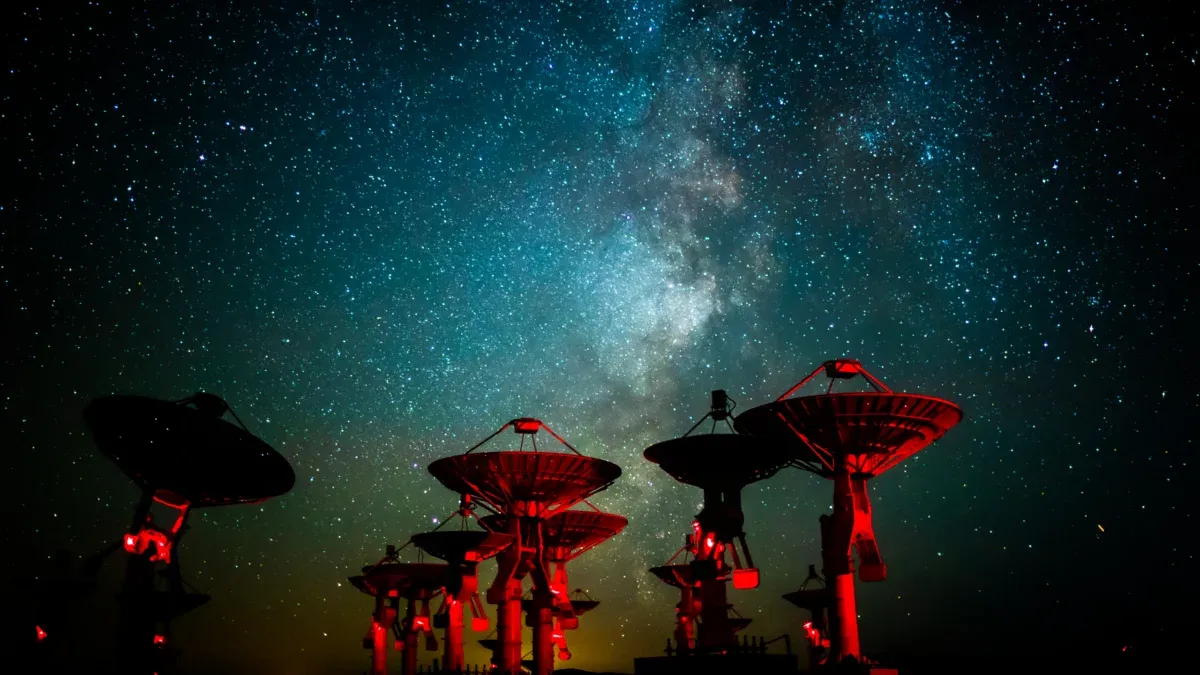
Radio telescopes beneath the Milky Way. Astronomers have discovered a mysterious radio source in our galaxy that has been changing for decades. (000ne/E+/Getty Images) Many things scattered throughout the Milky Way flicker, glow, and pulse in idiosyncratic ways. From the staccato static of a pulsar to the sudden eruption and slow fade of light from a nova, astronomers have a good handle on the various transient changes cosmic objects undergo. It would be a mistake, however, to think the catalog of sidereal shenanigans is complete. And astronomers have now observed an object behaving in ways that no one has ever seen before. It's called VT J1906+0849, located out beyond the Milky Way's outer Norma-Cygnus spiral arm, and changing in blazing radio light. The hinky part? Whatever is powering the object seems to operate on a timescale of decades. "The source," astronomers write in a paper led by Jessie Miller of the California Institute of Technology, "is a distant Galactic synchrotron transient that has remained radio-bright for approximately two decades while exhibiting an evolving spectral turnover frequency and little apparent expansion. "
0 comments
No comments yet. Be the first to share your thoughts!