A Strange Radio Signal in The Far Reaches of The Milky Way Is Behaving Like Nothing Else in The Galaxy - ScienceAlert
This story deserves to be shared
Send it to someone who'd care, or post it on your networks.

Radio telescopes beneath the Milky Way. Astronomers have discovered a mysterious radio source in our galaxy that has been changing for decades. (000ne/E+/Getty Images)
Many things scattered throughout the Milky Way flicker, glow, and pulse in idiosyncratic ways. From the staccato static of a pulsar to the sudden eruption and slow fade of light from a nova, astronomers have a good handle on the various transient changes cosmic objects undergo. It would be a mistake, however, to think the catalog of sidereal shenanigans is complete. And astronomers have now observed an object behaving in ways that no one has ever seen before. It's called VT J1906+0849, located out beyond the Milky Way's outer Norma-Cygnus spiral arm, and changing in blazing radio light. The hinky part? Whatever is powering the object seems to operate on a timescale of decades. "The source," astronomers write in a paper led by Jessie Miller of the California Institute of Technology, "is a distant Galactic synchrotron transient that has remained radio-bright for approximately two decades while exhibiting an evolving spectral turnover frequency and little apparent expansion. "
This article is an excerpt. To read the full content, visit the original source. ScienceAlert
Related articles

Scientists Left AI Alone on a Deserted Island With Nothing to Do. It Invented Games and Started Behaving Like Children at Play - ZME Science
Illustration made with the help of AI. Credit: ZME Science What happens when you put an AI on a virtual deserted island, all alone with no task or objective? Apparently, it finds things to do by itself.
Cortex-wide imaging in naturally behaving mice with 1-gram wireless mesoscopes - Nature
Author informationAuthor notesThese authors contributed equally: Yuanlong Zhang, Angran Li, Lekang Yuan, Mingrui Wang, Weihao ZhaoAuthors and AffiliationsIDG/McGovern Institute for Brain Research, Tsinghua-Peking Center for Life Sciences, School of Life Sciences, State Key Laboratory of Membrane Biology, Center for Life Sciences and Artificial Intelligence, Tsinghua University, Beijing, ChinaYuanlong Zhang, Zhenbo Wang, Yangxuan Zhou, Lin Gao, Rongkang Zhu, Mengyi Tian & Kun LiBeijing Key Laboratory of Cognitive Intelligence, IDG/McGovern Institute for Brain Research, Institute for Brain and Cognitive Sciences, Department of Automation, Tsinghua University, Beijing, ChinaYuanlong Zhang, Tao Yu, Jiamin Wu & Qionghai DaiCollege of Future Information Technology, Fudan University, Shanghai, ChinaAngran LiZhongguancun Academy, Beijing, ChinaAngran LiDepartment of Electrical and Computer Engineering, Princeton University, Princeton, NJ, USALekang YuanSchool of Future Technologies, Northeastern University, Shenyang, ChinaMingrui WangSenior Department of Otolaryngology–Head and Neck Surgery, the Sixth Medical Center of Chinese PLA General Hospital, Chinese PLA Medical School, Beijing,

CERN finds gluons behaving strangely deep inside atomic nuclei - Science Daily
A CERN experiment has given physicists a much sharper look at how gluons behave inside atomic nuclei, providing new evidence that could help distinguish between two competing explanations of what happens at extremely small scales. University of Kansas physicist Daniel Tapia Takaki played a leading role in the study, which was conducted as part of the ALICE experiment at CERN's Large Hadron Collider and published in Physical Review Letters.
Scientists probe link between early brain development and conditions such as autism - Financial Times
Venture will harness clinical data and laboratory tissue models in quest for potential new therapies
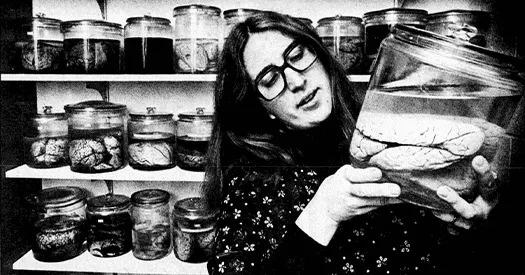
Remembering Barbara Finlay, ‘maverick’ of evolutionary neuroscience - The Transmitter
Brain beholder: Barbara Finlay, pictured here in the Wilder Brain Collection that she curated at Cornell University, spent her 40-year career studying how the brain develops and evolved. Finlay, who died on 12 September, championed the idea that developmental constraints dictate how evolution sculpts brains, a concept she used to model the timing of hundreds of events and align them across mammalian species.
0 comments
No comments yet. Be the first to share your thoughts!