Scientists Say They've Made Cells That Feed, Grow and Reproduce, Bringing Them One Step Closer to Building Life From Scratch - Smithsonian Magazine
This story deserves to be shared
Send it to someone who'd care, or post it on your networks.
This article is an excerpt. To read the full content, visit the original source. Smithsonian Magazine
Related articles
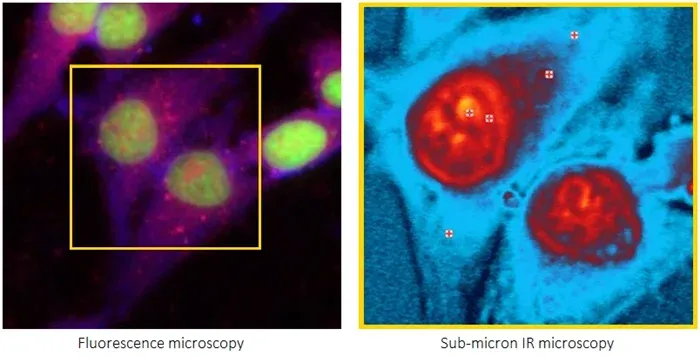
Sub-micron IR spectroscopic imaging for cellular and biomolecular research - News-Medical
Submicron IR microscopy is opening new opportunities in biological sciences with the development of a new technique: optical photothermal infrared (O-PTIR) spectroscopy. Developments in life sciences research are playing an increasingly important role in global health, and advancements in technology have the potential to offer new and improved approaches to support the health and wellbeing of people worldwide.
A comprehensive transcriptome and metabolome dataset for Erigeron breviscapus (Asteraceae) response to different light intensities - Nature
We’re sharing this article early to provide faster access to peer-reviewed, accepted research. It is citable and carries a permanent DOI. This version is subject to further edits and will be replaced automatically by the final Version of Record. All legal disclaimers apply. AbstractErigeron breviscapus is a widely utilized medicinal herb in traditional Chinese medicine, characterized by high annual demand and notable pharmacological activities. Light intensity is a critical environmental factor influencing secondary metabolism in medicinal plants. However, the effects of light intensity on the accumulation of active ingredients in E. breviscapus remain largely unexplored. In this study, we examined the transcriptomic and metabolomic responses of E. breviscapus to five levels of light intensity (50, 100, 200, 400, 800 μmol·m−2·s−1). The results revealed that higher light intensity (EB-L800) significantly increased the accumulation of scutellarin, chlorogenic acid, isochlorogenic acid A, and isochlorogenic acid C. A total of 1,334 metabolites were detected, and 127.10 Gb of high-quality clean data were generated through transcriptomic sequencing.
0 comments
No comments yet. Be the first to share your thoughts!