Driving On The Moon At A Blistering 11.6 MPH - Hackaday
This story deserves to be shared
Send it to someone who'd care, or post it on your networks.
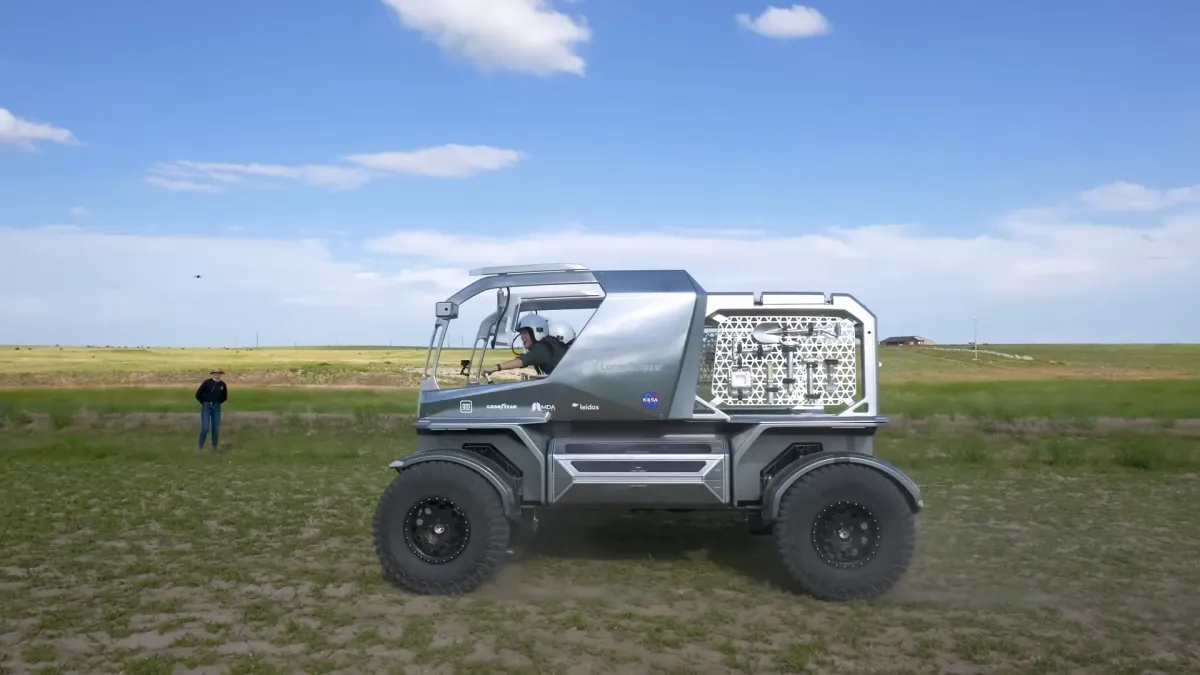
As NASA continues humanity’s slow march back to the Moon, different pieces of the puzzle of establishing a more permanent base there are falling into place. One of these pieces is the the Lunar Terrain Vehicle (LTR), and [Cleo Abram] and [Michelle Khare] got a look at the LTR candidate from Lunar Outpost.
Designed to help astronauts traverse the lunar surface as well as function as a semi-autonomous rover when uncrewed, the LTR will be an integral part to any future Moon base. NASA announced earlier this year that it would be moving forward with the LTR featured in this video and another from competitor Astrolab. Regardless of manufacturer, the LTR will have to deal with some wild conditions in the lunar environment.
This article is an excerpt. To read the full content, visit the original source. Hackaday
Related articles
NASA’s DAVINCI Beats Heat in Preparation for Blistering Venus Descent - NASA Science (.gov)
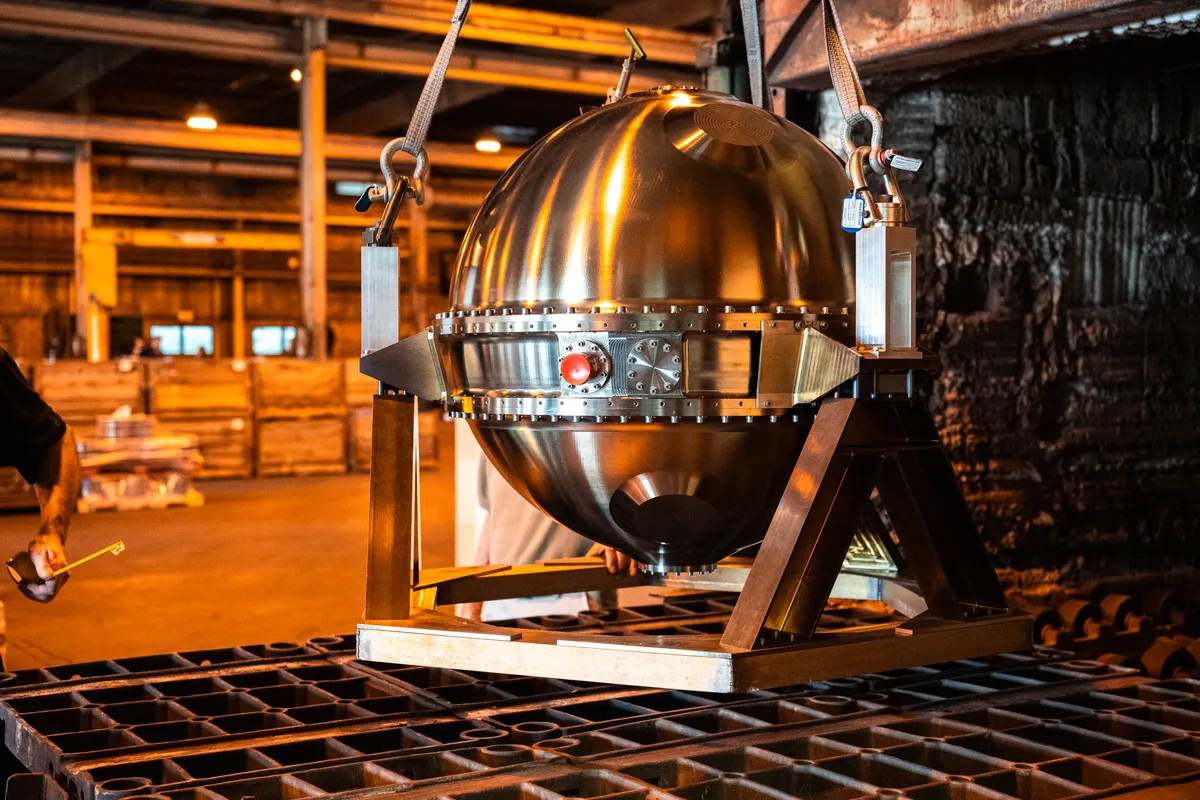
An engineering model of NASA’s DAVINCI (Deep Atmosphere Venus Investigation of Noble gases, Chemistry, and Imaging) descent probe passed a key test that ran from Aug. 28 to Sept. 10, showing it can survive the extreme temperatures of Venus. The DAVINCI team took the engineering model to a furnace at Rex Heat Treat in Bedford, Pennsylvania, as it’s one of few facilities capable of heating up to Venus-like temperatures as rapidly as the probe would experience. They slid the yoga ball-sized vessel into a ceramic-lined chamber with heat-scorched walls and ratcheted up the temperature to 869 F, or 465 C, over the course of about an hour — the same pace the probe will heat up during its descent to the surface of Venus.

Musk Wants The New Tesla Roadster To Go Over 380 MPH
Classic gems, tasteful customs, legendary supercars - for Silvian, they're all fair game. He's been in love with cars and motorcycles for as long as he can remember, so it made perfect sense to eventually turn that passion into a full-time writing career. Around six years and more than 3,000 articles later, he is still going strong and doesn't plan on hitting the brakes anytime soon. Regardless of your opinion on Tesla or its eccentric founder Elon Musk, there’s no denying that the Roadster’s recent reveal was absolutely wild. That thing just drove upside down, flew over a Semi and other Teslas while doing a barrel roll, and launched itself from zero to 60 mph in a single second. Call them gimmicks if you will, but the new Roadster basically broke the internet after its long-awaited official debut. And if there’s one thing Musk is more proficient at than anyone else, that would be his unmatched ability to get people talking even if it comes at the expense of overly ambitious or downright preposterous claims.

Passion for research challenges FHS MPH graduand to push through uncertainty - Simon Fraser University
While many students in the Faculty of Health Sciences (FHS) Master of Public Health (MPH) program do a capstone project to complete their degree, graduand Kezia Kesson was challenged with the realization she wanted to dig even deeper into the health systems by, instead, pursuing a thesis. “I did not initially plan to complete a thesis, but my practicum at the BC Centre for Disease Control made me realize how much I enjoyed asking research questions and working with data to understand real health-system issues,” she explains. “My thesis focused on British Columbia’s Minor Ailments and Contraception Service and compared pharmacist care for uncomplicated urinary tract infections with care provided in primary care, examining both healthcare utilization and how closely antibiotic prescribing aligned with clinical guidelines.”

The Sky Today on Monday, October 19: Feast your eyes on the Southern Fish - Astronomy.com
The Southern Fish is home to the bright luminary Fomalhaut, a lovely young star that shines brightly in the evening sky. Look south late this evening to find the bright star Fomalhaut in Piscis Austrinus above the horizon, forming a large triangle with the Moon to its upper right and Saturn to its upper left. Credit: Stellarium/USGS/Celestia/Clementine
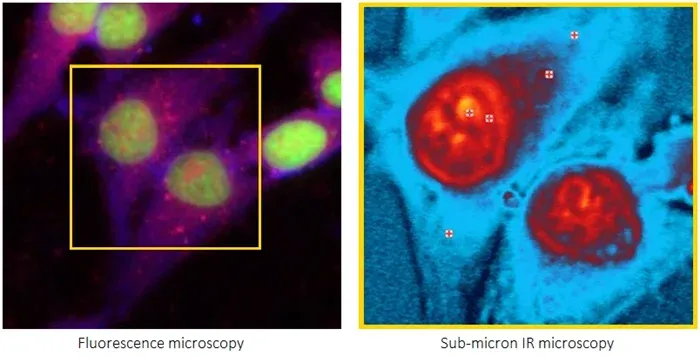
Sub-micron IR spectroscopic imaging for cellular and biomolecular research - News-Medical
Submicron IR microscopy is opening new opportunities in biological sciences with the development of a new technique: optical photothermal infrared (O-PTIR) spectroscopy. Developments in life sciences research are playing an increasingly important role in global health, and advancements in technology have the potential to offer new and improved approaches to support the health and wellbeing of people worldwide.
A comprehensive transcriptome and metabolome dataset for Erigeron breviscapus (Asteraceae) response to different light intensities - Nature
We’re sharing this article early to provide faster access to peer-reviewed, accepted research. It is citable and carries a permanent DOI. This version is subject to further edits and will be replaced automatically by the final Version of Record. All legal disclaimers apply. AbstractErigeron breviscapus is a widely utilized medicinal herb in traditional Chinese medicine, characterized by high annual demand and notable pharmacological activities. Light intensity is a critical environmental factor influencing secondary metabolism in medicinal plants. However, the effects of light intensity on the accumulation of active ingredients in E. breviscapus remain largely unexplored. In this study, we examined the transcriptomic and metabolomic responses of E. breviscapus to five levels of light intensity (50, 100, 200, 400, 800 μmol·m−2·s−1). The results revealed that higher light intensity (EB-L800) significantly increased the accumulation of scutellarin, chlorogenic acid, isochlorogenic acid A, and isochlorogenic acid C. A total of 1,334 metabolites were detected, and 127.10 Gb of high-quality clean data were generated through transcriptomic sequencing.
0 comments
No comments yet. Be the first to share your thoughts!