Scientists Discover Weird Conditions at Site of Star That Exploded During the Period of Japanese Samurai - Futurism
This story deserves to be shared
Send it to someone who'd care, or post it on your networks.
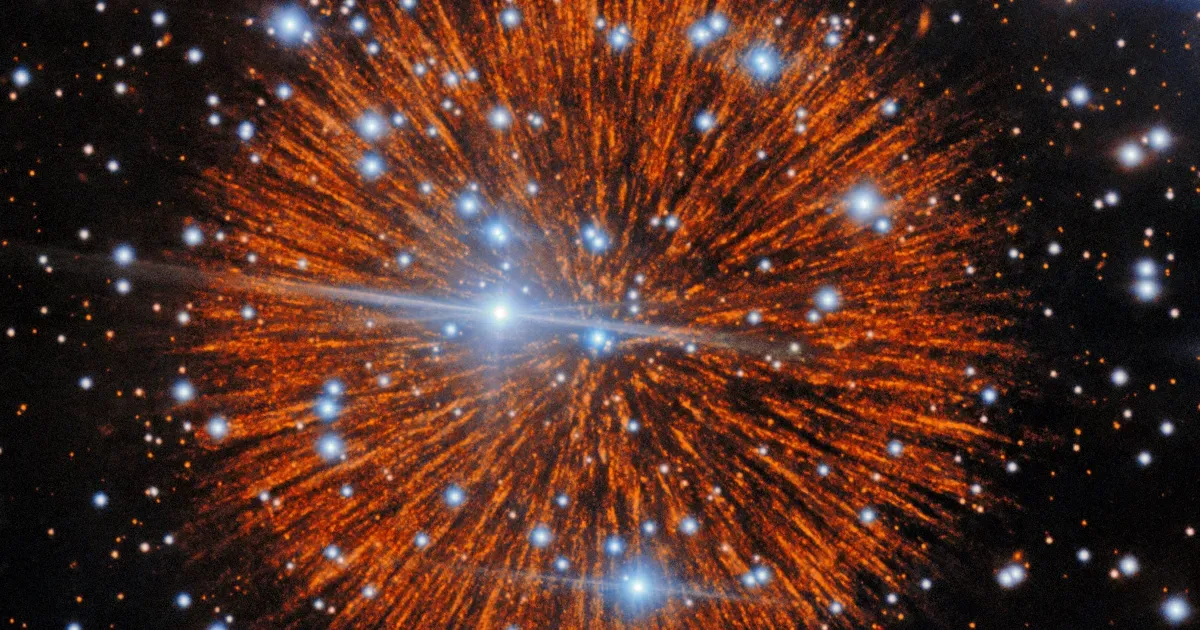
In 1181 — during the early years of the samurai who would dominate Japan’s feudal period — astronomers there witnessed a spectacular sight in the night sky. They observed remnants of a star that had survived its own explosion, a bright object in the Cassiopeia constellation visible for at least 185 days.
The supernova, independently documented almost a millennium ago by Japanese, Chinese, and Arabic astronomers, is just one out of five events like it recorded before the invention of the telescope several hundred years later.
This article is an excerpt. To read the full content, visit the original source. Futurism
Related articles

Cold War spy satellite named after Farrah Fawcett just exploded in space - Popular Science
While likely an accident, the consequences of FARRAH III's explosion could become serious. It’s still unclear why a Cold War-era spy satellite named after famed Charlie’s Angels actress Farrah Fawcett recently exploded above Earth . The secretive reconnaissance craft FARRAH III (officially designated USA-32) launched into orbit aboard a Titan II SLV rocket on September 5, 1988, and likely remained operational for years before exploding on September 13But what was FARRAH III, why was it launched, and what are the consequences of its untimely end?

Hurricane Polo exploded in intensity in just 24 hours. Is the 'super' El Niño to blame? - Live Science
Hurricane Polo exploded from a tropical storm into a powerful Category 5 hurricane in less than 24 hours and is one of the strongest Pacific hurricanes on record.

The Sky Today on Monday, October 19: Feast your eyes on the Southern Fish - Astronomy.com
The Southern Fish is home to the bright luminary Fomalhaut, a lovely young star that shines brightly in the evening sky. Look south late this evening to find the bright star Fomalhaut in Piscis Austrinus above the horizon, forming a large triangle with the Moon to its upper right and Saturn to its upper left. Credit: Stellarium/USGS/Celestia/Clementine

Driving On The Moon At A Blistering 11.6 MPH - Hackaday
As NASA continues humanity’s slow march back to the Moon, different pieces of the puzzle of establishing a more permanent base there are falling into place. One of these pieces is the the Lunar Terrain Vehicle (LTR), and [Cleo Abram] and [Michelle Khare] got a look at the LTR candidate from Lunar Outpost. Designed to help astronauts traverse the lunar surface as well as function as a semi-autonomous rover when uncrewed, the LTR will be an integral part to any future Moon base. NASA announced earlier this year that it would be moving forward with the LTR featured in this video and another from competitor Astrolab. Regardless of manufacturer, the LTR will have to deal with some wild conditions in the lunar environment.
Sub-micron IR spectroscopic imaging for cellular and biomolecular research - News-Medical
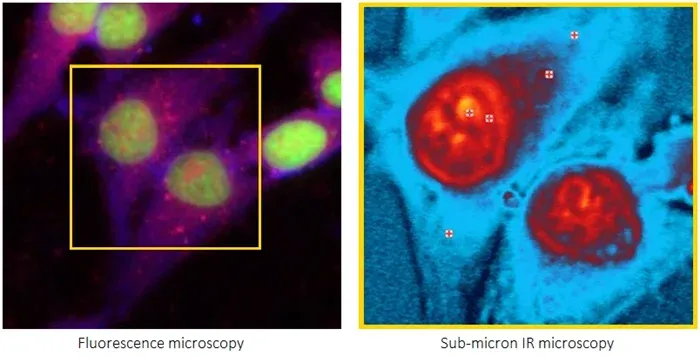
Submicron IR microscopy is opening new opportunities in biological sciences with the development of a new technique: optical photothermal infrared (O-PTIR) spectroscopy. Developments in life sciences research are playing an increasingly important role in global health, and advancements in technology have the potential to offer new and improved approaches to support the health and wellbeing of people worldwide.
A comprehensive transcriptome and metabolome dataset for Erigeron breviscapus (Asteraceae) response to different light intensities - Nature
We’re sharing this article early to provide faster access to peer-reviewed, accepted research. It is citable and carries a permanent DOI. This version is subject to further edits and will be replaced automatically by the final Version of Record. All legal disclaimers apply. AbstractErigeron breviscapus is a widely utilized medicinal herb in traditional Chinese medicine, characterized by high annual demand and notable pharmacological activities. Light intensity is a critical environmental factor influencing secondary metabolism in medicinal plants. However, the effects of light intensity on the accumulation of active ingredients in E. breviscapus remain largely unexplored. In this study, we examined the transcriptomic and metabolomic responses of E. breviscapus to five levels of light intensity (50, 100, 200, 400, 800 μmol·m−2·s−1). The results revealed that higher light intensity (EB-L800) significantly increased the accumulation of scutellarin, chlorogenic acid, isochlorogenic acid A, and isochlorogenic acid C. A total of 1,334 metabolites were detected, and 127.10 Gb of high-quality clean data were generated through transcriptomic sequencing.
0 comments
No comments yet. Be the first to share your thoughts!