Researchers Discover Histidine Pendulum Driving Hydrogenase Proton Capture - AZoCleantech
This story deserves to be shared
Send it to someone who'd care, or post it on your networks.

Nearly all metabolic processes require protons - positively charged hydrogen atoms. Although these are abundant in the cellular fluid, the biocatalysts involved depend on mechanisms for efficiently capturing protons and transporting them to the site where catalysis occurs. Enzymes from microorganisms can produce hydrogen (H2) by combining electrons with protons. These so-termed hydrogenases are so efficient that one biocatalyst can capture nearly 10,000 protons per second. A team of researchers from the Photobiotechnology group at Ruhr University Bochum, Germany, has discovered how they do this. The researchers report their findings in the Journal of the American Chemical Society from October 27, 2026.
How an inhibitor can help us understand biocatalysts
This article is an excerpt. To read the full content, visit the original source. AZoCleantech
Related articles
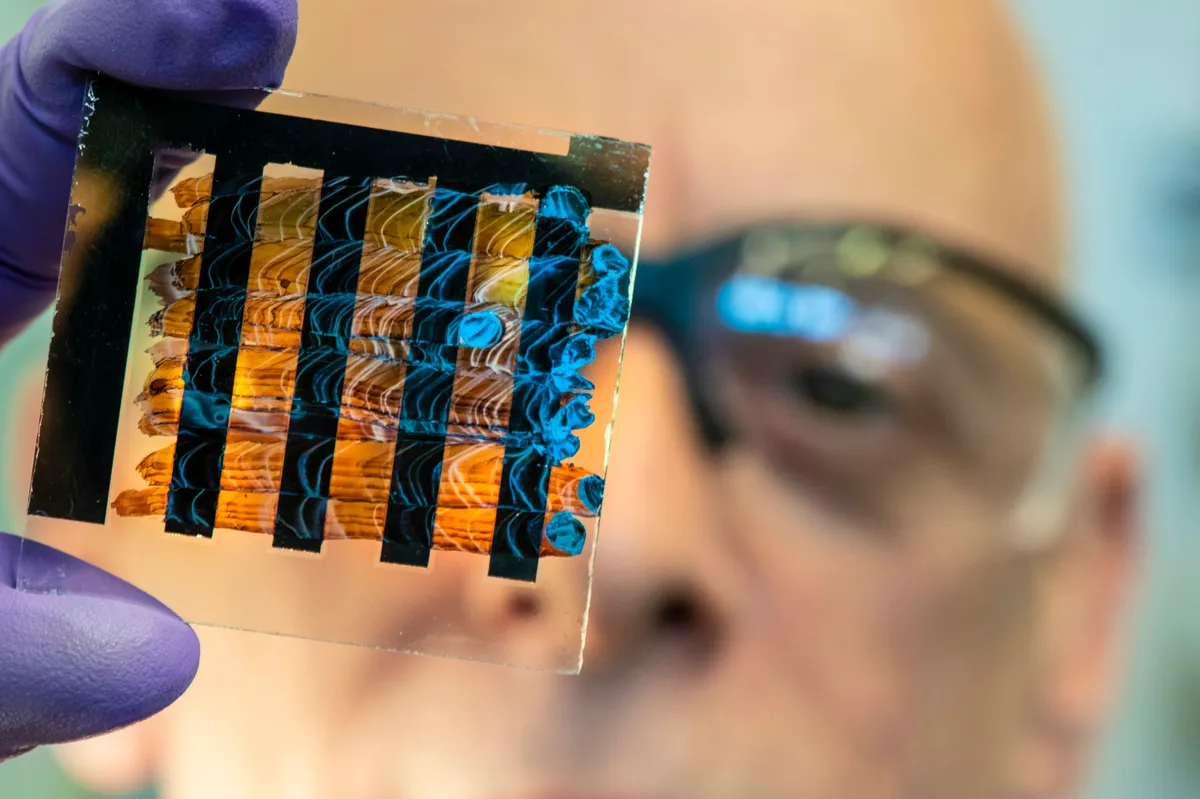
Molecular Pendulum Boosts Hydrogen Production Efficiency - Mirage News
How an inhibitor can help us understand biocatalystsZinc occurs naturally in many biocatalysts, where it is needed for the reaction mechanism. This metal ion binds to reactive groups of certain molecular components—the amino acids— of the enzyme. "Yet through this same bond, zinc can block biocatalysts," explains Dr. Jifu Duan, first author of the current study. "It can also bind non-specifically to sites required for proton binding. "Researchers at Ruhr University Bochum have examined how zinc affects the production of hydrogen by [FeFe]-hydrogenases—and made an interesting discovery. "Although we were able to see in crystal structures that zinc binds to various sites of the [FeFe]-hydrogenases, the interaction at only one very specific location resulted in inhibition," says Duan. Notably, this point is in the direct vicinity of the previously known proton transport pathway of the hydrogenases. Zinc blocks a proton-transporting pendulumThe team around Duan and Professor Thomas Happe was able to demonstrate that the binding of zinc and other metal ions blocks very specific amino acids, namely two histidines on the surface of [FeFe]-hydrogenases.


Quantum Tug-of-War Limits High-Temperature Superconductivity - Mirage News
New work helps show why the dream of high-temperature superconductivity has been so hard to realize: a quantum brawl between superconductivity and a competing state of matter. The finding resulted from a collaboration that included theorists with the Simons Foundation's Flatiron Institute in New York City and experimentalists at Quebec's Institut national de la recherche scientifique (INRS). The researchers investigated a copper alloy called a 'cuprate' as it transitioned from the superconducting state to an enigmatic neighboring state of matter called the 'pseudogap.' Using laser pulses and computer simulations, they were able to understand the behavior of electrons inside the cuprate. In a paper published October 20 in Nature Physics , the team shows how the two states — superconductivity and the pseudogap — wrestle for dominance. That finding challenges the idea that superconductivity in cuprates merely builds upon a pre-existing pseudogap phase. "We're really showing that these states are competing," says study co-author Olivier Gingras , an associate research scientist at the Flatiron Institute's Center for Computational Quantum Physics (CCQ).
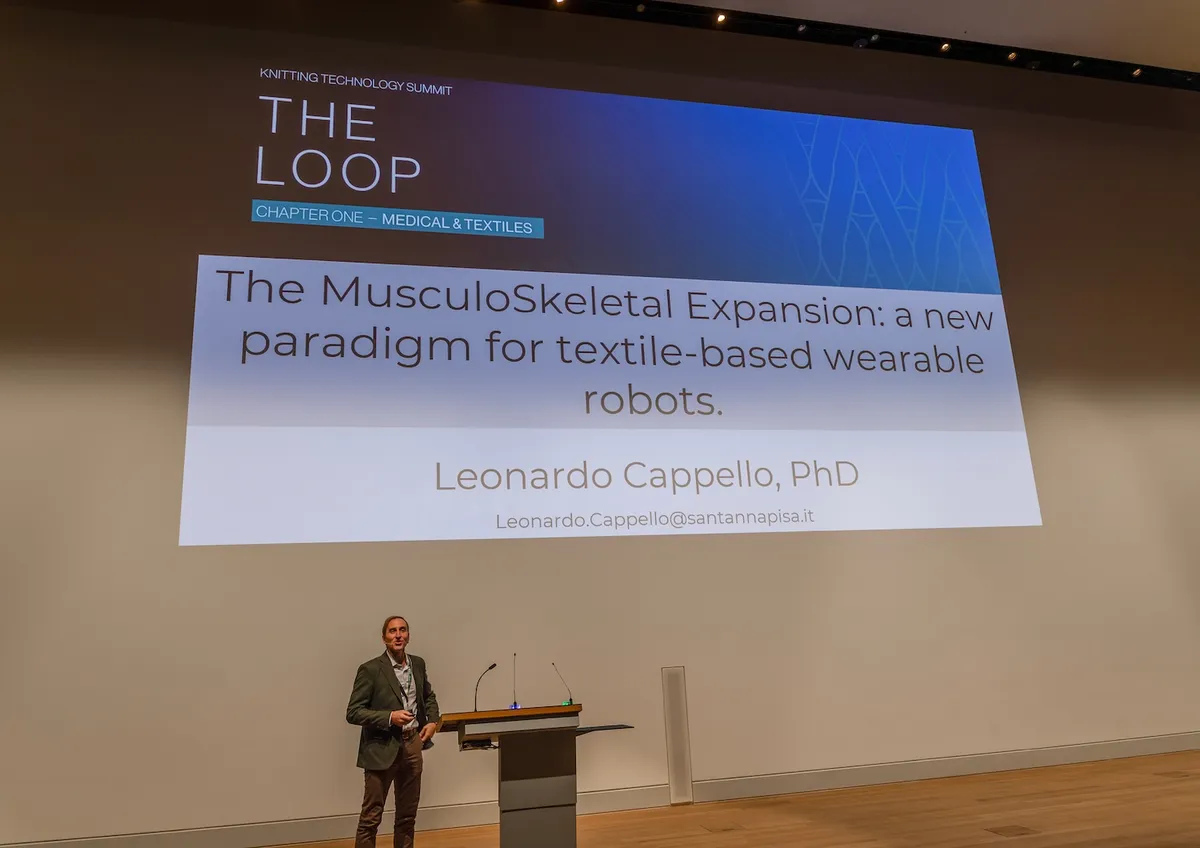
Textile wearable robotics: A new paradigm - Knitting Industry
Italian researchers are exploring knitted textiles and soft robotics to develop new wearable assistive technologies. Leonardo Cappello, Assistant Professor at the BioRobotics Institute of Scuola Superiore Sant'Anna in Pisa, presents on textile wearable robotics.

“I knew there was something going on.” Orangutans heard ‘gossiping’ in Borneo forest. Here’s what they’re saying - BBC Wildlife Magazine
Orangutans are one of the most solitary species of great apes – but a long-term study has discovered that orangutan mothers will interrupt their solitude to make sure their offspring have ‘playdates’. The findings, published in the journal PNAS, reveal that mothers look for opportunities for their young to play with similarly-aged playmates – travelling further away from their ‘core’ area and towards another mother’s core area to do so.
0 comments
No comments yet. Be the first to share your thoughts!