Quantum Tug-of-War Limits High-Temperature Superconductivity - Mirage News
This story deserves to be shared
Send it to someone who'd care, or post it on your networks.

New work helps show why the dream of high-temperature superconductivity has been so hard to realize: a quantum brawl between superconductivity and a competing state of matter. The finding resulted from a collaboration that included theorists with the Simons Foundation's Flatiron Institute in New York City and experimentalists at Quebec's Institut national de la recherche scientifique (INRS). The researchers investigated a copper alloy called a 'cuprate' as it transitioned from the superconducting state to an enigmatic neighboring state of matter called the 'pseudogap.' Using laser pulses and computer simulations, they were able to understand the behavior of electrons inside the cuprate. In a paper published October 20 in Nature Physics , the team shows how the two states — superconductivity and the pseudogap — wrestle for dominance. That finding challenges the idea that superconductivity in cuprates merely builds upon a pre-existing pseudogap phase. "We're really showing that these states are competing," says study co-author Olivier Gingras , an associate research scientist at the Flatiron Institute's Center for Computational Quantum Physics (CCQ).
This article is an excerpt. To read the full content, visit the original source. Mirage News
Related articles
Pair-density waves found in uranium ditelluride beyond superconductivity — ScienceAlert - UA.NEWS
A research group led by scientists at the University of Illinois Urbana-Champaign has found compelling evidence of pair-density waves on the surface of uranium ditelluride. These structures persisted at temperatures higher than the superconducting transition temperature, ScienceAlert reports. The results were published in the journal PNAS. Electron pairs form patternsIn the superconducting state, electrons can form Cooper pairs and move through a material without electrical resistance or energy loss through heating. The existence of pair-density waves, or PDWs, was theoretically predicted as early as 2007. In this state, Cooper pairs form spatially repeating patterns resembling waves in sand. Uranium ditelluride enters a superconducting state at temperatures below approximately 2.1 kelvin, or about minus 271 degrees Celsius. The material also interests physicists as a possible rare spin-triplet superconductor: in such a system, paired electrons also have a small magnetic orientation. More current news is available on the UA. News Telegram channel Telegram. Observations of magnetic field and temperatureSigns of PDW had previously been recorded in uranium ditelluride.
Inflation or recession? The tug of war in bond markets
Governments’ borrowing costs are being pulled in opposite directions
Evidence for spin-fluctuation-mediated superconductivity in electron-doped cuprates - Nature
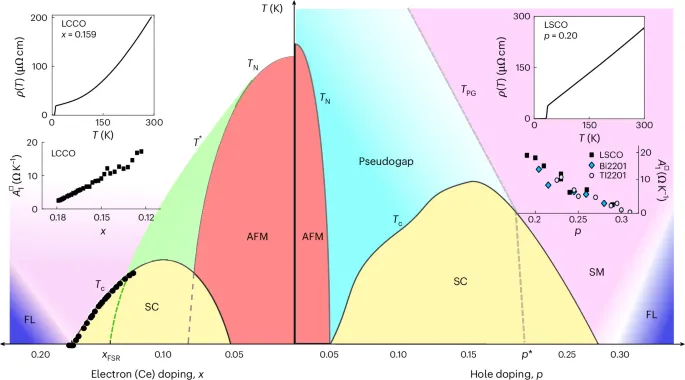
MainThe Bardeen–Cooper–Schrieffer theory of superconductivity, where the electron–phonon interaction binds two electrons into a Cooper pair, forms the basis of our present understanding of conventional superconductors. The critical temperature Tc is governed by an electron–phonon coupling constant λph through the McMillan formula1. The same interaction is also known to scatter electrons in the normal (resistive) state. At intermediate temperatures, where the resistivity ρ(T) is T linear, the associated scattering rate 1/τ = 2πλtrT. Here λtr is a measure of the electron–phonon coupling strength as manifested in charge transport. A near equivalence of λph and λtr has been demonstrated for a wide array of elements and alloys2 (Supplementary Fig. 2), affirming the correlation between the pairing strength and the strength of the relevant (transport) scattering process. Many superconductors of current interest, including heavy fermions, Fe-based superconductors, organic conductors, nickelates and cuprates, are believed to have a pairing mechanism that is non-phononic in origin.

Textile wearable robotics: A new paradigm - Knitting Industry
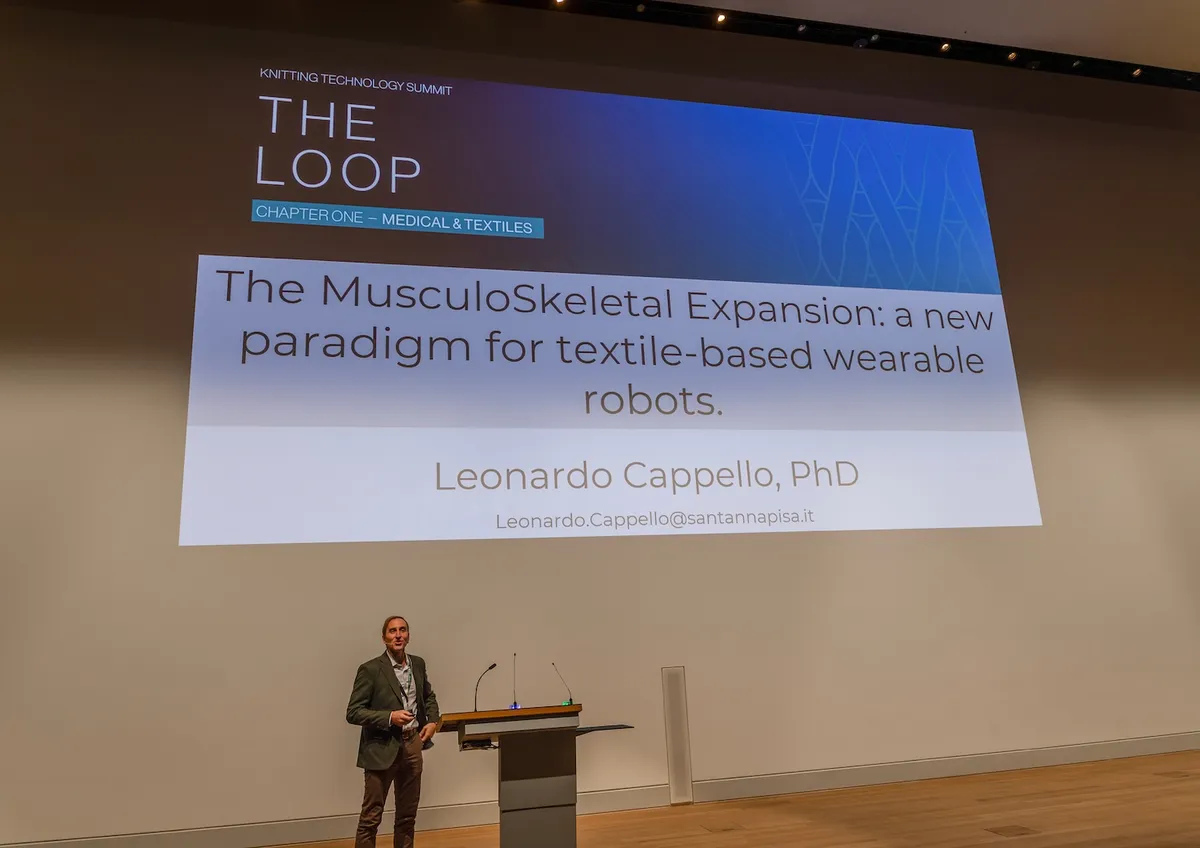
Italian researchers are exploring knitted textiles and soft robotics to develop new wearable assistive technologies. Leonardo Cappello, Assistant Professor at the BioRobotics Institute of Scuola Superiore Sant'Anna in Pisa, presents on textile wearable robotics.
“I knew there was something going on.” Orangutans heard ‘gossiping’ in Borneo forest. Here’s what they’re saying - BBC Wildlife Magazine
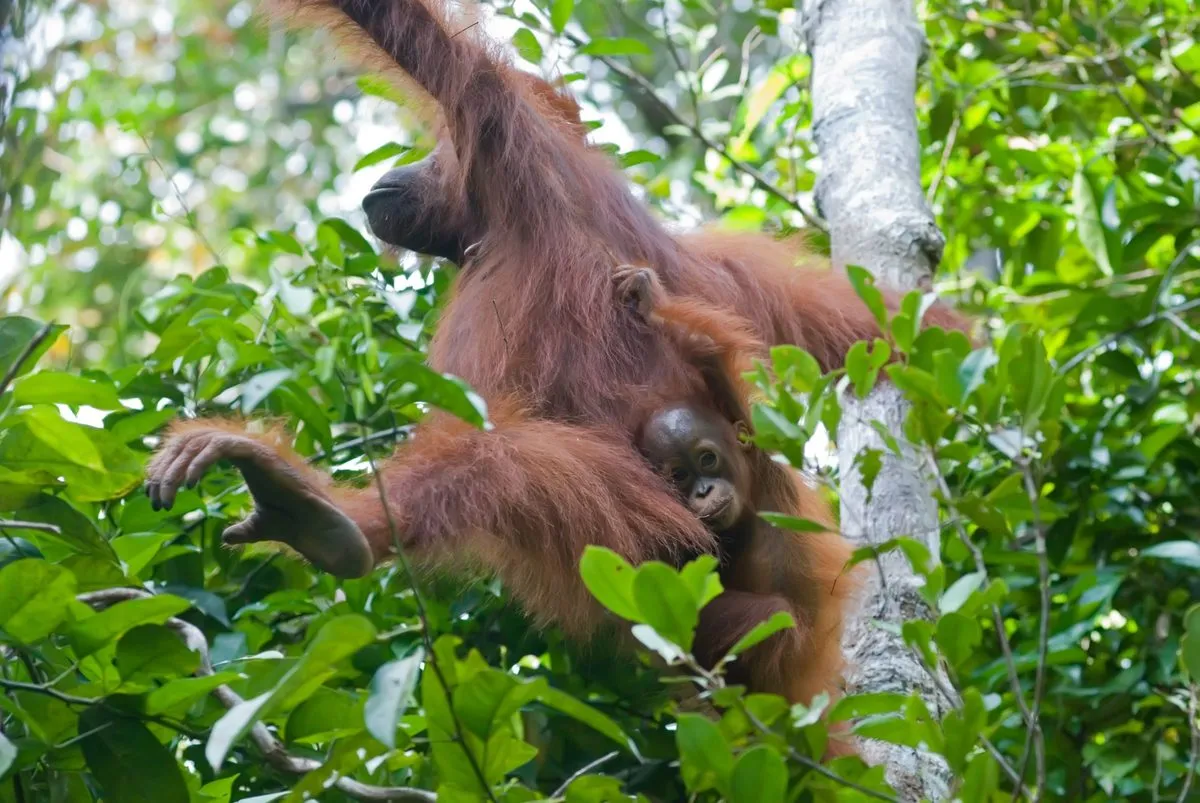
Orangutans are one of the most solitary species of great apes – but a long-term study has discovered that orangutan mothers will interrupt their solitude to make sure their offspring have ‘playdates’. The findings, published in the journal PNAS, reveal that mothers look for opportunities for their young to play with similarly-aged playmates – travelling further away from their ‘core’ area and towards another mother’s core area to do so.
0 comments
No comments yet. Be the first to share your thoughts!