Prototaxites fossils are structurally and chemically distinct from extinct and extant Fungi - Science | AAAS
This story deserves to be shared
Send it to someone who'd care, or post it on your networks.
This article is an excerpt. To read the full content, visit the original source. Science | AAAS
Related articles
How Enceladus' ocean spray becomes chemically diverse ice grains - EurekAlert!
image: Artist’s rendering of Saturn’s icy moon Enceladus, showing a plume of ice particles and water vapour erupting from fractures near its south pole. Material originating from the moon’s subsurface ocean travels through these icy vents before being ejected into space. The new study suggests that ocean droplets freeze slowly during this journey, allowing salts to separate before the frozen droplets fragment into the chemically diverse ice grains detected by NASA’s Cassini spacecraft. The illustration is based on observations from the Cassini mission. Saturn's icy moon Enceladus hides a global ocean beneath its frozen surface. From fractures near its south pole, material from this ocean is ejected into space as a plume of water vapour and ice particles. These particles offer scientists a rare opportunity to investigate an extraterrestrial ocean without drilling through kilometres of ice.
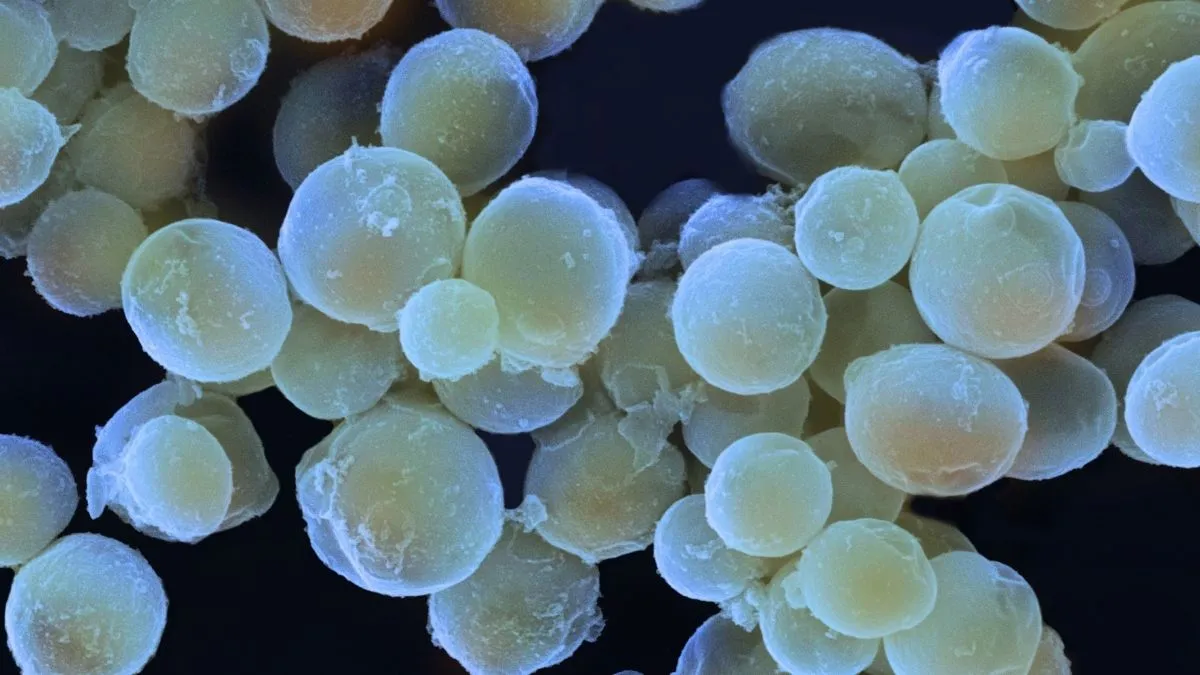
There Are Fungi in The Ocean, And They May Be Way More Important Than We Realized - ScienceAlert
Fungi in the Arctic sediments could look a bit like this. (David Spears FRPS ASIS FRMS/Corbis Documentary/Getty Images) Hidden inside tree trunks, between grains of soil, deep within our bodies, and below our feet, fungi seem to wind their way into everything. But did you know fungi actually live in the ocean, too? New research published in PLOS Biology reveals the overlooked role of marine fungi in the carbon cycle by zooming in on the seawater and sediments that line an Arctic fjord in Norway. We're only just starting to understand how widespread fungi are on this planet, and how much they contribute to the global carbon cycle. Marine fungi are easily overlooked because they're microscopic, but that doesn't mean their impact is small. For the first time, scientists quantified how much fungi in marine sediments are incorporating dissolved, free-floating amino acids into their bodies, trapping carbon and nitrogen. "Our study shows that fungi in the Arctic Ocean can contribute significantly to carbon storage in sediments via their highly efficient metabolism," explains geomicrobiologist William Orsi of Ludwig Maximilian University of Munich (LMU Munich) in Germany.
0 comments
No comments yet. Be the first to share your thoughts!