Parents of Dorset girl who died from brain tumour welcome PM's promises - BBC
This story deserves to be shared
Send it to someone who'd care, or post it on your networks.
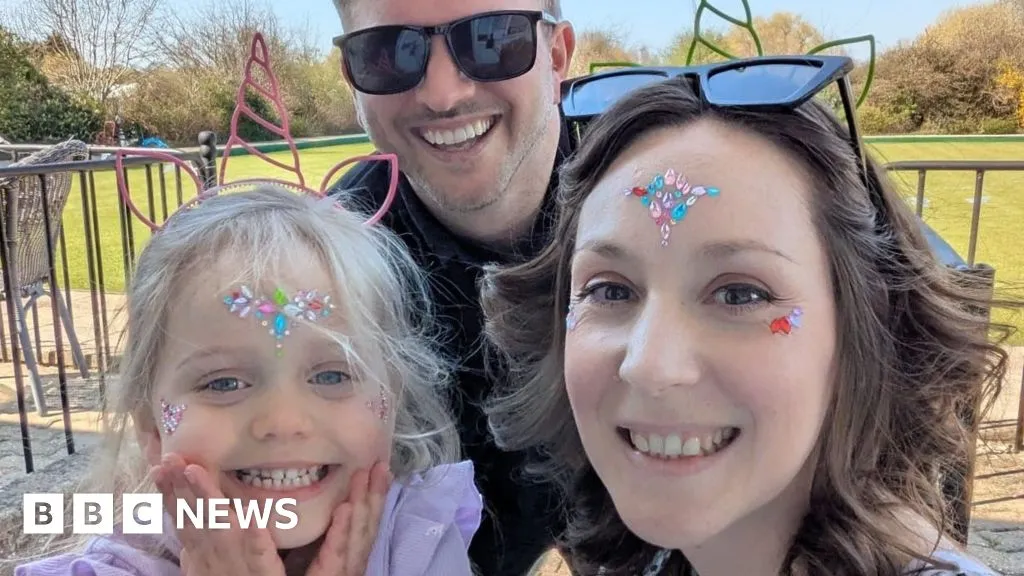
Grieving family welcome PM's brain cancer promise2 hours agoHannah WalshSouth of England Clare and Mark GrimleySeren was only four years old when she died due to a brain tumourA family whose daughter died from a brain tumour have welcomed Prime Minister Andy Burnham's promises for more investment into brain cancer research. Clare and Mark Grimley, from Bournemouth, Dorset, lost their four-year-old daughter Seren to a brain cancer, called an ependymoma, a year after she was diagnosed. Seren had brain surgery, learnt to walk again, went through proton beam therapy (PBT) and had a "really positive" end of treatment scan, before the tumour grew back within months. The promises from Burnham, including a review of brain cancer progress, come after a meeting with Archie Goodburn, a commonwealth swimmer who has three inoperable brain tumours. The family described Seren as a "very girly girl" who "loved her princesses, loved her unicorns". She first started to display symptoms such as a headache, being lethargic and losing her balance in July 2025 and died a year later.
This article is an excerpt. To read the full content, visit the original source. BBC
Related articles

Surrey mother whose son died of a brain tumour welcomes new plans - BBC
1 day agoJane TrumbleSouth EastEllie ThompsonBilly died 15 days before his fifth birthdayA mother whose son died of a brain tumour has welcomed government plans to speed up research into the disease. Ellie Thompson's son Billy passed away when he was four years old from an aggressive brain tumour. Speaking on BBC Radio Surrey, Ellie, from Great Bookham, praised Archie: "It is an honour to be alongside him and all the other amazing people that have lost someone or have brain tumours themselves. "That afternoon, Downing Street announced steps which it says means people living with brain cancer "will get a faster route from research to treatment". Ellie ThompsonBilly underwent radiotherapy treatment for his brain tumourEllie's son Billy was four years old when he died in her arms just five months after diagnosis. She said: "To be told there is nothing they can do apart from radiotherapy... it was hopeless. "Now Ellie says she and other campaigners are finally making change.
Point-of-Care Ultrasound Detection of Acute Myocardial Dysfunction Following Bupropion Overdose: A Case Report - Cureus
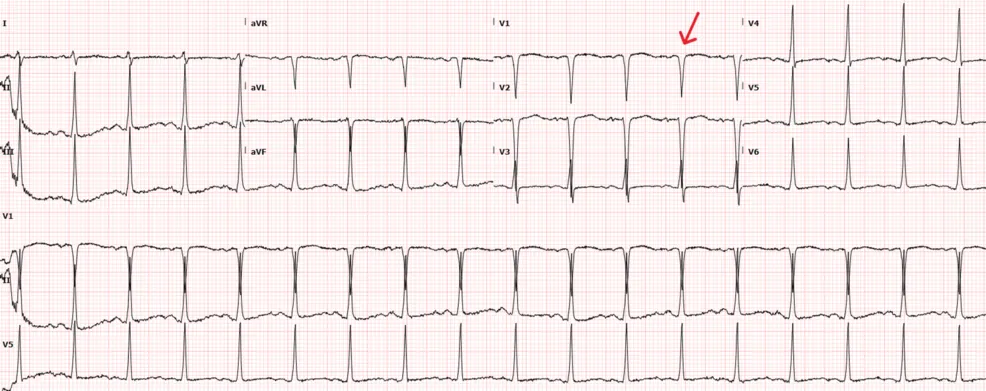
Bupropion overdose is associated with significant morbidity and mortality due to severe neurologic and cardiovascular toxicity, including seizures and life-threatening arrhythmias. Early recognition of electrocardiographic, clinical, and echocardiographic abnormalities is critical for prompt intervention and prevention of clinical deterioration. We present a case of a 21-year-old female who presented to the emergency department following an intentional polysubstance overdose involving suspected bupropion ingestion. The initial electrocardiogram (EKG) demonstrated sinus tachycardia. However, during continued monitoring, the patient developed QRS widening and seizures. Treatment included benzodiazepines, calcium, and sodium bicarbonate. Point-of-care ultrasound (POCUS) revealed a reduced ejection fraction (EF) of less than 30%, which was later confirmed on formal transthoracic echocardiography. These findings prompted escalation of care, intubation for airway protection and deep sedation, and transfer to the intensive care unit (ICU). During admission, she developed torsades de pointes (TdP), resulting in cardiac arrest. Despite her critical presentation, repeat echocardiography upon

Pembrolizumab-Associated Adrenal Insufficiency Presenting as Adrenal Crisis: A Case Report - Cureus
Immunotherapy regimens containing the programmed cell death protein 1 (PD-1) inhibitor pembrolizumab are widely utilised in the management of non-small cell lung cancer (NSCLC). However, the administration of pembrolizumab is associated with unique immune-related adverse events. Adrenal insufficiency is a rare, potentially life-threatening endocrinopathy that can manifest even after the cessation of planned treatment. A male in his 50s with metastatic pulmonary adenocarcinoma developed an acute adrenal crisis 12 days after completing a 24-month course of pembrolizumab immunotherapy. Routine outpatient blood tests first identified critical hypocortisolaemia (morning serum cortisol <50 nmol/L), prompting the patient to attend hospital. The patient subsequently developed severe hypotension (58/45 mmHg) and reported malaise, anorexia, and vomiting after oral intake. Septic shock was considered but felt to be less likely given the absence of infective symptoms. The patient was successfully resuscitated in the emergency department with administration of fluids and high-dose intravenous hydrocortisone. Following clinical stabilisation, under the supervision of the endocrinology team, he w
Synergistic reductive decolorization of waterlogged archaeological wood via a thiourea dioxide–amine borane system - Nature
We’re sharing this article early to provide faster access to peer-reviewed, accepted research. It is citable and carries a permanent DOI. This version is subject to further edits and will be replaced automatically by the final Version of Record. All legal disclaimers apply. AbstractWaterlogged archeological wood (WAW) undergoes lignin oxidation in the presence of air, generating quinones and other conjugated chromophores that cause severe discoloration. As conventional reductants (e.g., Na2S2O4 and NaBH4) struggle to balance between decolorization performance and operational compatibility, a thiourea dioxide (TDO)–amine borane (AB) composite formulation was developed for WAW decolorization. A paper-based solid-phase model with a covalently linked o-quinone motif was constructed for quantitative evaluation. The performances of TDO, dimethylamine borane (DMAB), tert-butylamine borane (TBAB), and their combinations were evaluated on both model and WAW samples. The TDO–AB formulations outperformed single-component treatments in decolorization effect and rate.
0 comments
No comments yet. Be the first to share your thoughts!