Outcomes of Severity-Stratified Antithrombotic Management of Imaging-Detected Thrombosis After Simultaneous Pancreas-Kidney Transplantation - Cureus
This story deserves to be shared
Send it to someone who'd care, or post it on your networks.
This article is an excerpt. To read the full content, visit the original source. Cureus
Related articles

A Clinical Framework for Antithrombotic Review in Anticoagulated Patients With Stable Coronary Artery Disease: When Should Aspirin Be Stopped? - Cureus
Patients receiving oral anticoagulation (OAC) for atrial fibrillation frequently have concomitant coronary artery disease (CAD), raising questions about the duration of additional antiplatelet therapy. Triple antithrombotic therapy combines OAC with aspirin and a P2Y₁₂ inhibitor, usually clopidogrel, whereas dual antithrombotic therapy combines OAC with a single antiplatelet agent. Early aspirin withdrawal from triple therapy and subsequent withdrawal of the remaining antiplatelet are separate decisions requiring assessment of the coronary timeline and current treatment indications. This narrative editorial examines randomized evidence and proposes a structured medication review framework. The evidence generally supports OAC monotherapy in appropriately selected patients with stable CAD, with reduced bleeding and favourable net clinical outcomes compared with combined treatment. However, aspirin-specific findings require distinction from comparisons involving clopidogrel or mixed antiplatelet regimens. Overall trial results do not establish identical benefits or harms across patients with previous myocardial infarction, multivessel disease, or complex coronary intervention. Differe
Interventional Post-ACS Antithrombotic Trials at ESC Congress 2026 - American College of Cardiology
Four late-breaking trials, presented at ESC Congress 2026 focused on post-acute coronary syndrome (ACS) antithrombotic therapy. LIBREXIA ACS examined adding the factor XIa inhibitor milvexian to antiplatelet therapy after ACS, PREMIUM looked at aspirin omission at the time of primary PCI for STEMI, SWITCH SWEDEHEART evaluated whether to switch from ticagrelor to prasugrel in ACS, and A-CLOSE compared clopidogrel monotherapy with extended dual antiplatelet therapy (DAPT) after high-risk PCI. LIBREXIA ACS: Can Factor XIa Inhibition Improve Outcomes After ACS?

Immunotherapy-Based Downstaging Linked to Improved Outcomes After Liver Transplantation in Hepatocellular Carcinoma - The ASCO Post
An immune checkpoint inhibitor–based multimodal downstaging strategy before liver transplantation was associated with improved posttransplant survival and a lower risk of recurrence among patients with hepatocellular carcinoma initially beyond the Milan criteria (single lesion not larger than 5 cm or two or three lesions not larger than 3 cm each), based on findings from a Chinese study published in JAMA Oncology. However, according to Ong et al, the strategy was also associated with a higher rate of acute rejection within 90 days posttransplantation. “By characterizing this post–liver transplantation benefit-risk profile, this multicenter matched cohort study may inform future prospective studies of immune checkpoint inhibitor–based pretransplant strategies in liver transplantation candidates and help clinical decision-making,” the investigators wrote.
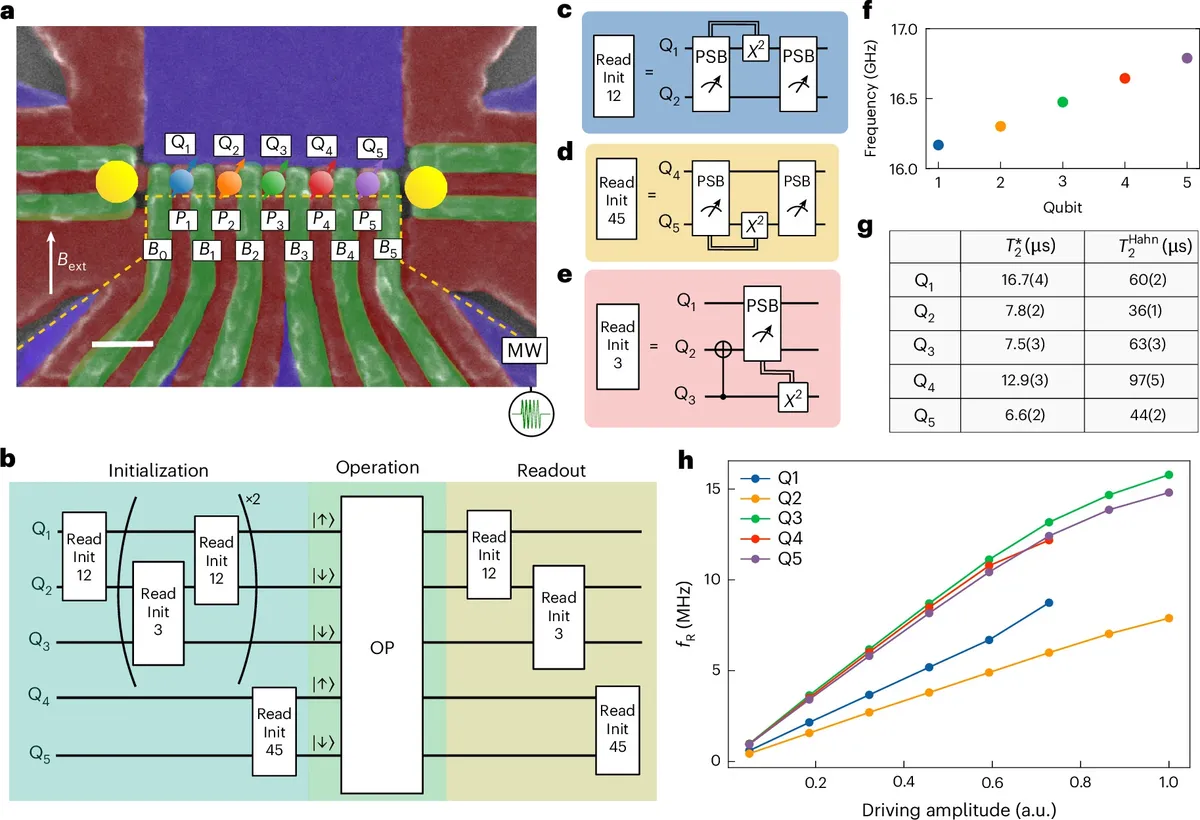
RIKEN Demonstrates High-Fidelity Simultaneous Control of Silicon Spin Qubits Above 99.9% Threshold - Quantum Computing Report
In a study published in Nature Physics, researchers from RIKEN, National Taiwan University, ETH Zurich, and TU Delft have demonstrated simultaneous high-fidelity single-qubit operations across a five-qubit silicon (28Si/SiGe) quantum dot array using a single, shared microwave control line. Detailed in the paper (“Simultaneous high-fidelity single-qubit gates in a spin qubit array“, the team identified AC-Stark shifts as the main source of parallel drive crosstalk and introduced an N(N-1) pairwise calibration protocol that preserves gate fidelities above 99.9% during simultaneous 5-qubit operation.
0 comments
No comments yet. Be the first to share your thoughts!