Immunotherapy-Based Downstaging Linked to Improved Outcomes After Liver Transplantation in Hepatocellular Carcinoma - The ASCO Post
This story deserves to be shared
Send it to someone who'd care, or post it on your networks.

An immune checkpoint inhibitor–based multimodal downstaging strategy before liver transplantation was associated with improved posttransplant survival and a lower risk of recurrence among patients with hepatocellular carcinoma initially beyond the Milan criteria (single lesion not larger than 5 cm or two or three lesions not larger than 3 cm each), based on findings from a Chinese study published in JAMA Oncology. However, according to Ong et al, the strategy was also associated with a higher rate of acute rejection within 90 days posttransplantation.
“By characterizing this post–liver transplantation benefit-risk profile, this multicenter matched cohort study may inform future prospective studies of immune checkpoint inhibitor–based pretransplant strategies in liver transplantation candidates and help clinical decision-making,” the investigators wrote.
This article is an excerpt. To read the full content, visit the original source. The ASCO Post
Related articles
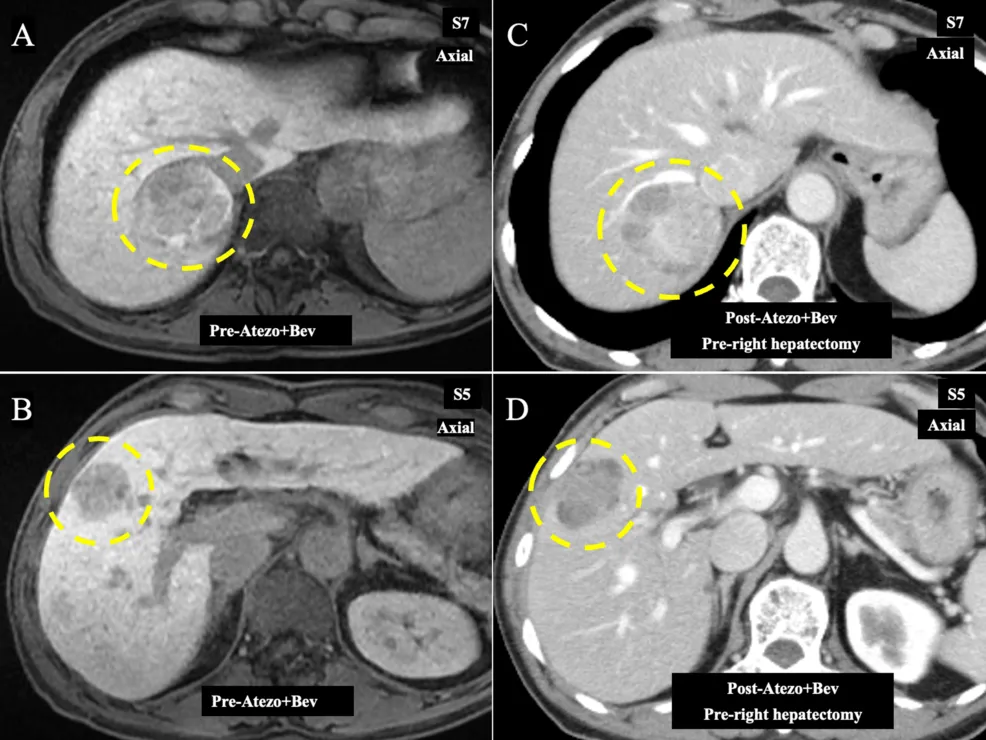
Robotic Parenchyma-Sparing Repeat Hepatectomy After Durvalumab Plus Tremelimumab for Recurrent Hepatocellular Carcinoma Abutting the Left Glissonean Pedicle Following Prior Atezolizumab-Bevacizumab Failure: A Case Report - Cureus
Immune checkpoint inhibitor (ICI)-based combination therapies have expanded the treatment options for hepatocellular carcinoma (HCC), and tumor shrinkage achieved with these regimens can make limited, parenchyma-sparing resection possible. We report the case of a 67-year-old man with multiple HCCs who had received atezolizumab plus bevacizumab without response and then underwent portal vein embolization followed by open right hepatectomy. Forty-eight months after hepatectomy, magnetic resonance imaging revealed new HCC lesions in segments 3 and 4 of the remnant left liver; the segment 4 lesion abutted the main left Glissonean pedicle, which had to be preserved. Durvalumab plus tremelimumab was administered for three courses and produced marked tumor shrinkage, separating the tumor from the pedicle. Robot-assisted partial resection of segments 3 and 4 was performed with indocyanine green fluorescence guidance, despite dense adhesions from the previous surgery. The patient was discharged without post-hepatectomy liver failure or complications. Pathology showed well-differentiated HCC without vascular invasion. The patient is alive without recurrence and without systemic therapy 69 mo
Metaplastic breast carcinoma: a rare breast cancer with distinct biology and therapeutic challenges - Nature
We’re sharing this article early to provide faster access to peer-reviewed, accepted research. It is citable and carries a permanent DOI. This version is subject to further edits and will be replaced automatically by the final Version of Record. All legal disclaimers apply. AbstractMetaplastic breast carcinoma (MpBC) is a rare, histologically heterogeneous breast cancer typically treated with regimens developed for triple-negative breast cancer (TNBC), despite distinct biology and insufficient response to standard therapy. MpBC is defined by differentiation of malignant epithelial cells toward non-glandular lineages, reflecting a plasticity that complicates biomarker interpretation and distinguishes it from non-metaplastic TNBC. In this review, we cover MpBC histopathology, biology, and therapeutic development, calling for dedicated clinical investigation that recognizes MpBC as a biologically distinct entity.
Artificial intelligence-based prediction of hepatocellular carcinoma in individuals without HBV or HCV infection in the MASLD era - Nature
We’re sharing this article early to provide faster access to peer-reviewed, accepted research. It is citable and carries a permanent DOI. This version is subject to further edits and will be replaced automatically by the final Version of Record. All legal disclaimers apply. AbstractCurrent surveillance guidelines for hepatocellular carcinoma (HCC) primarily target individuals with liver cirrhosis or viral hepatitis. We developed an artificial intelligence (AI)-based model to predict HCC risk in individuals without viral hepatitis. Using the South Korean National Health Insurance Service database, we analyzed 7,961,075 individuals aged 20–79 years who underwent health screening in 2017 and were followed through 2023. Twelve AI models were compared. The best-performing model was retrained and evaluated in an unmatched validation cohort reflecting the original HCC prevalence and an independent non-selected validation cohort.
Retifanlimab Versus Avelumab for Metastatic Merkel Cell Carcinoma: Comparative Analysis Insights - DocWireNews
Results from a recent matching-adjusted indirect comparison (MAIC) analysis indicated clinical favorability of retifanlimab versus avelumab for the treatment of metastatic Merkel cell carcinoma (MCC), which investigators described as “a rare and aggressive skin cancer with poor prognosis and low survival rate. A team of researchers from Italy conducted the study and published their findings in Advances in Therapy. Both retifanlimab and avelumab are classified as monoclonal immune checkpoint inhibitor (ICI) antibodies, and investigators highlighted that both medications are approved for the treatment of metastatic or locally advanced recurrent MCC. They explained that the goal of their research was to assess clinical outcomes of both ICIs via a MAIC analysis of data from the phase 2 POD1UM-201 trial and part B of the phase 2 JAVELIN Merkel 200 trial. Patient data from each trial were used in the analysis, with data from POD1UM-201 informing the retifanlimab group and aggregate data from JAVELIN Merkel 200 informing the avelumab treatment group. Investigators also underscored that the data cutoff of POD1UM-201 was July 2024.
People Are Dying of Heart Attacks at Nanaimo’s Outdated Hospital - The Tyee
Informations complètes et à jour, compilées par Google Actualités à partir de sources d'actualité du monde entier

Flagellin Antibody Predicts Future Crohn’s Disease - DocWireNews
AbstractBackground & AimsElevated antimicrobial antibodies have been reported up to 6 years before diagnosis of Crohn’s disease (CD), but the specific antibody response is unclear. Here, we characterized the antimicrobial antibody responses before CD diagnosis in healthy first-degree relatives (FDRs) of patients with CD. MethodsThe CCC-GEM (Crohn’s and Colitis Canada – Genetic, Environmental, Microbial) Project nested case-control cohort consisted of FDRs who later developed CD (n = 77), matched 1:4 by age, sex, follow-up duration, and geographical location with healthy FDRs (n = 304). Sera at enrollment were probed for antimicrobial reactivity using a microbiota antigen microarray and a flagellin peptide cytometric bead array. Conditional logistic regression was used to assess association with CD onset, and partial Spearman was used to correlate serologic responses with lactulose-to-mannitol ratio (LMR), C-reactive protein (CRP), and fecal calprotectin (FCP). False discovery rate was controlled using the Benjamini-Hochberg method (q < 0.05).
0 comments
No comments yet. Be the first to share your thoughts!