NASA’s Roman Space Telescope Is Sharper Than Anyone Expected - SciTechDaily
This story deserves to be shared
Send it to someone who'd care, or post it on your networks.
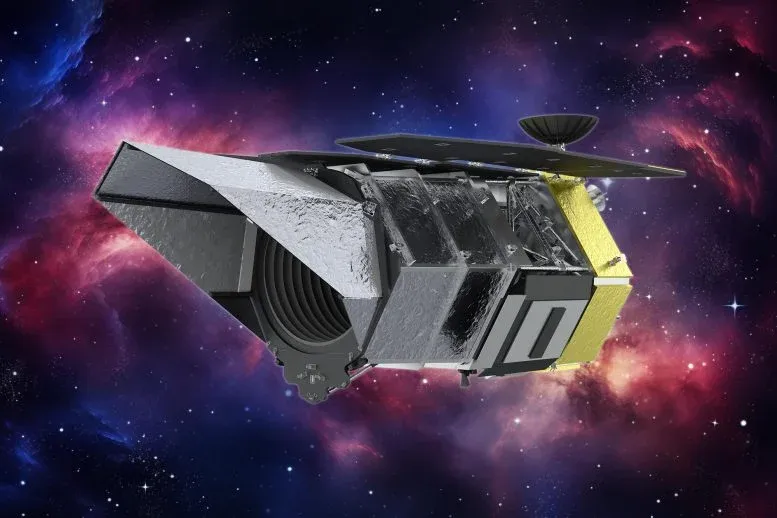
NASA’s Nancy Grace Roman Space Telescope is already exceeding expectations after engineers made incredibly precise adjustments to sharpen its view of the universe. Credit: NASA’s Goddard Space Flight CenterNASA’s Roman Space Telescope has achieved nearly 30% better optical performance than required, promising stunningly sharp views of the universe and its greatest mysteries. NASA’s Nancy Grace Roman Space Telescope is performing even better than scientists anticipated after engineers completed an extensive series of tests and precision adjustments. The work has sharpened the observatory’s focus and brought its primary instrument closer to regular scientific operations. Remarkably, the telescope’s Wide Field Instrument is now delivering optical performance nearly 30% better than predicted. “All of Roman’s sweeping surveys will rely on the Wide Field Instrument,” said Dave Hickey, a Wide Field Instrument systems engineer at NASA’s Goddard Space Flight Center in Greenbelt, Maryland.
This article is an excerpt. To read the full content, visit the original source. SciTechDaily
Related articles
Saskatchewan skies: Catching the Orionid meteor shower - Global News
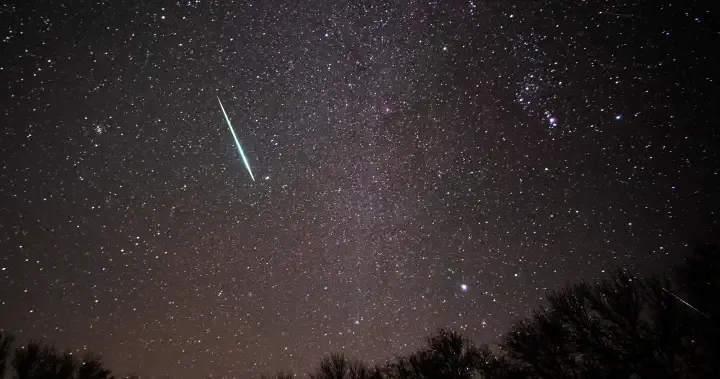
WATCH: If you're in the Prairies, you may want to look up in the sky tonight, as an Orionid meteor shower could be visible. Our Payton Zillich spoke with Saskatoon astrophotographer Tim Yawarski to find out the best way to see the shower. If you look up in the sky Wednesday or Thursday evening, you may just see something amazing. An Orionids meteor shower is headed Saskatchewan’s way. It’s one of approximately 12 meteor showers we see annually, according to Living Sky Guy and astrophotographer, Tim Yaworski.
X-ray free-electron laser sets new record for shortest high-energy pulses - Phys.org
Researchers at the Linac Coherent Light Source (LCLS) at the U.S. Department of Energy's SLAC National Accelerator Laboratory have measured the shortest high-energy X-ray pulses ever recorded at an X-ray free-electron laser (XFEL). The pulses had photon energies of about 9 kiloelectronvolts (keV) and clocked in at durations of 100 to 400 attoseconds—mere billionths of a billionth of a second. The results are published in Nature Photonics.
NASA's CASALS instrument bridges gaps in 3D maps of Earth's surface - Phys.org
A team of researchers at NASA's Goddard Space Flight Center (GSFC) has developed a new instrument designed to eliminate blind spots between lines of lidar data on Earth's surface. Built with support from NASA's Earth Science Technology Office (ESTO), the Concurrent Artificially-intelligent Spectrometry Lidar System (CASALS) could help researchers map the features of Earth's surface in detail. Rather than mechanically steering a laser with moving mirrors, CASALS steers light using wavelength itself, generating a continuous, 3D swath of the ground below.
0 comments
No comments yet. Be the first to share your thoughts!