MR-AIV reveals in vivo brain-wide fluid flow with physics-informed AI - Science | AAAS
This story deserves to be shared
Send it to someone who'd care, or post it on your networks.
This article is an excerpt. To read the full content, visit the original source. Science | AAAS
Related articles
JMIR News: Informed consent’s redesign for AI-related trials, an autonomous oxygenation device, and the physician-led campaign for Canada’s Safe Social Media Act - EurekAlert!
(Toronto, October 16, 2026) — JMIR Publications this week released three News and Perspectives features on the latest digital health news: stories on how informed consent must be rethought for clinical trials involving AI; Canada’s proposed Safe Social Media Act and the Canadian Medical Association’s support; and a promising new autonomous oxygen titration device for health care. In "Informed Consent in the AI Age: Why and How Documentation Must Change", JMIR Correspondent and researcher Hankun Su argues that traditional informed consent frameworks, which tend to assume that risks to patient safety are static and that clinicians will be able to fill in any gaps in understanding, are inadequate for clinical trials that use AI. “Documents must anticipate questions clinicians cannot answer and provide accessible responses within the text itself,” he writes. Su and his colleagues developed an informed consent framework for AI-related clinical trials that mandates transparency and disclosure, uses tiered standards based on risk, and employs dynamic consent mechanisms—one of many possible frameworks.
Electrical Grids Planned on Outdated Climate Data Face Physical and Fiscal Risk: UN University Scientists Propose Domain-Informed AI as the Fix - UNU | United Nations University
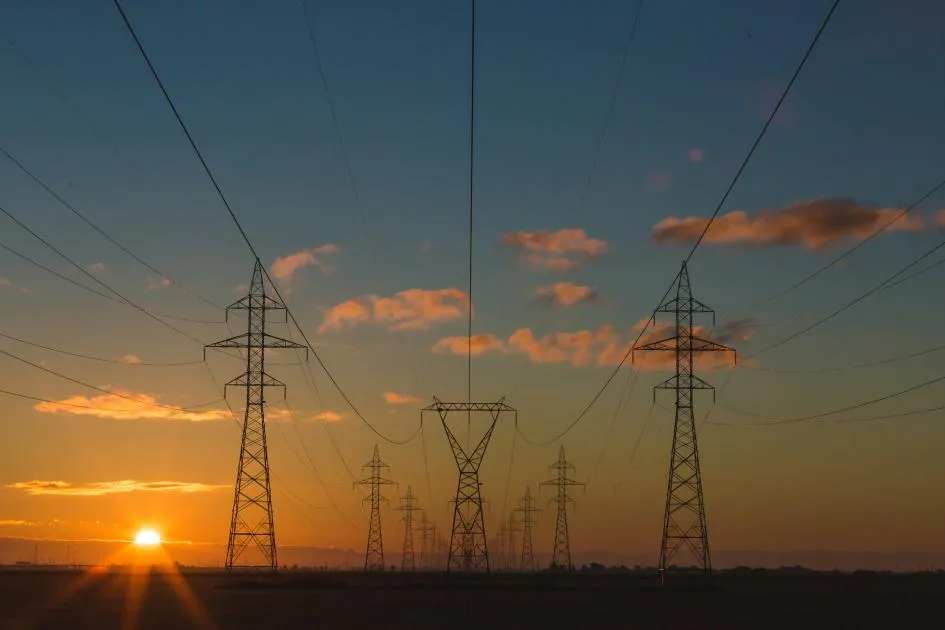
Richmond Hill, Ontario, Canada – 04 September 2026 — Artificial intelligence has become a major new pressure on the electricity grid at the same time as it is emerging as one of the most promising tools for making that grid resilient, according to a new publication by the United Nations University scientists. The policy question, the authors argue, is no longer whether to deploy AI for grid resilience, but under what guardrails. The Policy Brief, “Employing Domain-Informed AI for Energy Planning and Decarbonization under Uncertainty”, published by the United Nations University Institute for Water, Environment and Health (UNU-INWEH), warns that governments are approving electricity infrastructure with 15-20 year lifespans on the basis of historical weather records that are unlikely to hold in the coming decades. Written for national regulators and climate-finance institutions, the publication is a step forward to set out safeguards supporting the acceleration of decarbonisation targets through 2030. At the centre of the energy transition, the Policy Brief describes a feedback loop.
Science Talk: Bridging Climate Science and Engineering through Climate-Informed Engineering - UNU | United Nations University
Planetary Scientists Create Classification System and Map of Martian Soils - Sci.News
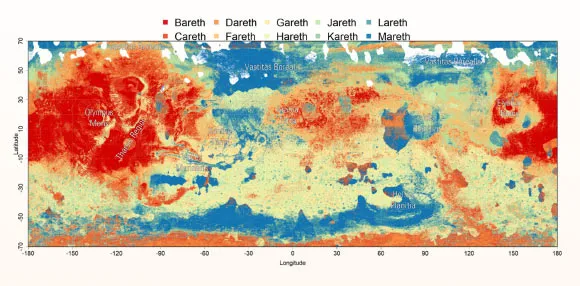
Planetary researchers at the University of Sydney have proposed a new way to classify the soils of Mars, along with a new word for them: areth (the name comes from Ares, the Greek name for Mars). Classification of realms across the Martian surface. Image credit: McBratney et al., doi: 10.1016/j.catena.2026.110649.
Spatially resolved host and microbiota RNA profiling in the mouse gut using microDBiT - Nature
AcknowledgementsThe authors thank the Yale Department of Pathology and Yale Pathology Tissue Services for technical and tissue-related support. FundingThe research is supported by Maximizing Investigators Research Award (MIRA) for Early-Stage Investigators 1R35GM150838 (to Y. L.). The research is also supported, in part, by Grant #IRG-21-132-60-IRG from the American Cancer Society. We also acknowledge the support of Leslie H. Warner Postdoctoral Fellowship to D. W. Author informationAuthor notesThese authors contributed equally: Bo Tao, Deguang Song, Mingze Dong, Gaocai Li. Authors and AffiliationsDepartment of Pathology, Yale School of Medicine, New Haven, CT, USABo Tao, Mingze Dong, Gaocai Li, Shenjie Wang, Dejiang Wang, Xiangjun Di, Fu Gao, Liyun Lin, Xiaohui Yu, Junyi Xu, Mo Liu, Mariana Kelley, Anthony Y. Feng, Yu Jin, Yuval Kluger & Yang LiuDepartment of Neurology, Yale School of Medicine, New Haven, CT, USABo Tao, Gaocai Li, Shenjie Wang, Dejiang Wang, Xiangjun Di, Fu Gao, Liyun Lin, Xiaohui Yu, Mariana Kelley & Yang LiuDepartment of Immunobiology, Yale School of Medicine, New Haven, CT, USADeguang Song & Noah W.
0 comments
No comments yet. Be the first to share your thoughts!