More current with less calcium: Computational models help solve longstanding ion channel evolution mystery - Phys.org
This story deserves to be shared
Send it to someone who'd care, or post it on your networks.
In the early 1980s, scientists observed an anomaly. Embedded within cell membranes, they identified ion channels with extraordinarily high conductance. These so-called "BK" (Big K, or Big Potassium) channels had roughly 10 times the unitary conductance (i.e., conductance per individual channel molecule) of other potassium channels, enabling much more efficient, rapid transport of potassium ions. And while later structural characterization explained how this happened, no one could understand why. That is, until now.
This article is an excerpt. To read the full content, visit the original source. Phys.org
Related articles
Millions take calcium and vitamin D for bone health. A major review finds little benefit - Science Daily
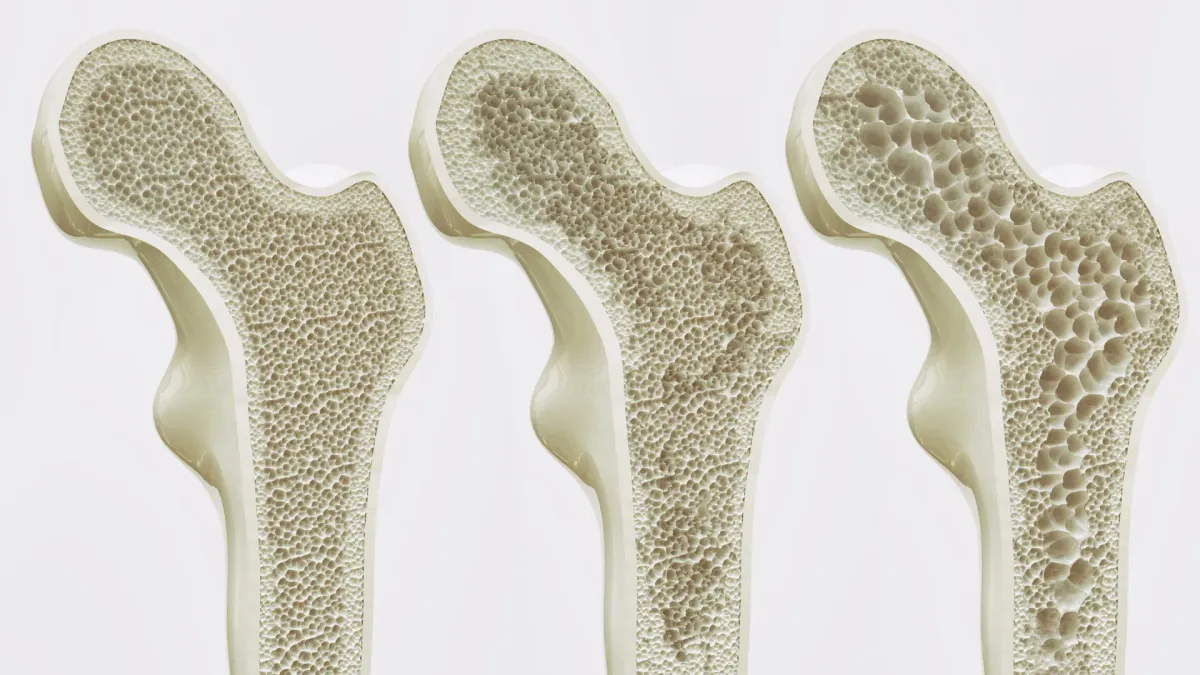
Calcium and vitamin D supplements are widely taken to support bone health, especially by older adults. But a large review published in The BMJ suggests that, for most older people, these supplements provide little to no meaningful protection against falls or broken bones. Falls are a major health concern as people age. Nearly one in three adults aged 65 and older falls each year, and those falls can lead to fractures, chronic pain, loss of independence, reduced quality of life, and in some cases a move into residential care. Finding effective ways to prevent falls and fractures is therefore an important public health goal.

Who really needs a heart calcium scan? - Science Daily
Coronary artery calcium scans are becoming an increasingly popular way to assess a person's future risk of heart disease. The quick, relatively inexpensive CT test measures calcium buildup in the arteries that supply blood to the heart. But new research from Northwestern Medicine suggests the scan may provide its greatest benefit to a narrower group of patients than previously assumed.
Snail slime does many jobs thanks to calcium - Science News
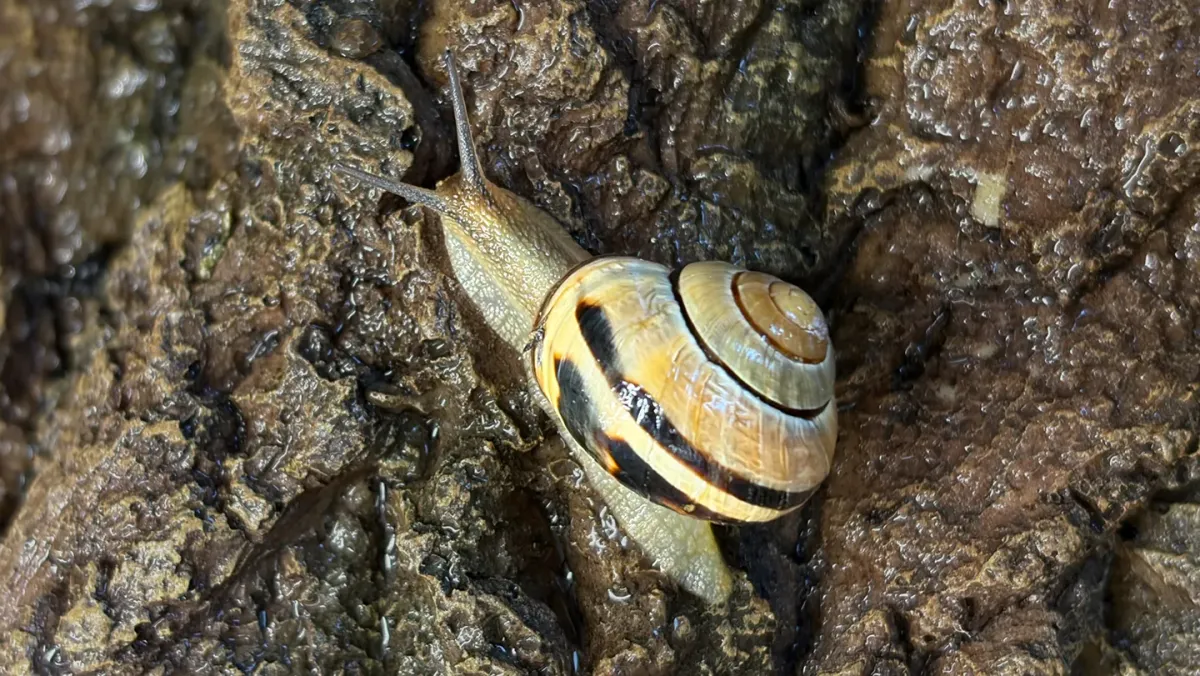
Snails remix their slime’s chemistry to shift between mucus types, from sticky to slippery Land snails like the grove snail (Cepaea nemoralis) (shown) can make five different kinds of mucus. The slimes’ properties are fine tuned by the snail for specific functions for life in the slow lane.
Star Alliance Wins Top Airline Alliance Award for APAC - Business Traveller

Evolutionary Biologist Wins Prestigious Research Prize - Mirage News
Professor Guillaume Chomicki from our Department of Biosciences has been awarded a prestigious Philip Leverhulme Prize for his internationally recognised research in evolutionary biology. The prizes, awarded by the Leverhulme Trust, recognise outstanding researchers whose work has already gained international recognition and whose future careers show exceptional promise. Guillaume conducts world-leading research into how partnerships between species evolve, persist and break down. He is particularly interested in why different species - such as insects and plants - form partnerships and what causes these relationships to change or break down. Partnerships over millions of years Much of Guillaume's work focuses on the Hydnophytinae, a group of around 100 plants that grow on the branches of rainforest trees across Australasia. They form swollen, hollow stems divided into chambers where ant colonies live. In return, the ants feed the plant with their waste and with the debris they carry home. Some of these plants rely on a single specialist ant, others accept many kinds, and some have given up ants altogether.
Quantifying controller preference reliability under uncertainty in a rotary inverted pendulum benchmark - Nature
We’re sharing this article early to provide faster access to peer-reviewed, accepted research. It is citable and carries a permanent DOI. This version is subject to further edits and will be replaced automatically by the final Version of Record. All legal disclaimers apply. AbstractSimulation-based controller comparisons can report a single winner even when score differences are too small to justify a unique engineering preference. We assessed preference reliability for five fixed controllers on a numerically verified nonlinear rotary inverted pendulum model using two independent Latin-hypercube realizations across matched ± 10%, ± 15%, and ± 20% uncertainty bands (30,000 closed-loop simulations). A four-metric score and a prespecified 5% practical margin quantified controller separation. Under the common uncertainty score, PID had the lowest controller robustness index in every band, but the four leading indices remained within 3.87%. In the pooled ± 15% domain, all ten paired comparisons were detectable after Holm correction, yet 69.40% of 2,000 scenario blocks lacked a unique practical preference.
0 comments
No comments yet. Be the first to share your thoughts!