Quantifying controller preference reliability under uncertainty in a rotary inverted pendulum benchmark - Nature
This story deserves to be shared
Send it to someone who'd care, or post it on your networks.
We’re sharing this article early to provide faster access to peer-reviewed, accepted research. It is citable and carries a permanent DOI. This version is subject to further edits and will be replaced automatically by the final Version of Record. All legal disclaimers apply.
AbstractSimulation-based controller comparisons can report a single winner even when score differences are too small to justify a unique engineering preference. We assessed preference reliability for five fixed controllers on a numerically verified nonlinear rotary inverted pendulum model using two independent Latin-hypercube realizations across matched ± 10%, ± 15%, and ± 20% uncertainty bands (30,000 closed-loop simulations). A four-metric score and a prespecified 5% practical margin quantified controller separation. Under the common uncertainty score, PID had the lowest controller robustness index in every band, but the four leading indices remained within 3.87%. In the pooled ± 15% domain, all ten paired comparisons were detectable after Holm correction, yet 69.40% of 2,000 scenario blocks lacked a unique practical preference.
This article is an excerpt. To read the full content, visit the original source. Nature
Related articles
Quantifying the prevalence and impact of overreaching causal claims in social science - Nature
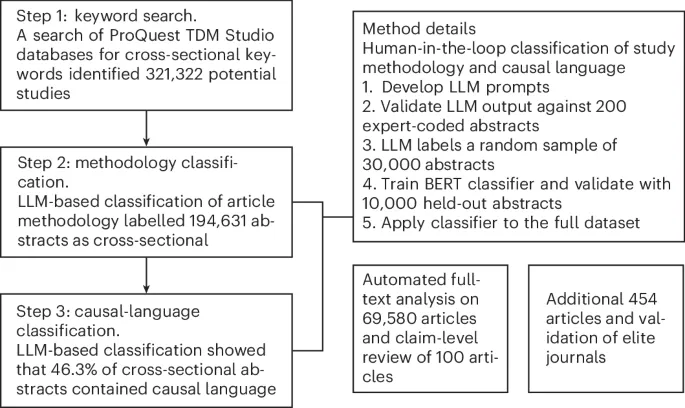
MainReliable and trustworthy science communication requires measured claims that accurately reflect empirical evidence1,2. In academic publications, this ideal translates into reporting research questions, methods, results and implications in a way that avoids distortion and misleading readers3,4. Yet scientific articles are not purely objective accounts of facts. Researchers retain considerable discretion in how they operationalize constructs and rhetorically frame their findings5,6,7, providing flexibility that also opens the door to misinterpretation. An important case of what we call ‘Narrative License’ occurs when scholars claim or imply that correlational findings are causal without conducting the appropriate tests8. In such cases, readers seeking evidence-based solutions9 may find themselves persuaded of causal claims that are not based on causal evidence. Conflating correlation with causation can yield serious real-world consequences when such claims inform policy, medicine, or communication. For example, in political science, influential work argued that civil wars were driven not by poverty or ethnic grievances but by structural opportunities for insurgency10,11.

Darwinism: Scientific Inference or Philosophical Preference? - Science and Culture Today
Note from William Dembski: Darwinism: Scientific Inference or Philosophical Preference?, co-edited by Steve Meyer, Jon Buell, and myself, has just been released through Inkwell Press using its amazing book production technology (https://inkwell.net — I encourage authors to try it!). This book is available at Amazon: hardback, paperback, and ebook. With a new preface (see below) by Meyer and myself, it reprints the proceedings of the classic symposium on ID versus Darwinism from the early 1990s. (Tidbit: To earn some extra cash, I typeset the original 1994 printing of Darwinism: Science or Philosophy? as a first-year student at Princeton Theological Seminary.) At Southern Methodist University in March 1992, scientists and philosophers gathered to examine the conceptual basis of Darwinian evolution. Titled Darwinism: Scientific Inference or Philosophical Preference? this symposium became a landmark exchange between Phillip E. Johnson and Michael Ruse, as well as between respective supporters of intelligent design and Darwinian naturalism.
OPTIONS | Half-Day vs. All-Day Dove Hunting Preference More Than Science - The Henderson News
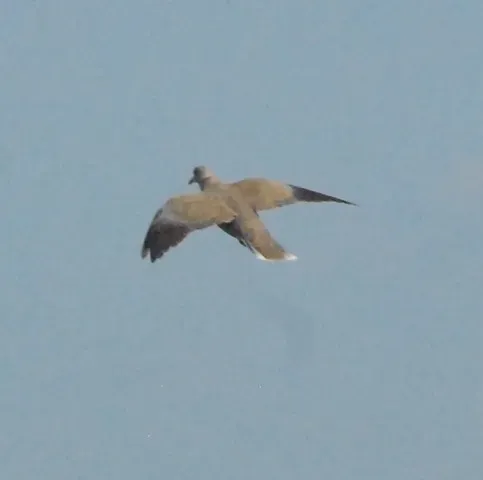
If I had to describe myself as one type of hunter or fisherman it would start with bird hunter, and more specifically dove hunter. It is what I grew up doing. My dad was not a great fisherman, and we did not have a boat or any ponds to fish. When I was young, we did not have friends with places to deer hunt, and to that point did not even have a rifle of any caliber in the house.
0 comments
No comments yet. Be the first to share your thoughts!