Millions take omega-3 fish oil for brain health but a new study found no benefit - Science Daily
This story deserves to be shared
Send it to someone who'd care, or post it on your networks.
This article is an excerpt. To read the full content, visit the original source. Science Daily
Related articles

The Sky Today on Monday, October 19: Feast your eyes on the Southern Fish - Astronomy.com
The Southern Fish is home to the bright luminary Fomalhaut, a lovely young star that shines brightly in the evening sky. Look south late this evening to find the bright star Fomalhaut in Piscis Austrinus above the horizon, forming a large triangle with the Moon to its upper right and Saturn to its upper left. Credit: Stellarium/USGS/Celestia/Clementine

Driving On The Moon At A Blistering 11.6 MPH - Hackaday
As NASA continues humanity’s slow march back to the Moon, different pieces of the puzzle of establishing a more permanent base there are falling into place. One of these pieces is the the Lunar Terrain Vehicle (LTR), and [Cleo Abram] and [Michelle Khare] got a look at the LTR candidate from Lunar Outpost. Designed to help astronauts traverse the lunar surface as well as function as a semi-autonomous rover when uncrewed, the LTR will be an integral part to any future Moon base. NASA announced earlier this year that it would be moving forward with the LTR featured in this video and another from competitor Astrolab. Regardless of manufacturer, the LTR will have to deal with some wild conditions in the lunar environment.
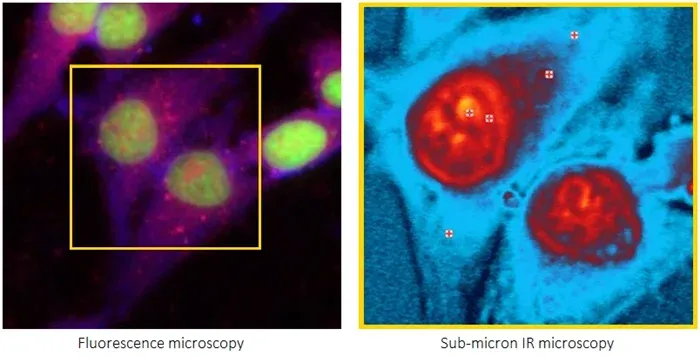
Sub-micron IR spectroscopic imaging for cellular and biomolecular research - News-Medical
Submicron IR microscopy is opening new opportunities in biological sciences with the development of a new technique: optical photothermal infrared (O-PTIR) spectroscopy. Developments in life sciences research are playing an increasingly important role in global health, and advancements in technology have the potential to offer new and improved approaches to support the health and wellbeing of people worldwide.
A comprehensive transcriptome and metabolome dataset for Erigeron breviscapus (Asteraceae) response to different light intensities - Nature
We’re sharing this article early to provide faster access to peer-reviewed, accepted research. It is citable and carries a permanent DOI. This version is subject to further edits and will be replaced automatically by the final Version of Record. All legal disclaimers apply. AbstractErigeron breviscapus is a widely utilized medicinal herb in traditional Chinese medicine, characterized by high annual demand and notable pharmacological activities. Light intensity is a critical environmental factor influencing secondary metabolism in medicinal plants. However, the effects of light intensity on the accumulation of active ingredients in E. breviscapus remain largely unexplored. In this study, we examined the transcriptomic and metabolomic responses of E. breviscapus to five levels of light intensity (50, 100, 200, 400, 800 μmol·m−2·s−1). The results revealed that higher light intensity (EB-L800) significantly increased the accumulation of scutellarin, chlorogenic acid, isochlorogenic acid A, and isochlorogenic acid C. A total of 1,334 metabolites were detected, and 127.10 Gb of high-quality clean data were generated through transcriptomic sequencing.

Cells Block Repair System to Fuse Together - Mirage News
The fusion of two cells is a decisive event in the sexual reproduction of many organisms. In fungi, cells must not only bring their membranes together and merge them, but also locally open their protective cell wall. A study conducted at the University of Geneva (UNIGE) shows how a mechanism that prevents cells from repairing their wall at the fusion site makes this process irreversible. Published in the journal Current Biology, these findings provide new insights into how cells coordinate fusion and repair mechanisms and could ultimately open new avenues for targeting the cell wall of pathogenic fungi. Unlike animal cells, fungal cells are surrounded by a rigid cell wall. This structure protects them and allows them to withstand the internal pressure exerted by their cellular contents. When two cells fuse, notably during sexual reproduction, this wall must be locally degraded to allow the membranes of the two cells to merge. Once this step has been completed, fusion normally proceeds until a single cell is formed.
Inhibition of DCLK1 promotes spinal cord injury recovery: implications for KATNA1 phosphorylation in microtubule-dependent neurite outgrowth - Nature
We’re sharing this article early to provide faster access to peer-reviewed, accepted research. It is citable and carries a permanent DOI. This version is subject to further edits and will be replaced automatically by the final Version of Record. All legal disclaimers apply. AbstractFunctional recovery after spinal cord injury (SCI) remains challenging, requiring therapeutic targets. Here, we show that doublecortin-like kinase 1 (DCLK1) is upregulated after SCI in mice. Pharmacological inhibition of DCLK1 with DCLK1-IN-1 improved motor recovery, reduced glial scar formation and fibrosis, and preserved neurons at the lesion site. Mechanistically, we identified the microtubule-severing protein KATNA1 as a downstream target of DCLK1. DCLK1 directly phosphorylated KATNA1 at threonine 118 (T118), suppressing its microtubule-severing activity. DCLK1 overexpression inhibited, whereas DCLK1 knockdown or inhibition enhanced KATNA1 function. The T118D mutation reduced KATNA1 activity, while T118A resisted DCLK1-mediated suppression. In neurons, DCLK1 inhibited KATNA1-induced neurite outgrowth, whereas DCLK1 inhibition restored this effect.
0 comments
No comments yet. Be the first to share your thoughts!