Melting glaciers could trigger volcanic eruptions around the globe, study finds - Live Science
This story deserves to be shared
Send it to someone who'd care, or post it on your networks.
This article is an excerpt. To read the full content, visit the original source. Live Science
Related articles
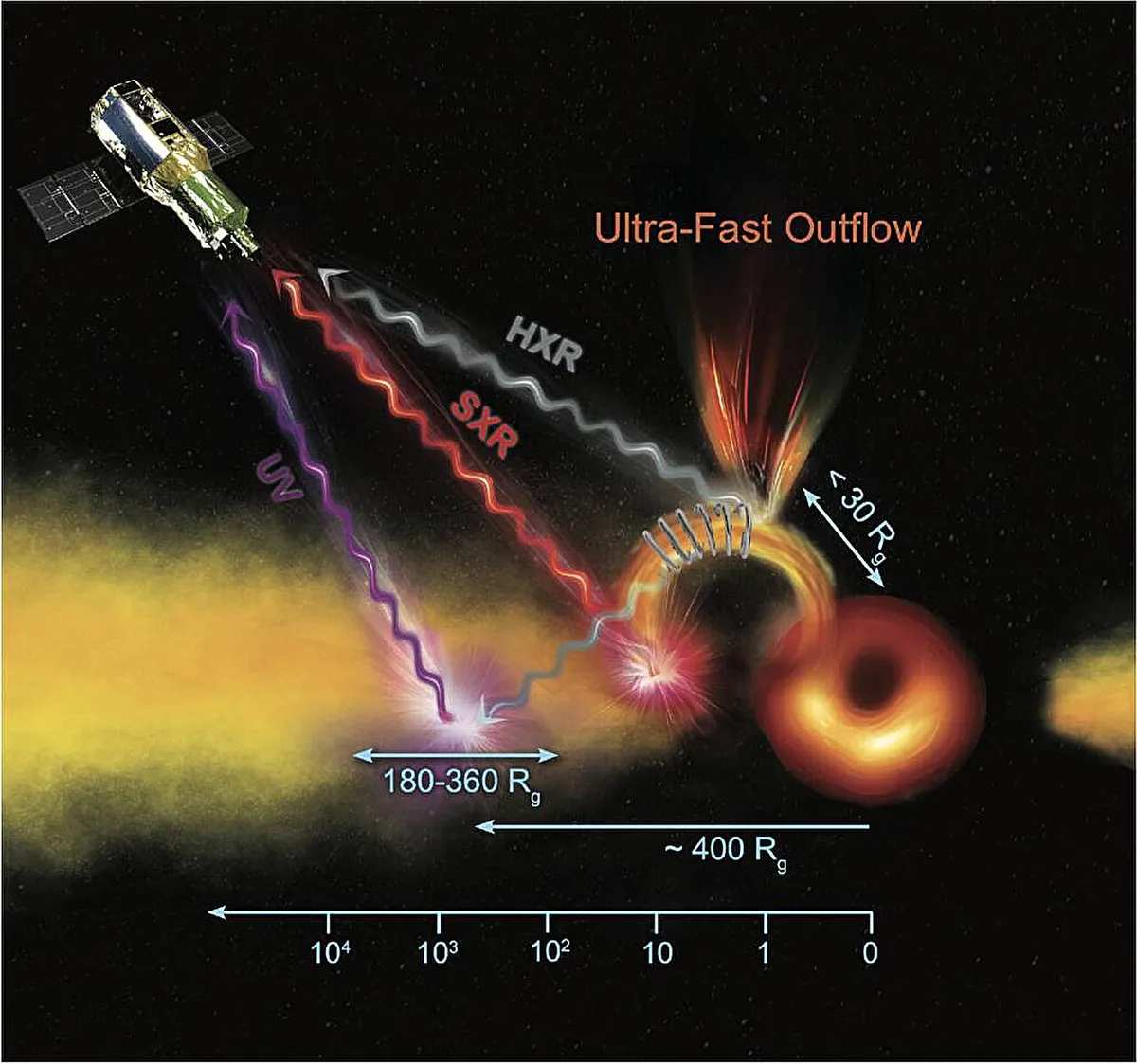
Black hole observations uncover evidence of solar storm–like magnetic eruptions - Phys.org
Schematic illustration of the detected magnetic reconnection event and ensuing processes. Credit: The Astrophysical Journal Letters (2026). DOI: 10.3847/2041-8213/ae8f44 Technion researchers have presented evidence for the existence of solar-storm-like outbursts near supermassive black holes, which can be a million times larger than the sun or more. The phenomenon was discovered in the vicinity of the black hole in the galaxy NGC 3783, and the researchers' findings were published in The Astrophysical Journal Letters.
Researchers for 1st time observe solar-storm-like eruptions near black hole - Xinhua
JERUSALEM, Oct. 18 (Xinhua) -- An international team of researchers has discovered eruptions similar to solar storms near a giant black hole, the Israel Institute of Technology (Technion) said Sunday. Published in the Astrophysical Journal Letters, the study provides the first evidence that the physical processes driving solar storms can also occur near supermassive black holes. Solar storms occur when energy stored in magnetic fields is suddenly released, producing bursts of radiation and streams of charged particles that can disrupt satellites and communications on Earth. The researchers analyzed X-ray emissions from the region around a black hole in the galaxy NGC 3783, using the XRISM and XMM-Newton space telescopes to track changes in radiation. They identified a pattern known as the "Neupert effect," first discovered on the Sun in 1968 but never previously observed near a black hole. The discovery suggests that powerful magnetic eruptions may occur across vastly different cosmic environments, from the Sun to black holes millions of times more massive, the researchers say. ■
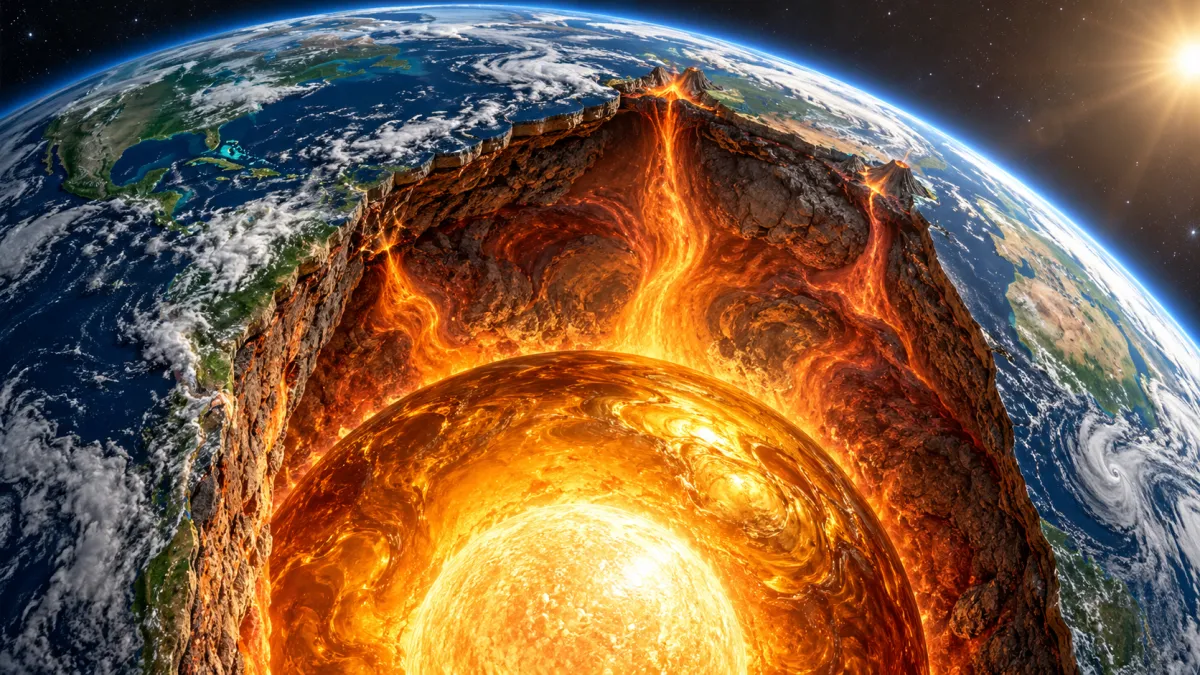
Earth’s core may be leaking hydrogen into the mantle and its volcanic rocks - The Brighter Side of News
Simulations suggest Earth’s ancient magma ocean could not create the unusually light hydrogen signatures found in some volcanic rocks. The modeled mantle retained nearly uniform hydrogen isotope ratios, despite differences among minerals and crystallization conditions. The findings strengthen the case for hydrogen escaping Earth’s core, although the transfer mechanism remains unresolved. Some volcanic rocks carry hydrogen signatures that may trace back to Earth’s metallic core. Lavas from Baffin Island in the Canadian Arctic and Iceland contain unusually little deuterium, hydrogen’s heavier stable isotope. Explaining that imbalance could reveal whether the core has supplied material to the mantle over billions of years. Work led by Wenzhong Wang at the University of Science and Technology of China tests a competing explanation. Published in Science Advances, the study examines whether crystallization of Earth’s ancient magma ocean could have created those distinctive signatures. Its simulations indicate that this process produced far too little separation between hydrogen isotopes.
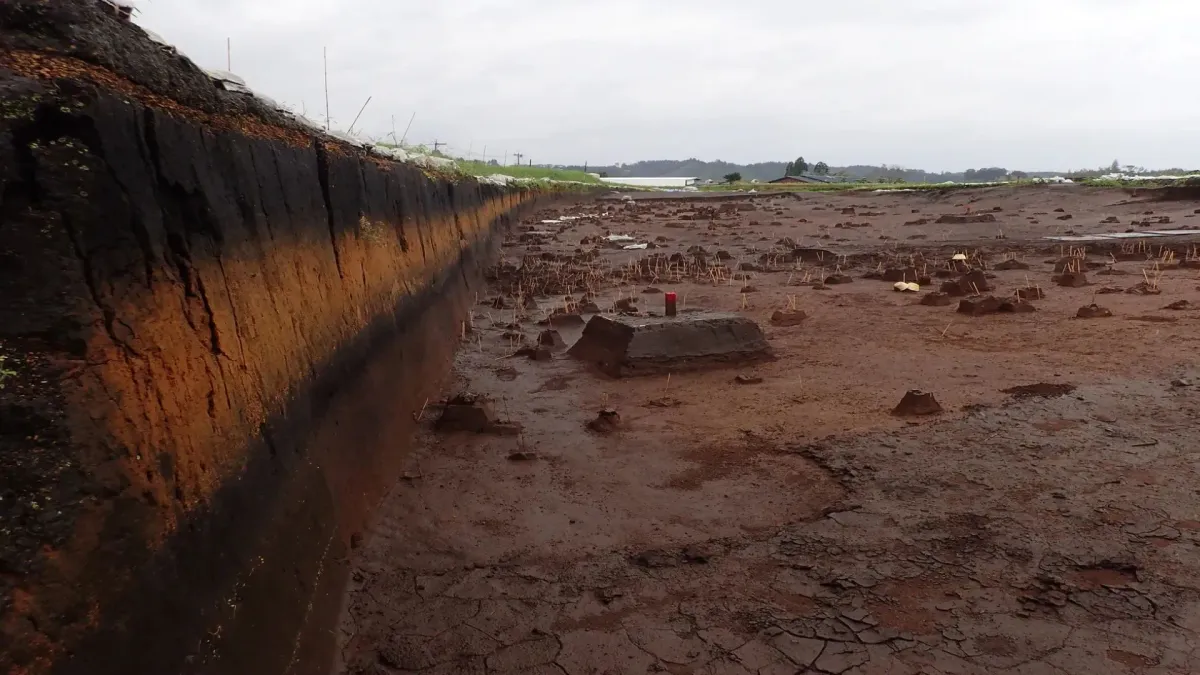
Japan biggest volcanic blasts triggered a population collapse 7,300 years ago - Interesting Engineering
Around 7,300 years ago, one of Earth’s largest volcanic eruptions devastated prehistoric Japan, triggering severe population declines in certain regions while communities elsewhere continued to grow, according to new research. “This eruption must have been devastating,” said Peter Jordan, senior author and professor of archaeology at Lund University.

Scientists sifted through a million years of volcanic ash in a remote cave, and found a forgotten evolutionary world - Futura, le média qui explore le monde
A study published in Alcheringa highlights an excavation at Moa Eggshell Cave near Waitomo on the North Island. A research team led by Trevor Worthy of Flinders University and Paul Scofield of the Canterbury Museum recovered a diverse collection of ancient bird and frog bones, perfectly preserved between two distinct layers of volcanic ash. A missing volume of New Zealand’s history

Scientists Sound Alarm as Disturbing Volcanic Scenario Unfolds Beneath Antarctica - Futura, le média qui explore le monde
As a child, I dreamed of being a paleontologist, an astronaut, or a writer… and ultimately, my heart led me to geology. After years of studying to gain deep knowledge, I now share it with you, the readers of Futura! Looking back, I realize that my passion for Earth and science in general started very early! My first spelunking expedition was at the age of 4, my first scuba dive at 7, fossil hunting all across France, nighttime outings to watch the stars… With a father who was a chemistry teacher and an avid cave diver, and a mother who was the first female commercial diver in France, my childhood was filled with adventure and discovery! One memory in particular stands out: observing the Hale-Bopp comet in 1997, in the middle of the night, standing in a field while my parents whispered the countdowns for the exposure times to photograph that strange celestial object lighting up the sky. That image is forever etched in my memory, a moment filled with a certain magic—and even today, I still get chills when I gaze up at the stars. Head in the stars, feet on the ground.
0 comments
No comments yet. Be the first to share your thoughts!