Japan biggest volcanic blasts triggered a population collapse 7,300 years ago - Interesting Engineering
This story deserves to be shared
Send it to someone who'd care, or post it on your networks.

Around 7,300 years ago, one of Earth’s largest volcanic eruptions devastated prehistoric Japan, triggering severe population declines in certain regions while communities elsewhere continued to grow, according to new research.
“This eruption must have been devastating,” said Peter Jordan, senior author and professor of archaeology at Lund University.
This article is an excerpt. To read the full content, visit the original source. Interesting Engineering
Related articles
Scientists Sound Alarm as Disturbing Volcanic Scenario Unfolds Beneath Antarctica - Futura, le média qui explore le monde
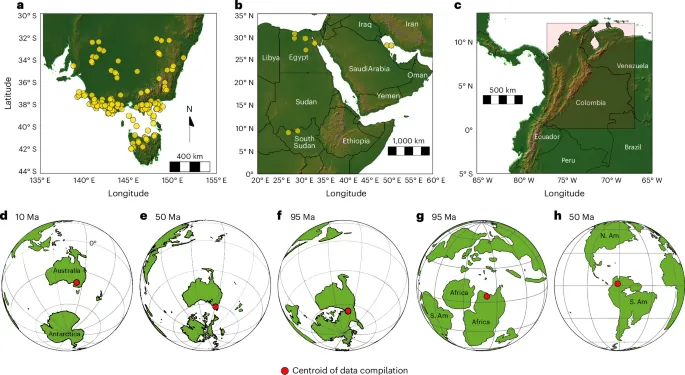
Extreme greenhouse warmth triggered the two major floristic turnover events of the past 120 million years - Nature
Coiro, M., Doyle, J. A. & Hilton, J. How deep is the conflict between molecular and fossil evidence on the age of angiosperms? New Phytol. 223, 83–99 https://doi.org/10.1111/nph.15708 (2019). Article Hughes, N. F. & McDougall, A. B. Barremian-Aptian angiospermid pollen records from southern England. Rev. Palaeobot. Palynol. 65, 145–151 (1990). Article

Scientists Gave People 2 Nearly Identical Meals. One Triggered Much More Insulin. - ScienceAlert
You've probably heard a bit about ultra-processed foods by now, and if so, you likely know they're not the healthiest things you can eat. These industrially manufactured foods are increasingly being linked to heightened risk of disease, and research suggests they may affect how we think and harm our mental health. In light of all the concerning associations scientists are finding, it's easy to assume that ultra-processed foods are unhealthy because they're packed full of nutritionally poor ingredients – but what if there's more to it than that? "We know that the majority of ultra-processed foods are high in fat, they're high in sugar, they're low in fiber, and they're low in protein," says neuroscientist Alex DiFeliceantonio from Virginia Tech. "But if we artificially hold all of those things constant, is there something about the processing that leads to a different outcome? "The answer, it seems, is yes, according to a surprising finding reported in Nature Metabolism. Ultra-processed foods seem to produce a different metabolic response, even when nutrients and calories are matched.

A feared signal just triggered: scientists warn the 7th planetary limit has now been crossed - Futura, le média qui explore le monde
Published on 24 September, the Planetary Health Check report paints a deeply concerning picture. These ‘planetary boundaries’ – nine scientifically defined limits designed to keep Earth stable and safe for humanity – have now been pushed even further out of balance. The newest addition to this growing list is ocean acidification, a phenomenon largely driven by the burning of fossil fuels, and intensified by deforestation and land use changes. Six other boundaries have already been significantly exceeded: climate change, biodiversity loss, deforestation, the spread of synthetic chemicals including plastics, freshwater depletion, and the disruption of the nitrogen cycle linked to agriculture. For now, only the ozone layer and atmospheric aerosols remain within relatively safe limits.
0 comments
No comments yet. Be the first to share your thoughts!