Idiopathic Retroperitoneal Fibrosis Presenting as a Podagra-Like Condition: A Case Report - Cureus
This story deserves to be shared
Send it to someone who'd care, or post it on your networks.
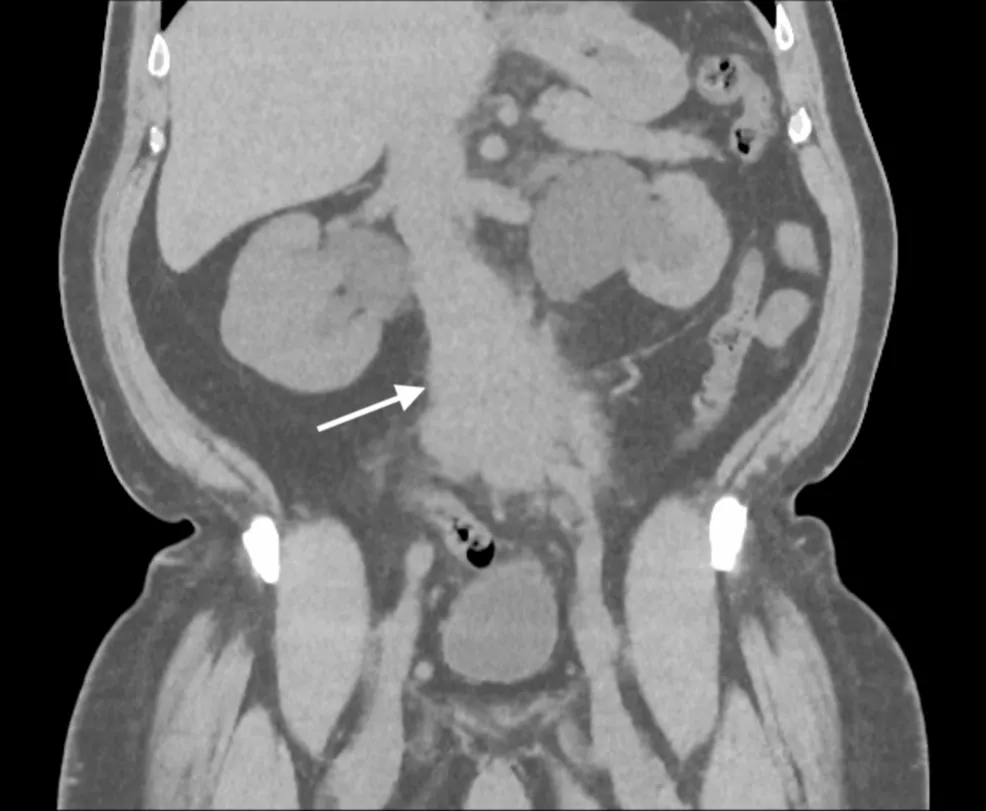
Retroperitoneal fibrosis (RPF) is a rare fibroinflammatory disorder in which fibrous tissue forms around the infrarenal aorta and iliac vessels, often compressing the ureters and causing obstructive uropathy and renal impairment. It typically presents insidiously with back, flank, or abdominal pain and constitutional symptoms. We describe a 52-year-old man with a background of hypertension who presented on three occasions over 10 months with an acutely painful, swollen first metatarsophalangeal (MTP) joint, initially on the left and subsequently on the right. The first two episodes were managed as presumed gout, with naproxen and then a short course of oral prednisolone, and his symptoms settled between attendances. His serum urate and creatinine rose across these attendances. At his third presentation, he was incidentally found to be hypertensive with severe renal impairment and was admitted. Imaging demonstrated bilateral hydronephrosis secondary to ureteric compression by a confluent para-aortic soft tissue mass. Following further investigation and specialist multidisciplinary team review, a working diagnosis of idiopathic RPF was made. Bilateral nephrostomies relieved the obstr
This article is an excerpt. To read the full content, visit the original source. Cureus
Related articles

Review of the Hands-On Laparoscopic Cadaveric Dissection for Retroperitoneal Pelvic Anatomy, Advanced Gynaecological Surgery and Robotic Simulation Course - EMJ
A DETAILED understanding of pelvic anatomy underpins safe gynaecological surgery, but developing advanced surgical skills requires opportunities to move beyond simulation. At the University of Leeds, UK, the European Society for Gynaecological Endoscopy (ESGE) brought together senior trainees and consultant gynaecologists for hands-on cadaveric dissection and robotic simulation. This feature explores the course’s practical lessons, the expertise behind its delivery, and the generosity of body donors who make this training possible. Minimally invasive gynaecological surgery continues to evolve rapidly, with increasing complexity in the management of endometriosis, gynaecological malignancies, and benign pelvic disease. While simulation has transformed surgical education, many advanced procedures still require an understanding of anatomical planes and tissue handling that can only be fully appreciated through cadaveric dissection.
Early Intervention in Cystic Fibrosis: Limiting Multisystem Disease Progression - EMJ
The publication of this infographic was funded by Vertex Pharmaceuticals. Medical writing assistance was provided by Bethany Cooper, Ownership Health Limited, UK. Advances in cystic fibrosis care have transformed expectations for many people living with the disease. Evidence continues to support intervening early to prevent irreversible organ damage and optimise outcomes.

AHN Cancer Center Launches RANDY’S Trial for Peritoneal Fibrosis - The Clinical Trial Vanguard
Fibrosis, the dense scar tissue that can entangle peritoneal tumors and the healthy organs around them, is one reason cytoreduction surgery is denied to a portion of patients with appendiceal and other abdominal cancers. Allegheny Health Network Cancer Center’s newly launched RANDY’S Trial is built on a direct answer to that problem: test whether FDA-approved drugs already on the market can remodel that scar tissue and bring more patients into surgical eligibility. The trial did not emerge from a pharma pipeline or an NIH grant. A single community gala, the La Sera d’Oro event, raised $44,000 in 2025 to fund it. The acronym stands for Repurposed And Naturally-Derived Drugs for the Treatment of Fibrosis in Peritoneal Carcinomatosis. Principal investigator Patrick Wagner, a surgical oncologist at AHN, is leading a multidisciplinary team that will evaluate existing medications for their ability to break down or remodel abdominal scar tissue. The mechanism matters because fibrosis does two things that complicate surgery: it obscures the boundary between healthy and diseased tissue, and it can trap cancer cells that are then left behind when a surgeon separates planes.

Three Ways a Pulmonary Fibrosis Lung Health Navigator Can Support You - American Lung Association
Pulmonary fibrosis (PF) is a complex lung disease and falls under a larger group of lung diseases called interstitial lung disease (ILD). Genetics, certain medications and environmental exposures are some of the known causes of PF. Most often the cause is not known, which is referred to as idiopathic pulmonary fibrosis (IPF). In July 2025, the Lung Association, with support from the Feldman Family Foundation, launched the Pulmonary Fibrosis Lung Health Navigator program. The program provides participants with trusted lung disease education, personalized guidance and empowers participants to advocate for their lung health. To understand the impact of the free Lung Health Navigator program, we sat down with program participants to hear about their experience. We also spoke with Lung Health Navigators, Denise and Tiffany, who shared how the program helps those who call. Access Trusted InformationPeople living with PF have questions about their diagnosis, treatment options and what to expect as the disease progresses. Often, finding reliable information can be a challenge.
Cheaper medicines for people living with cystic fibrosis - Australian Government Department of Health, Disability and Ageing

Pembrolizumab-Associated Adrenal Insufficiency Presenting as Adrenal Crisis: A Case Report - Cureus
Immunotherapy regimens containing the programmed cell death protein 1 (PD-1) inhibitor pembrolizumab are widely utilised in the management of non-small cell lung cancer (NSCLC). However, the administration of pembrolizumab is associated with unique immune-related adverse events. Adrenal insufficiency is a rare, potentially life-threatening endocrinopathy that can manifest even after the cessation of planned treatment. A male in his 50s with metastatic pulmonary adenocarcinoma developed an acute adrenal crisis 12 days after completing a 24-month course of pembrolizumab immunotherapy. Routine outpatient blood tests first identified critical hypocortisolaemia (morning serum cortisol <50 nmol/L), prompting the patient to attend hospital. The patient subsequently developed severe hypotension (58/45 mmHg) and reported malaise, anorexia, and vomiting after oral intake. Septic shock was considered but felt to be less likely given the absence of infective symptoms. The patient was successfully resuscitated in the emergency department with administration of fluids and high-dose intravenous hydrocortisone. Following clinical stabilisation, under the supervision of the endocrinology team, he w
0 comments
No comments yet. Be the first to share your thoughts!