Review of the Hands-On Laparoscopic Cadaveric Dissection for Retroperitoneal Pelvic Anatomy, Advanced Gynaecological Surgery and Robotic Simulation Course - EMJ
This story deserves to be shared
Send it to someone who'd care, or post it on your networks.

A DETAILED understanding of pelvic anatomy underpins safe gynaecological surgery, but developing advanced surgical skills requires opportunities to move beyond simulation. At the University of Leeds, UK, the European Society for Gynaecological Endoscopy (ESGE) brought together senior trainees and consultant gynaecologists for hands-on cadaveric dissection and robotic simulation. This feature explores the course’s practical lessons, the expertise behind its delivery, and the generosity of body donors who make this training possible.
Minimally invasive gynaecological surgery continues to evolve rapidly, with increasing complexity in the management of endometriosis, gynaecological malignancies, and benign pelvic disease. While simulation has transformed surgical education, many advanced procedures still require an understanding of anatomical planes and tissue handling that can only be fully appreciated through cadaveric dissection.
This article is an excerpt. To read the full content, visit the original source. EMJ
Related articles
Cecal Perforation Caused by an Ingested Fishbone Discovered During Laparoscopic Appendectomy for Suspected Acute Appendicitis: A Case Report - Cureus
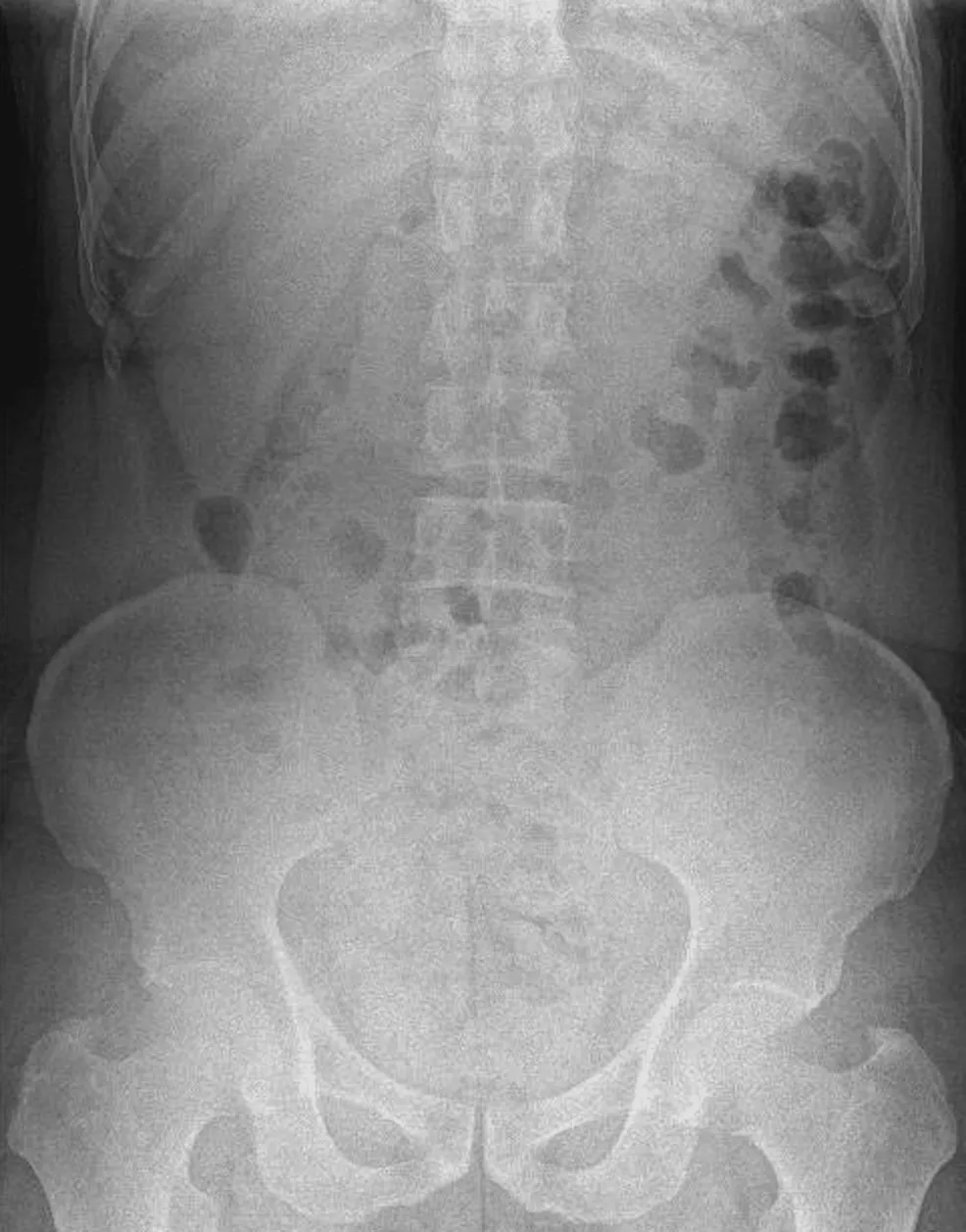
Ingested foreign bodies are not uncommon but are usually excreted naturally without any symptoms. Sharp objects like fishbones can impact and perforate the bowel. Ileo-caecal fishbones present with symptoms mimicking acute appendicitis. A young man presented in the emergency room with pain in the right lower quadrant of the abdomen with tenderness and rebound tenderness. Contrast-enhanced CT (CECT) was not conclusive of acute appendicitis. No fishbone was identified preoperatively or on retrospective CT review. Laparoscopic examination showed a fishbone perforating the cecum and an inflamed appendix. Appendectomy was done; the fishbone was retrieved, and the punctate perforation was repaired. Histological examination of the appendix confirmed intact mucosa and mantle zones with multiple reactive lymphoid follicles, suggesting secondary appendicitis. The patient recovered well without complications.
Persistence of Symptoms Following Laparoscopic Cholecystectomy for Symptomatic Cholelithiasis: A Prospective Observational Study - Cureus
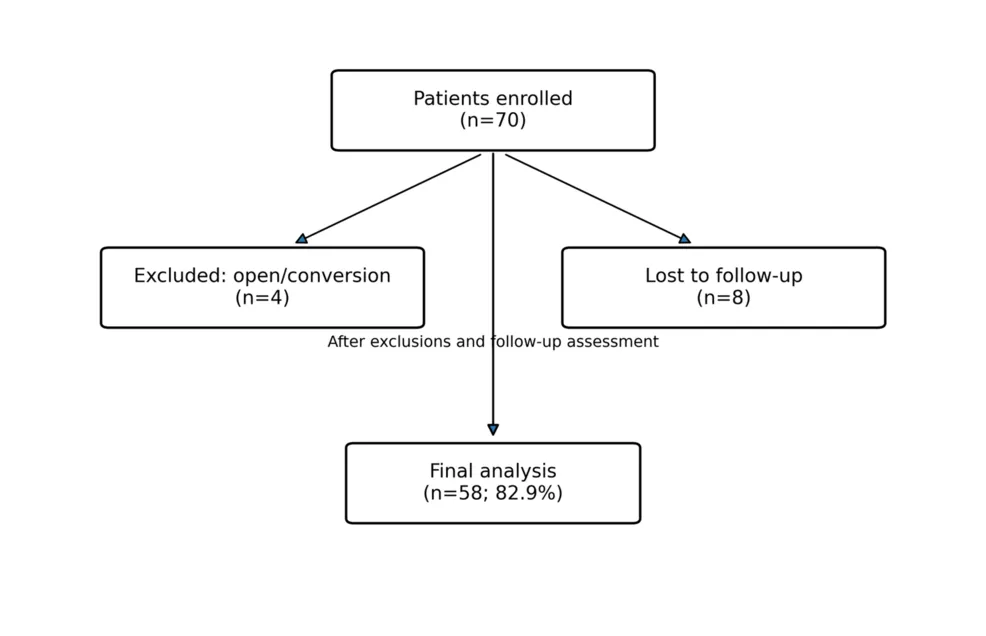
Introduction: Laparoscopic cholecystectomy is the standard surgical treatment for symptomatic cholelithiasis, but a proportion of patients continue to experience abdominal or gastrointestinal symptoms after surgery. This study evaluated the frequency of persistent symptoms and the resolution pattern of individual gastrointestinal symptoms following laparoscopic cholecystectomy. Methods: This prospective longitudinal observational study was conducted at Pushpagiri Institute of Medical Sciences and Research Centre, Thiruvalla, Kerala. Eligible patients undergoing laparoscopic cholecystectomy for symptomatic cholelithiasis were prospectively enrolled and followed for one to six months after surgery through outpatient visits or telephone follow-up. Symptoms were recorded using a predefined structured proforma; no separate validated gastrointestinal symptom score was used. Of 70 enrolled patients, four who underwent open cholecystectomy were excluded, and eight were lost to follow-up, leaving 58 patients for final analysis. Paired preoperative and postoperative symptom status was compared using the exact McNemar test. Results: Among the 58 patients who completed follow-up, 39 were femal

Lupus Remission Linked to Better Pregnancy Outcomes - EMJ
WOMEN with systemic lupus erythematosus (SLE) who are not in remission may face an increased risk of adverse pregnancy outcomes, according to findings from a prospective cohort study examining pregnancy complications across different disease severity groups. Researchers found that adverse pregnancy outcome rates varied substantially depending on patient characteristics and the definitions used to classify complications. The findings also highlighted the potential importance of achieving disease remission before pregnancy, particularly among women with additional clinical risk factors.
0 comments
No comments yet. Be the first to share your thoughts!