GLP-1 drugs linked to lower risk of serious heart-related complications and infections after surgery - Medical Xpress
This story deserves to be shared
Send it to someone who'd care, or post it on your networks.
GLP-1 medications, widely prescribed for diabetes and weight loss, may also help protect people from serious complications after surgery. People taking GLP-1 medications had lower rates of major heart-related complications and infections after surgery than those not taking the drugs, according to results of a study of more than 2 million adults undergoing surgery presented at the ANESTHESIOLOGY 2026 annual meeting.
This article is an excerpt. To read the full content, visit the original source. Medical Xpress
Related articles

Biomarkers for Prediction of Cardiovascular Complications in Hip Fracture Surgery in the Elderly - Cureus
To evaluate and synthesize evidence on the prognostic value of circulating biomarkers - B-type natriuretic peptide (BNP)/N-terminal pro-BNP (NT-proBNP), troponins T and I, C-reactive protein (CRP), and soluble urokinase plasminogen activator receptor (suPAR) - for short- and long-term mortality in elderly patients undergoing hip fracture surgery, we hypothesized that elevated biomarker levels reflect frailty and underlying cardiac and non-cardiac pathology and predict mortality. We conducted a narrative review of clinical studies in geriatric hip fracture cohorts reporting preoperative and/or postoperative measurements of these biomarkers, extracting study design, timing of sampling, biomarker thresholds, associations with all-cause and cardiovascular mortality, and whether analyses adjusted for age, comorbidity, and surgical factors. Multiple studies report postoperative troponin elevations linked to worse long-term prognosis and higher mortality. BNP and NT-proBNP consistently correlate with cardiovascular risk and increased mortality when measured preoperatively or early postoperatively, with several studies describing nonlinear relationships and threshold effects. CRP shows var

Mobile app monitoring may reduce serious complications after surgery, new study finds - Medical Xpress
Mobile app-based monitoring may help address the vulnerable days and weeks after surgery when recovery shifts from the hospital to home with little direct supervision. Patients using mobile apps had a lower risk of serious complications, emergency room visits and readmissions after surgery, but the benefits depended on physician or other clinician involvement, rather than the technology alone, according to research presented at the Anesthesiology 2026 annual meeting. "Just using an app may not make recovery safer," said Mouad Elganga, B. S., lead author of the study and a medical student at the Temerty Faculty of Medicine, University of Toronto.

Mepolizumab Reduces Systemic Corticosteroid Exposure in Eosinophilic COPD - HCPLive
In pooled phase 3 data, mepolizumab lowered mean yearly systemic corticosteroid exposure by 178.97 mg in patients with a BEC of ≥150 cells/µL. Mepolizumab (Nucala) reduced total yearly systemic corticosteroid (SCS) exposure, particularly high-dose courses, in patients with COPD and type 2 inflammation receiving inhaled triple therapy, according to pooled phase 3 data presented at the American College of Chest Physicians (CHEST) 2026 Annual Meeting in Phoenix.¹,²Although treatment guidelines recommend SCS for COPD exacerbations, these agents are associated with complications in this population, prompting interest in targeted therapies capable of limiting their use.¹ Mepolizumab, a humanized monoclonal antibody targeting interleukin-5 (IL-5), is approved for patients with COPD and an eosinophilic phenotype.
TMU research examines menopause, memory and brain health - CityNews Toronto
Losing your train of thought or searching for a familiar word can raise some serious concerns for women approaching menopause. Researchers at Toronto Metropolitan University are working on investigating how this transition affects memory and how these changes impact brain health later in life. On this Menopause Day, Natasha Rajah, a professor of Psychology and Tier 1 Canada Research Chair in Sex, Gender and Diversity in Brain Health, Memory and Aging at TMU, is highlighting the research examining menopause and memory related issues showing signs of early dementia.
Congenital Cervical Vertebral Segmentation Failure Presenting as Refractory Torticollis in Infancy: A Case of Klippel-Feil Syndrome - Cureus
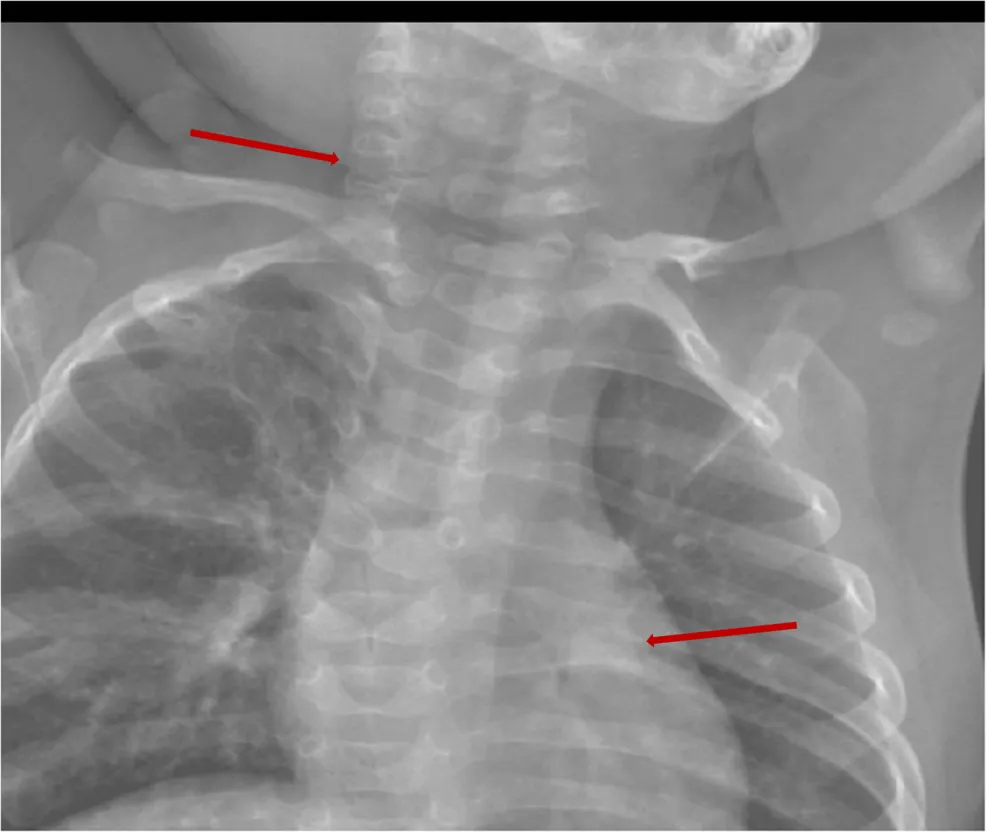
We present a case of a six-month-old female with a five-month history of right-sided torticollis that showed little improvement despite physical therapy. She presented to the emergency department due to parental concern for pneumonia, with congestion and cough without respiratory distress. Physical examination demonstrated leftward rotation and right lateral flexion of the head and cervical spine, consistent with the previously diagnosed right-sided torticollis. Chest radiographs were obtained in the workup for pneumonia and incidentally revealed segmentation anomalies of the cervical and upper thoracic spine as well as multiple bilateral bifid and fused ribs, more pronounced on the right. The radiographic findings were interpreted as highly suggestive of Klippel-Feil syndrome (KFS). In the setting of refractory torticollis and characteristic congenital vertebral abnormalities, the diagnosis of KFS was made. No acute complication requiring immediate intervention was documented. Referral to appropriate specialists was recommended for further evaluation and longitudinal management. This case highlights the importance of maintaining a broad differential diagnosis when evaluating refra

A Cold and Viscous Clue: Waldenström Macroglobulinemia Presenting With Secondary Cold Agglutinin Syndrome and Hyperviscosity Syndrome - Cureus
Waldenström macroglobulinemia (WM) is an indolent mature B-cell lymphoproliferative disorder defined by bone marrow infiltration by lymphoplasmacytic lymphoma (LPL) and an associated serum monoclonal immunoglobulin M (IgM) gammopathy. In this case report, we describe a patient presenting with two serious and rare IgM-mediated complications of WM that require urgent treatment: secondary cold agglutinin syndrome and hyperviscosity syndrome. With prompt diagnosis and therapeutic plasma exchange, the patient's IgM-mediated complications improved, with a marked reduction in serum IgM and resolution of hyperviscosity-related symptoms. This highlights the importance of recognizing the possible complications of an otherwise indolent disease.
0 comments
No comments yet. Be the first to share your thoughts!