Biomarkers for Prediction of Cardiovascular Complications in Hip Fracture Surgery in the Elderly - Cureus
This story deserves to be shared
Send it to someone who'd care, or post it on your networks.

To evaluate and synthesize evidence on the prognostic value of circulating biomarkers - B-type natriuretic peptide (BNP)/N-terminal pro-BNP (NT-proBNP), troponins T and I, C-reactive protein (CRP), and soluble urokinase plasminogen activator receptor (suPAR) - for short- and long-term mortality in elderly patients undergoing hip fracture surgery, we hypothesized that elevated biomarker levels reflect frailty and underlying cardiac and non-cardiac pathology and predict mortality. We conducted a narrative review of clinical studies in geriatric hip fracture cohorts reporting preoperative and/or postoperative measurements of these biomarkers, extracting study design, timing of sampling, biomarker thresholds, associations with all-cause and cardiovascular mortality, and whether analyses adjusted for age, comorbidity, and surgical factors. Multiple studies report postoperative troponin elevations linked to worse long-term prognosis and higher mortality. BNP and NT-proBNP consistently correlate with cardiovascular risk and increased mortality when measured preoperatively or early postoperatively, with several studies describing nonlinear relationships and threshold effects. CRP shows var
This article is an excerpt. To read the full content, visit the original source. Cureus
Related articles

GLP-1 Drugs Linked to Fewer Heart Complications and Infections After Surgery - Inside Precision Medicine
Credit: camacho9999/ iStock / Getty Images Plus Patients taking GLP-1 medications for diabetes or weight loss had fewer major cardiovascular complications and infections after surgery, according to a study of more than two million adults, including 146,000 taking GLP-1s, presented at the ANESTHESIOLOGY 2026 annual meeting in San Diego. Researchers at UTHealth Houston found that GLP-1 receptor agonist use was associated with 11% lower odds of major adverse cardiovascular events, including heart attack, myocardial injury, stroke and death, and 8% lower odds of postoperative infections.
GLP-1 drugs linked to lower risk of serious heart-related complications and infections after surgery - Medical Xpress
GLP-1 medications, widely prescribed for diabetes and weight loss, may also help protect people from serious complications after surgery. People taking GLP-1 medications had lower rates of major heart-related complications and infections after surgery than those not taking the drugs, according to results of a study of more than 2 million adults undergoing surgery presented at the ANESTHESIOLOGY 2026 annual meeting.

Mobile app monitoring may reduce serious complications after surgery, new study finds - Medical Xpress
Mobile app-based monitoring may help address the vulnerable days and weeks after surgery when recovery shifts from the hospital to home with little direct supervision. Patients using mobile apps had a lower risk of serious complications, emergency room visits and readmissions after surgery, but the benefits depended on physician or other clinician involvement, rather than the technology alone, according to research presented at the Anesthesiology 2026 annual meeting. "Just using an app may not make recovery safer," said Mouad Elganga, B. S., lead author of the study and a medical student at the Temerty Faculty of Medicine, University of Toronto.
Hybrid dual attentional-based pyramidal deep learning model for liver tumor detection - Nature
We’re sharing this article early to provide faster access to peer-reviewed, accepted research. It is citable and carries a permanent DOI. This version is subject to further edits and will be replaced automatically by the final Version of Record. All legal disclaimers apply. AbstractLiver tumors are life-threatening diseases that occur due to the rapid growth of liver cells and even result in a chronic condition. Nevertheless, conventional liver tumor detection struggled with the limitations of poor robustness, difficulties in identifying the complex boundaries, and inconsistent segmentation. Hence, the research introduced a hybrid dual attention-based pyramidal deep convolutional network and deep belief network (HDPCBN) for accurate liver tumor detection. Significantly, the HDPCBN approach deployed a pyramidal architecture to learn deep hierarchical features and intricate patterns of the tumor effectively. Moreover, the integration of the dual attention technique gathers the long-range relationships of both spatial and channel dimensions for accurate liver tumor detection.
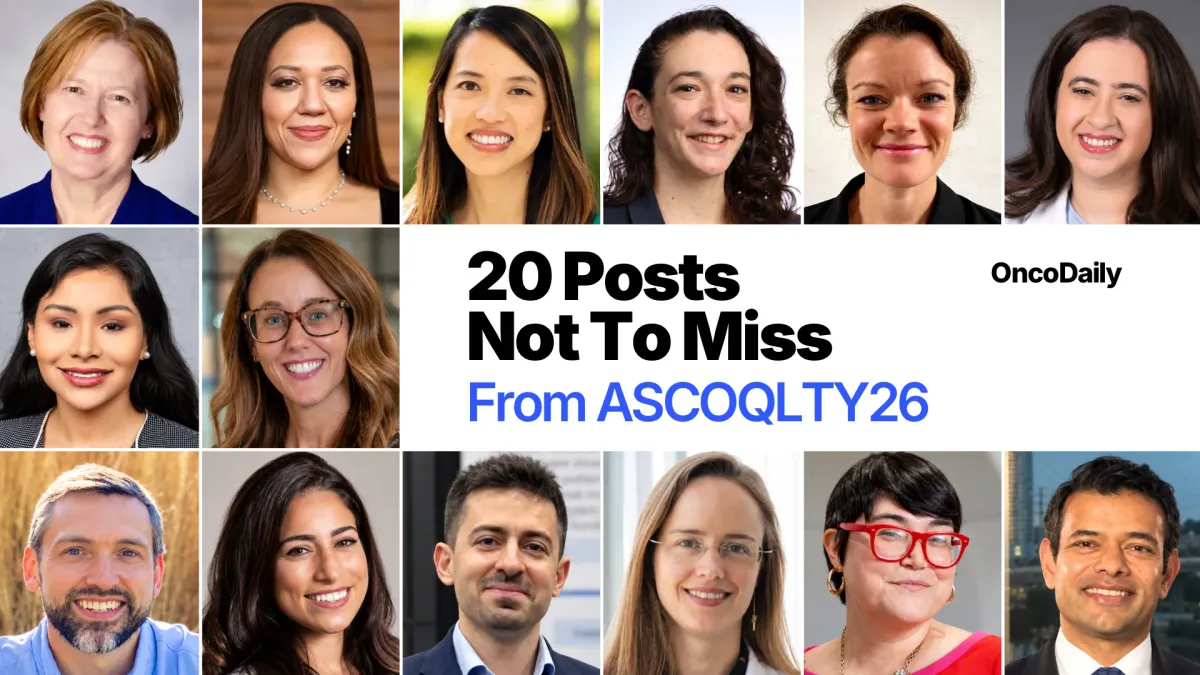
20 Posts Not To Miss From ASCOQLTY26 - Oncodaily
The ASCO Quality Care Symposium 2026 (ASCOQLTY26) brought together oncologists, researchers, healthcare professionals, and patient advocates to discuss advances in cancer care quality, patient safety, and healthcare delivery. The meeting focused on improving patient outcomes, addressing disparities in cancer care, and sharing research aimed at strengthening oncology practice. Held on October 16–17, 2026, at the Hynes Convention Center in Boston, Massachusetts, and online, the symposium featured discussions on improving cancer care delivery, advancing patient-centered approaches, and ensuring equitable access to high-quality oncology services.
0 comments
No comments yet. Be the first to share your thoughts!