GLP-1 Drugs Linked to Fewer Heart Complications and Infections After Surgery - Inside Precision Medicine
This story deserves to be shared
Send it to someone who'd care, or post it on your networks.
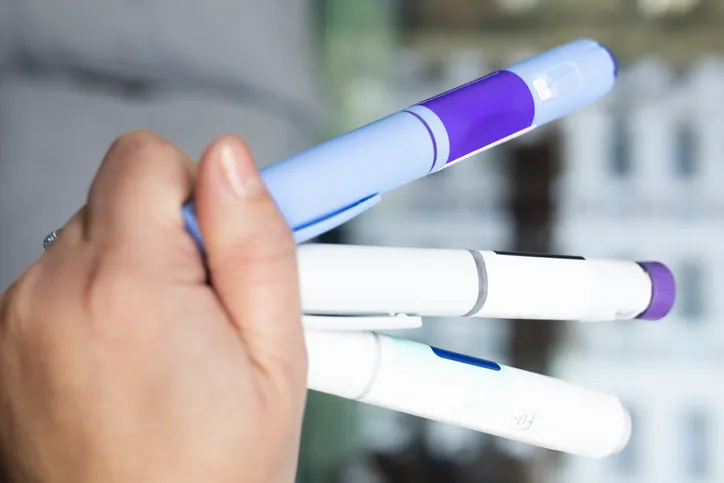
Credit: camacho9999/ iStock / Getty Images Plus Patients taking GLP-1 medications for diabetes or weight loss had fewer major cardiovascular complications and infections after surgery, according to a study of more than two million adults, including 146,000 taking GLP-1s, presented at the ANESTHESIOLOGY 2026 annual meeting in San Diego.
Researchers at UTHealth Houston found that GLP-1 receptor agonist use was associated with 11% lower odds of major adverse cardiovascular events, including heart attack, myocardial injury, stroke and death, and 8% lower odds of postoperative infections.
This article is an excerpt. To read the full content, visit the original source. Inside Precision Medicine
Related articles
GLP-1 drugs linked to lower risk of serious heart-related complications and infections after surgery - Medical Xpress
GLP-1 medications, widely prescribed for diabetes and weight loss, may also help protect people from serious complications after surgery. People taking GLP-1 medications had lower rates of major heart-related complications and infections after surgery than those not taking the drugs, according to results of a study of more than 2 million adults undergoing surgery presented at the ANESTHESIOLOGY 2026 annual meeting.

Biomarkers for Prediction of Cardiovascular Complications in Hip Fracture Surgery in the Elderly - Cureus
To evaluate and synthesize evidence on the prognostic value of circulating biomarkers - B-type natriuretic peptide (BNP)/N-terminal pro-BNP (NT-proBNP), troponins T and I, C-reactive protein (CRP), and soluble urokinase plasminogen activator receptor (suPAR) - for short- and long-term mortality in elderly patients undergoing hip fracture surgery, we hypothesized that elevated biomarker levels reflect frailty and underlying cardiac and non-cardiac pathology and predict mortality. We conducted a narrative review of clinical studies in geriatric hip fracture cohorts reporting preoperative and/or postoperative measurements of these biomarkers, extracting study design, timing of sampling, biomarker thresholds, associations with all-cause and cardiovascular mortality, and whether analyses adjusted for age, comorbidity, and surgical factors. Multiple studies report postoperative troponin elevations linked to worse long-term prognosis and higher mortality. BNP and NT-proBNP consistently correlate with cardiovascular risk and increased mortality when measured preoperatively or early postoperatively, with several studies describing nonlinear relationships and threshold effects. CRP shows var

Mobile app monitoring may reduce serious complications after surgery, new study finds - Medical Xpress
Mobile app-based monitoring may help address the vulnerable days and weeks after surgery when recovery shifts from the hospital to home with little direct supervision. Patients using mobile apps had a lower risk of serious complications, emergency room visits and readmissions after surgery, but the benefits depended on physician or other clinician involvement, rather than the technology alone, according to research presented at the Anesthesiology 2026 annual meeting. "Just using an app may not make recovery safer," said Mouad Elganga, B. S., lead author of the study and a medical student at the Temerty Faculty of Medicine, University of Toronto.
Nearly half of severe pregnancy complications happen before or after birth — and fall outside current monitoring: study - Faculty of Health Sciences - McMaster University
AI platform allows real-time conversation between patients and their medical devices - Medical Xpress
A new AI-driven platform could allow people to interact with their medical devices by sending messages using a smartphone application and receiving feedback in real time. Participants in a proof-of-concept study undergoing monitoring for seizures could ask questions about their brain activity, receive personalized alerts, report symptoms and behaviors and help train the system to better recognize seizure-related patterns.
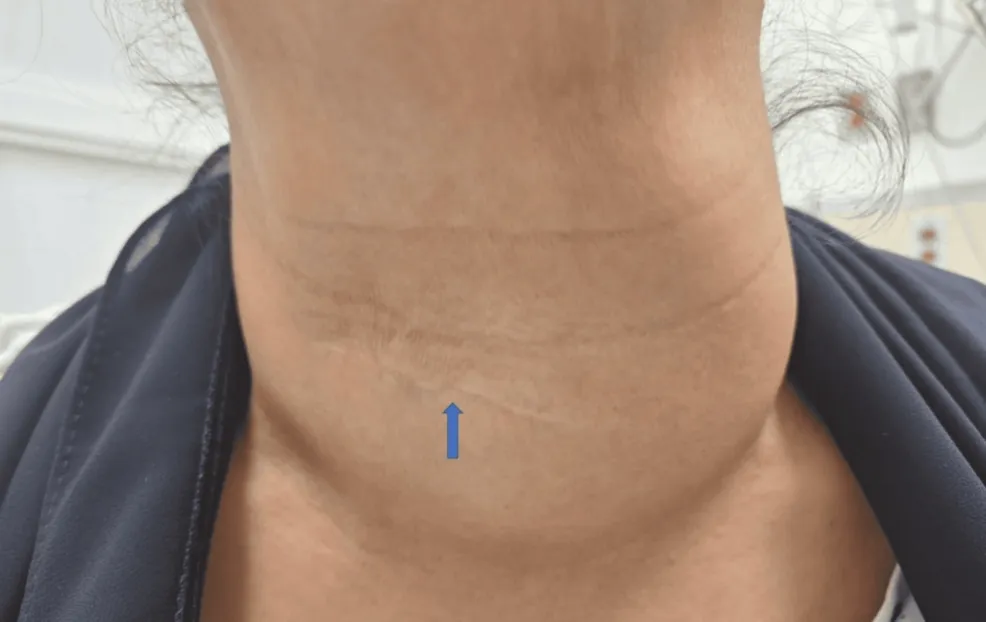
Acute Intrathyroidal Hematoma in a Multinodular Thyroid Presenting With Sudden Neck Swelling and Tracheal Deviation: A Case Report - Cureus
Acute hemorrhage within the thyroid gland is uncommon but can cause rapid neck swelling and, in severe cases, airway compromise. We report a 65-year-old woman with hypertension and a history of partial thyroidectomy performed more than 25 years earlier who presented with painful neck swelling that developed overnight. The swelling was associated with pain on swallowing, without shortness of breath, voice change, drooling, fever, or recent neck trauma. She was hemodynamically stable with an oxygen saturation of 99% on room air. Examination showed marked neck swelling, thyromegaly, thyroid tenderness, and left-sided neck induration. Contrast-enhanced computed tomography (CT) demonstrated a multinodular thyroid with a large heterogeneous mass in the left thyroid lobe causing mass effect and rightward tracheal deviation. Subsequent ultrasonography demonstrated a heterogeneous intrathyroidal collection consistent with hematoma. The patient remained clinically stable and was discharged after approximately five hours of observation. At otolaryngology follow-up 10 days later, repeat ultrasonography showed a progressively enlarging left thyroid nodule, and fine-needle aspiration cytology wa
0 comments
No comments yet. Be the first to share your thoughts!