Ginseng derived extracellular vesicles attenuate adipocyte hypertrophy and modulate gut microbiota and cholecystokinin responsiveness in high fat diet fed mice - Nature
This story deserves to be shared
Send it to someone who'd care, or post it on your networks.
We’re sharing this article early to provide faster access to peer-reviewed, accepted research. It is citable and carries a permanent DOI. This version is subject to further edits and will be replaced automatically by the final Version of Record. All legal disclaimers apply.
AbstractDiet-induced obesity is associated with impaired satiety signaling and alterations in intestinal microbial communities. Plant-derived extracellular vesicles have recently emerged as bioactive dietary vesicles capable of influencing host physiology. However, the in vivo metabolic effects of Panax ginseng–derived extracellular vesicles (GDE) remain incompletely characterized. Male C57BL/6 mice were fed a low-fat diet, high-fat diet (HF), or HF supplemented with orally administered GDE (3 × 10⁹ particles, 3 times/week) for 9 weeks. Relative epididymal fat pad weight, adipose tissue histology, cholecystokinin (CCK)-mediated satiety responsiveness, gut microbiota composition, and selected intestinal inflammatory markers were evaluated. GDE administration reduced adipocyte diameter and normalized epididymal leptin mRNA expression in HF-fed mice despite comparable energy intake between HF and HF/GDE groups.
This article is an excerpt. To read the full content, visit the original source. Nature
Related articles
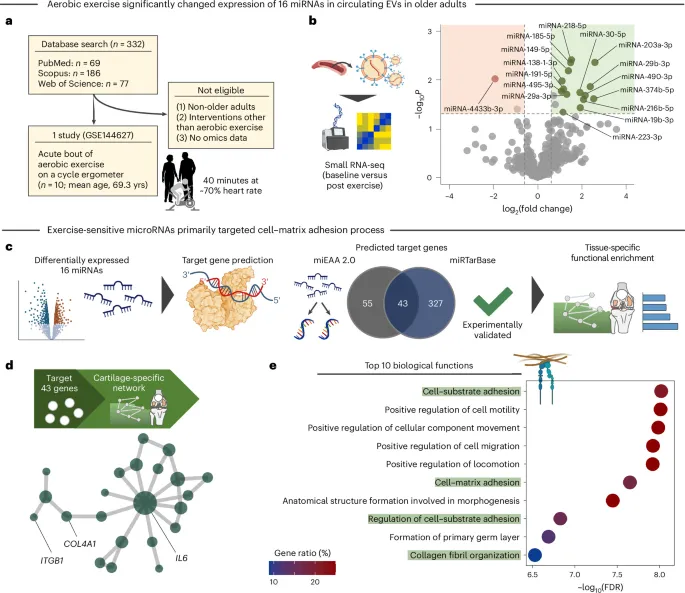
Exercise enhances aged chondrocyte health through microRNA-29-enriched extracellular vesicles - Nature
Denham, J. & Spencer, S. J. Emerging roles of extracellular vesicles in the intercellular communication for exercise-induced adaptations. Am. J. Physiol. Endocrinol. Metab. 319, E320–E329 (2020). Article Zaborowski, M. P., Balaj, L., Breakefield, X. O. & Lai, C. P. Extracellular vesicles: composition, biological relevance, and methods of study. Bioscience 65, 783–797 (2015). Article
Single-cell RNA sequencing dataset of hippocampus from mice of neuropathic pain at different time points - Nature
We’re sharing this article early to provide faster access to peer-reviewed, accepted research. It is citable and carries a permanent DOI. This version is subject to further edits and will be replaced automatically by the final Version of Record. All legal disclaimers apply. AbstractChronic pain (CP) affects more than 30% of the global population and is often accompanied by significant cognitive impairments. Although an increasing number of studies have focused on the pathological mechanisms associated with chronic pain-induced cognitive impairments, most have concentrated on the stage after the onset of cognitive impairments. Currently, the course by which chronic pain induces cognitive impairment has not been fully reported. Therefore, single-cell RNA sequencing were conducted in this study in order to map the mice hippocampus altas before and after cognitive impairments induced by spared nerve injury (SNI) on days 3, 7, 14, and 21. After quality control screening, 53852 out of 64207 cells from 11 samples were retained for subsequent analysis. The reliability of the sequencing data was verified through analysis of various evaluation indicators and sequencing alignment rates.
Giant fungus discovered in Yunnan reveals new fungal family_InKunming - 昆明信息港
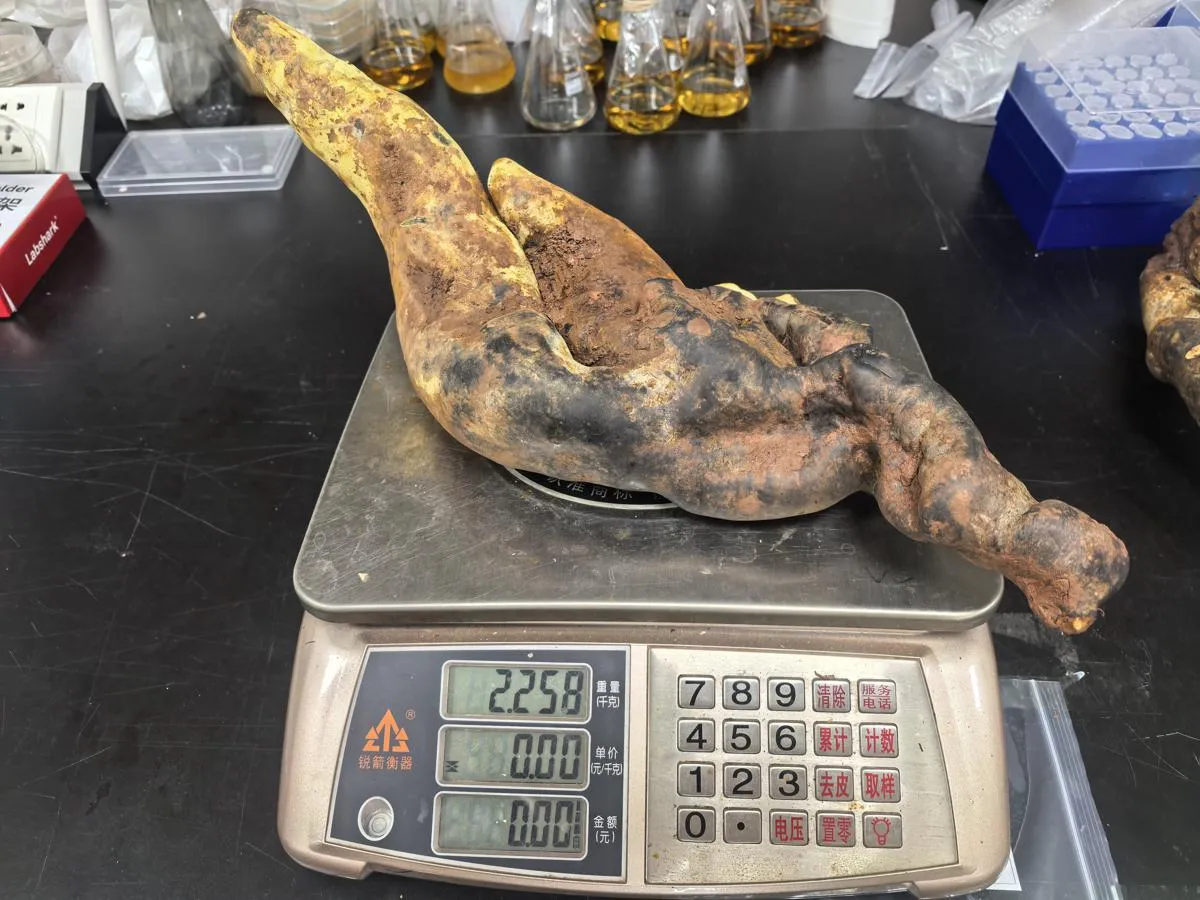
Dianjunus rex can weigh more than 2 kilograms. [Photo/Kunming Institute of Botany under the Chinese Academy of Sciences]Chinese scientists have discovered a previously unknown giant fungus in Yunnan province that constitutes a new fungal family after finding specimens that can grow up to 50 centimeters tall and weigh more than 2 kilograms. Dianjunus rex was identified by a research team led by Yu Fuqiang of the Kunming Institute of Botany under the Chinese Academy of Sciences, together with collaborators. Their findings were recently published in the journal Frontiers in Fungal Biology. The research established an entirely new fungal family, Dianjunaceae, highlighting how much remains unknown about fungal diversity even in a region renowned for its rich plant and animal life, according to the team. Dianjunus rex growing in a forest. [Photo/Kunming Institute of Botany under the Chinese Academy of Sciences]Researchers collected specimens from tropical and subtropical forests in Yunnan between August 2024 and July 2025. The fungi were found growing from the roots of recently dead trees and surrounding soil.
0 comments
No comments yet. Be the first to share your thoughts!